
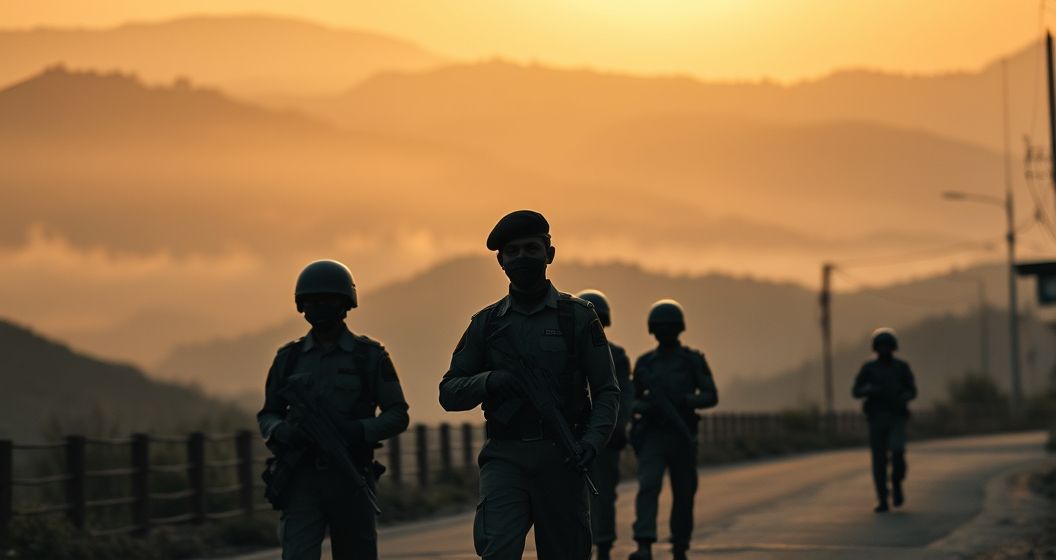
The central government is intensifying security measures in Manipur in response to the persistent ethnic violence that has gripped the state. Fresh contingents of central armed police forces have been deployed to sensitive areas to prevent further clashes and restore order. This move underscores the gravity of the situation, which has seen ongoing conflict between the state’s Meitei and Kuki communities, leading to significant instability and loss of life.
The Escalating Security Situation
Recent reports indicate a resurgence of violent incidents, including arson and sporadic gunfire in buffer zones separating the communities. These flare-ups have challenged the efforts of existing security personnel to maintain peace. The deployment of additional forces aims to bolster the security grid, conduct area domination patrols, and rebuild confidence among the local populace. The government’s primary objective is to de-escalate tensions and create a secure environment for dialogue and reconciliation to begin.
The conflict, rooted in long-standing grievances over land rights, economic opportunities, and affirmative action policies, has proven difficult to contain. Security forces face the immense challenge of operating in a deeply divided landscape where mistrust between the communities runs high. Patrolling efforts are focused on preventing armed groups from crossing into rival territories and instigating further violence, which remains a critical and ongoing task for law enforcement.
Government’s Multi-Faceted Response
Beyond the troop surge, authorities are employing a combination of strategies to manage the crisis. The suspension of internet services in the state has been extended as a precautionary measure to curb the spread of misinformation and hate speech, which have been identified as major triggers for violence. Officials believe that controlling the flow of inflammatory content online is crucial to preventing organised attacks and mob violence, though the measure has also drawn criticism for its impact on daily life.
Challenges in Restoring Normalcy
Despite increased security presence, restoring normalcy remains a formidable challenge. The complete segregation of the communities has disrupted economic activities and access to essential services. Peace committees formed with representatives from different groups have struggled to make significant headway due to the prevailing atmosphere of suspicion. The state machinery is working to provide relief to thousands of displaced individuals living in temporary camps, addressing their immediate needs for food, shelter, and medical care.
Impact on Local Communities
The human cost of the conflict is immense. Thousands of families have been displaced from their homes, and the psychological trauma of the violence affects all segments of society, especially women and children. The disruption of education and livelihoods threatens to have long-term consequences for the state’s development. Civil society organisations and local leaders are appealing for an end to the violence and are calling for a political solution that addresses the core issues underlying the conflict.
In conclusion, the reinforcement of security forces is a critical step by the government to stabilise Manipur. However, a lasting peace will require more than just a security-based approach. It necessitates sincere political dialogue, community-led peace initiatives, and a comprehensive plan to address the deep-seated grievances of all communities involved. The path to reconciliation is complex, but halting the immediate cycle of violence is the undisputed priority.
