
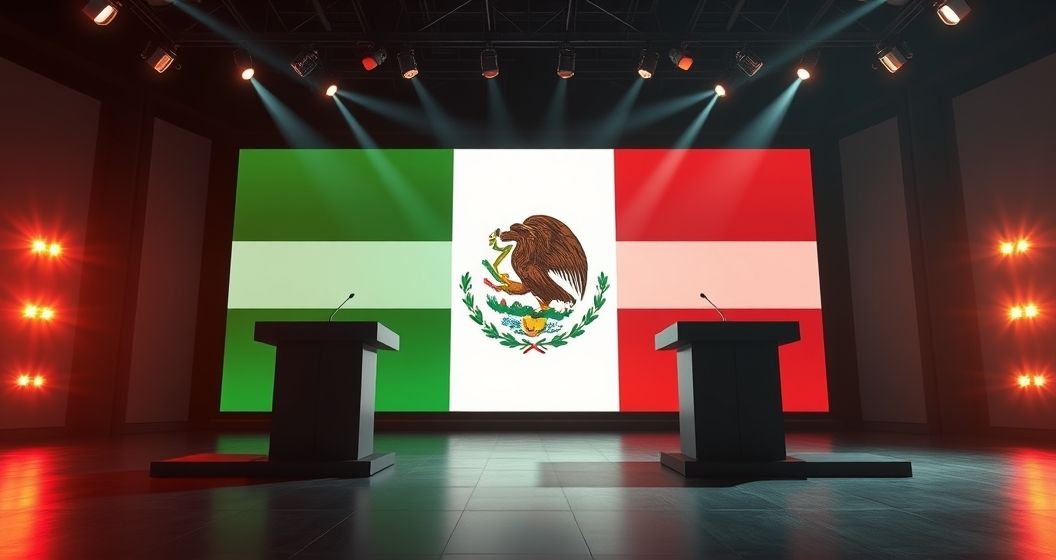
Mexico’s presidential race has intensified following the first official debate, where the leading candidates clashed over critical national issues. Frontrunner Claudia Sheinbaum, opposition candidate Xóchitl Gálvez, and Jorge Álvarez Máynez presented their visions for the country, focusing on security, health, and corruption. The event provided voters with a direct comparison of their platforms and leadership styles ahead of the upcoming election, setting a charged tone for the remainder of the campaign.
Key Policy Areas Take Center Stage
The debate centered on some of the most pressing concerns for Mexican citizens. The topics of healthcare and education were prominent, with candidates offering starkly different approaches. Sheinbaum, representing the ruling party, defended the current administration’s policies while promising to expand social programs. In contrast, Gálvez sharply criticized the state of the public health system and proposed significant reforms to improve service and access for all citizens.
The fight against corruption was another major battleground. Accusations and counter-accusations were exchanged, with Gálvez leveraging her position to attack the integrity of the current government. Sheinbaum responded by highlighting her own anti-corruption efforts during her time as mayor of Mexico City. Álvarez Máynez attempted to position himself as an outsider, untainted by the political baggage of the two main coalitions, arguing for a new approach to transparency and governance.
Strategies and Performances Under Scrutiny
Each candidate adopted a distinct strategy for the debate. As the frontrunner in most polls, Claudia Sheinbaum maintained a largely composed and defensive posture. Her goal was to project an image of stability and continuity, reinforcing the achievements of the current government while outlining her own proposals. She focused on data and specific policy points to counter the attacks from her rivals, aiming to appear presidential and prepared.
Gálvez Adopts an Aggressive Stance
Xóchitl Gálvez, representing a broad opposition coalition, was clearly on the offensive from the outset. Her strategy involved directly challenging Sheinbaum on her record and that of the ruling party. She used forceful language and presented specific cases to illustrate her criticisms, particularly concerning public safety and health. Her energetic performance was designed to galvanize opposition voters and persuade undecideds that a change in leadership is necessary.
Máynez Seeks a Breakthrough Moment
For Jorge Álvarez Máynez of the Citizens’ Movement party, the debate was a crucial opportunity to gain visibility. Trailing in the polls, his primary objective was to differentiate himself from the two leading women. He presented himself as a fresh, modern alternative, focusing on innovative proposals for the economy and social justice. He often tried to steer the conversation away from the direct attacks between Sheinbaum and Gálvez to present his own agenda.
The Road Ahead After the First Encounter
While the debate may not have produced a single, decisive winner, it successfully crystallized the core arguments of each campaign. Voters were given a clear view of the candidates’ priorities and their demeanor under pressure. With more debates scheduled, the performances in this first encounter will undoubtedly shape the strategies and narratives for all three candidates as they enter the final, most intense phase of the election cycle. The event has laid the groundwork for a highly competitive contest.