
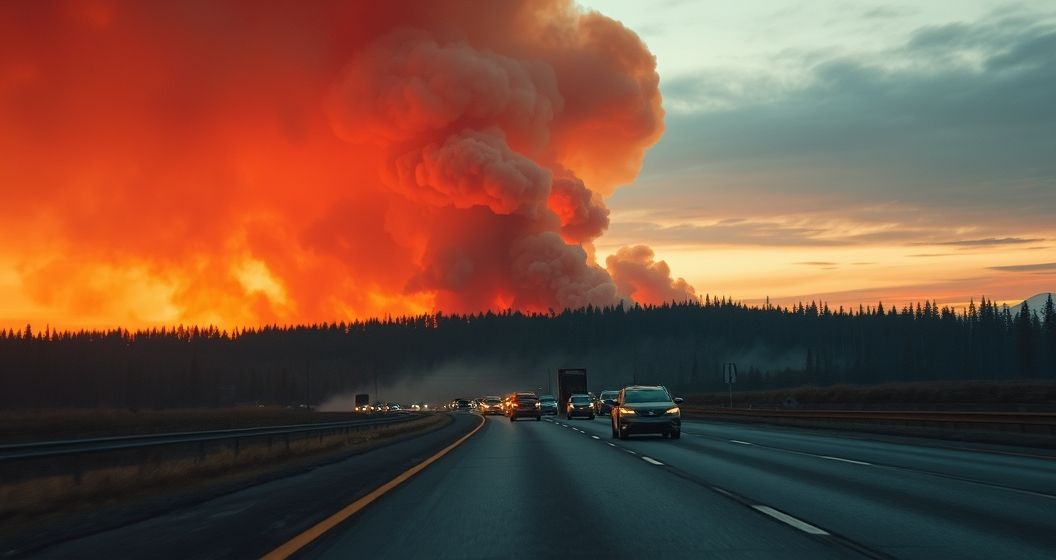
Intensifying wildfires across Western Canada have prompted widespread evacuation orders, forcing thousands of residents from their homes in British Columbia and Alberta. Authorities are battling numerous out-of-control blazes fueled by strong winds and historically dry conditions. The escalating crisis has led to states of emergency in several regions, with air quality deteriorating significantly across a vast area, impacting millions of citizens who are now under special air quality statements.
State of Emergency in British Columbia
British Columbia is currently facing an extreme wildfire threat, with the province managing several fires of note. The most significant concern is centred around the northeastern community of Fort Nelson, where the majority of the town’s residents have been ordered to evacuate. The Parker Lake fire, burning just kilometres away, has grown exponentially, creating hazardous conditions and threatening critical infrastructure. Officials have described the fire behaviour as aggressive and are urging all remaining residents to leave immediately for their safety.
Alberta Faces Growing Wildfire Threat
Neighbouring Alberta is also on high alert, with several communities facing evacuation orders due to aggressive wildfires. The area around Fort McMurray, a region tragically familiar with devastating fires, is once again under threat. An out-of-control wildfire is approaching the city, prompting evacuation alerts for several neighbourhoods and putting emergency services on maximum readiness. The situation remains volatile, with shifting winds posing a significant challenge to containment efforts and threatening to push the fire closer to populated areas.
Widespread Air Quality Advisories
The smoke from these massive fires is not contained to the immediate vicinity. Thick plumes have drifted across the prairies and into other provinces, leading to widespread air quality advisories. Major cities, including Edmonton and Calgary, have experienced hazy skies and elevated levels of fine particulate matter. Health officials are advising residents, especially those with respiratory conditions, children, and the elderly, to limit outdoor activities and stay informed about local air quality health indexes, which have reached very high-risk levels in some locations.
National Response and Firefighting Efforts
Federal and provincial governments are coordinating a massive response to the emergency. Hundreds of firefighters, supported by water bombers and helicopters, are working tirelessly on the front lines. However, crews face extreme challenges due to unpredictable winds and tinder-dry forests that have not seen significant rainfall. Resources are being strategically deployed to protect lives and property, but officials warn that the battle against these fires will be a prolonged one, dependent heavily on a significant and sustained change in weather patterns.
As the wildfire situation in Western Canada continues to unfold, the primary focus remains on the safety of residents in affected areas. The coming days will be critical for firefighting teams as they attempt to gain control over the fast-moving blazes. For thousands of displaced families, the future remains uncertain as they await news about their homes and communities, highlighting the severe and growing impact of Canada’s annual wildfire season.
