
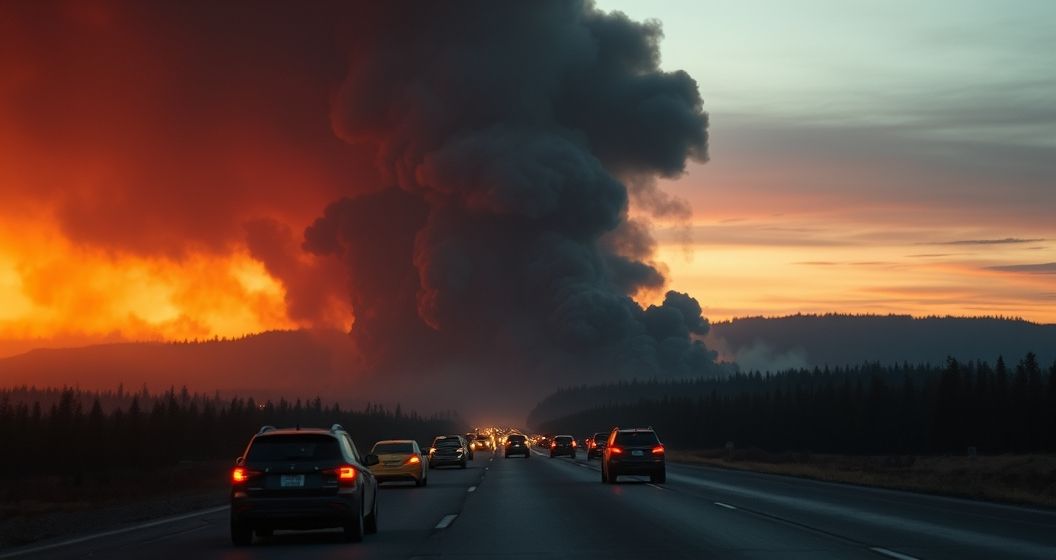
Canada is grappling with an unprecedented wildfire season as fast-moving blazes in British Columbia and the Northwest Territories force widespread evacuations. Tens of thousands of residents have been ordered to leave their homes, including the entire population of the territorial capital, Yellowknife. The escalating crisis has prompted emergency declarations and a massive mobilization of resources as officials confront a situation described as dire and unpredictable. This season is now the worst in the nation’s recorded history.
State of Emergency in British Columbia
In British Columbia, the situation escalated rapidly, leading the provincial government to declare a state of emergency. The declaration grants authorities additional powers to manage travel restrictions and secure necessary resources for evacuees. The focus of the crisis is in the Okanagan region, including the city of West Kelowna, where the McDougall Creek fire has destroyed a significant number of properties and continues to threaten thousands more homes. Strong winds have fanned the flames, making firefighting efforts exceptionally challenging.
Evacuation orders now cover large parts of Kelowna and surrounding communities in the Central Okanagan. Officials have urged residents to obey evacuation orders immediately, warning that the fast-moving fires pose an imminent threat to life and safety. The Shuswap region is also experiencing aggressive fire behaviour, leading to further property losses and evacuations. The emergency measures are intended to keep roads clear for first responders and those fleeing the affected areas.
The Historic Exodus from Yellowknife
The Northwest Territories is facing its own monumental challenge with the evacuation of Yellowknife’s 20,000 residents. A large wildfire burning just outside the city limits prompted the evacuation order, turning the northern capital into a near ghost town. Residents fled via a single highway heading south or through emergency airlift operations organized by local and federal authorities. The exodus represents one of the largest evacuations in the country’s recent history, highlighting the severity of the threat.
The logistical operation to move an entire city to safety has been immense. Officials have been working around the clock to coordinate flights and manage highway traffic, with nearby communities in Alberta opening their doors to displaced residents. The fire remains a serious threat, and authorities have stated that it will be some time before it is safe for anyone to consider returning to Yellowknife. The focus remains on protecting the city’s critical infrastructure from the approaching flames.
National Response and Widespread Impact
The federal government has mobilized the Canadian Armed Forces to assist with firefighting efforts and logistical support for evacuations in both regions. Prime Minister Justin Trudeau convened an incident response group to coordinate federal assistance, pledging full support to the affected provinces and territories. This national response underscores the scale of a disaster that has stretched local resources to their breaking point.
Beyond the immediate fire zones, the broader impact is being felt across the country. Thick smoke has blanketed vast areas of Western Canada, leading to severe air quality advisories and health warnings. The smoke has created hazardous conditions, affecting daily life for millions and serving as a stark reminder of the widespread environmental consequences of this historic wildfire season. The fight against the fires continues on multiple fronts in a battle that is far from over.

