
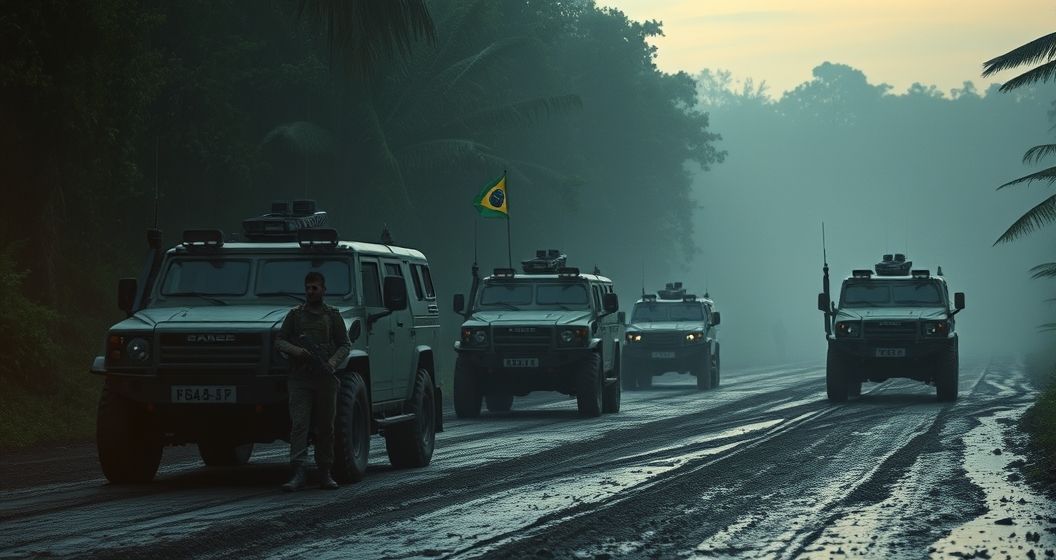
Brazil is significantly increasing its military presence along its northern border with Venezuela in response to rising regional tensions. The move comes as Venezuela escalates its long-standing territorial claim over the Essequibo region, a vast and oil-rich area that constitutes more than two-thirds of neighboring Guyana. The Brazilian Ministry of Defence confirmed the deployment of additional troops and armored vehicles to the state of Roraima, which shares a border with both nations, to guarantee the inviolability of its territory.
A Proactive Defense Strategy
The Brazilian Army’s actions are described as a preventative measure aimed at bolstering security and preventing the conflict from spilling over into Brazilian territory. The 1st Jungle Infantry Brigade is leading the operation, with reports indicating the movement of Guaicuru armored vehicles and other military assets to the border city of Pacaraima. This strategic reinforcement is designed not as an act of aggression but to ensure that the border remains secure and to deter any potential use of Brazilian land by Venezuelan forces in a possible move against Guyana.
The Essequibo Dispute Explained
The core of the tension is the Essequibo territory, which has been administered by Guyana for over a century but is claimed by Venezuela. The dispute has intensified recently, particularly after significant offshore oil discoveries were made in the region. Venezuela recently held a controversial referendum in which voters purportedly approved the creation of a new Venezuelan state within the Essequibo region, a move that Guyana and the international community have widely condemned as a step toward annexation and a violation of international law.
Diplomatic Channels Remain Open
While reinforcing its military posture, the Brazilian government has simultaneously emphasized the need for a peaceful and diplomatic resolution. Officials have been in contact with both the Venezuelan and Guyanese governments, urging dialogue and de-escalation. Brazil’s position, shared by other South American nations, is that the controversy should be settled through legal means, preferably at the International Court of Justice, which is already hearing the case. The diplomatic efforts aim to prevent a military conflict that could destabilize the entire region.
Local Impact and Regional Concerns
The military buildup has a direct impact on the residents of Roraima, a state already dealing with the complexities of the Venezuelan migrant crisis. The increased military presence brings both a sense of security and anxiety about the potential for conflict nearby. For the wider South American continent, the dispute poses a significant threat to regional stability. Brazil, as a regional power, is taking a leading role in containing the crisis, balancing its national security interests with its commitment to peaceful coexistence and diplomacy among its neighbors.


