
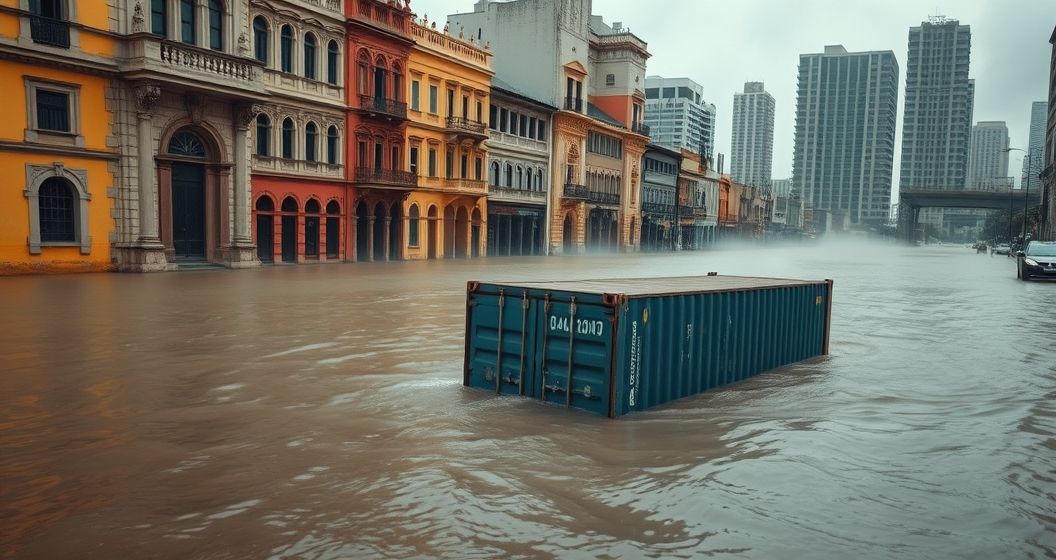
Brazil is currently navigating a period of significant challenge, marked by a devastating environmental disaster in the south and contentious economic reforms being debated in the capital. The catastrophic flooding in Rio Grande do Sul has created a humanitarian crisis, while the government’s proposed tax changes are generating widespread concern across multiple business sectors. These events unfold against a backdrop of persistent economic uncertainty, placing the nation at a critical juncture.
Catastrophic Flooding Hits Southern Brazil
The state of Rio Grande do Sul is experiencing one of the worst climate disasters in its history. Unprecedented rainfall has led to severe flooding, displacing hundreds of thousands of people and causing widespread destruction of homes, infrastructure, and agricultural land. The human toll is immense, with communities completely submerged and rescue operations continuing under difficult conditions. The economic impact is expected to be substantial, affecting the region’s vital agribusiness sector and supply chains across the country.
The federal and state governments are mobilizing resources for emergency response and long-term recovery. However, the scale of the devastation presents a formidable challenge. Experts point to this event as a stark warning of the increasing frequency and intensity of extreme weather events linked to climate change, highlighting the urgent need for more robust infrastructure and preventative policies to mitigate future disasters.
Government Advances Controversial Tax Reform
Simultaneously, the federal government is pushing forward with a significant tax reform measure, specifically targeting the PIS/Cofins social contributions. The proposed change, outlined in a provisional measure, aims to alter how tax credits are used by companies, effectively limiting their ability to offset these federal taxes. The government argues the move is necessary to compensate for other tax breaks and maintain fiscal balance, projecting it will boost revenue significantly.
Potential Impact on Key Sectors
The proposal has been met with strong opposition from various industries, including agribusiness, pharmaceuticals, and fuel distribution. Business leaders warn that restricting tax credits will lead to increased operational costs. This financial pressure could ultimately be passed on to consumers through higher prices for goods and services, potentially fueling inflation and creating a more challenging business environment for both large corporations and small enterprises.
Navigating an Unstable Economic Climate
These developments are occurring within a complex economic context. While inflation has shown signs of moderation, concerns remain about the government’s fiscal trajectory and its ability to control spending. The Central Bank continues to carefully manage monetary policy to balance inflation control with economic growth. The outcome of the tax reform debate and the financial cost of the southern floods will be critical factors shaping Brazil’s economic stability in the coming months.
In conclusion, Brazil is grappling with a dual crisis. The immediate humanitarian and economic fallout from the floods requires urgent attention and massive investment. At the same time, the nation is engaged in a pivotal debate over its fiscal future, with proposed tax changes threatening to impact industries and consumers alike. How the country’s leadership addresses these interconnected challenges will define its path forward.


