
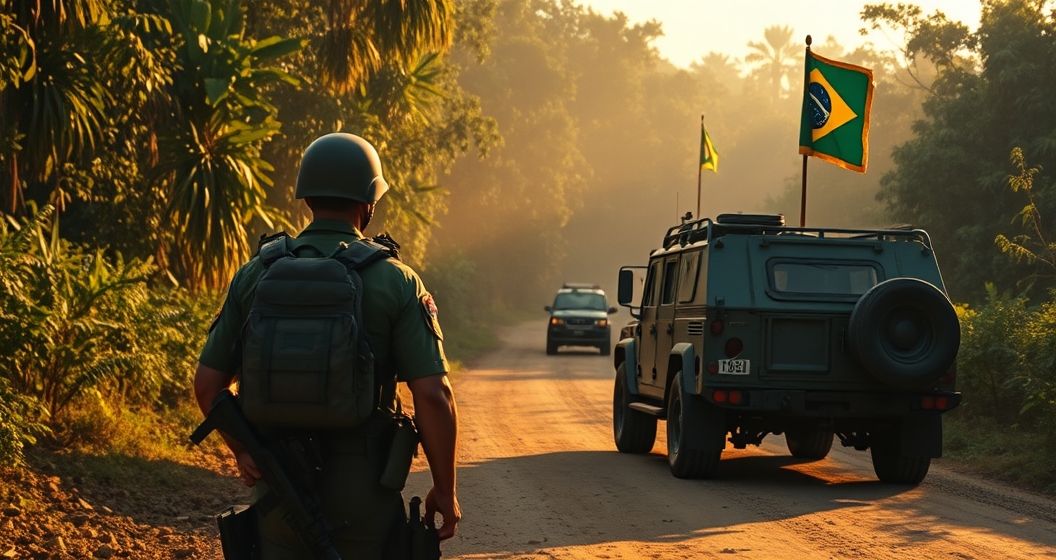
Brazil’s government has significantly increased its military presence along the border with Venezuela in the state of Roraima. This move is a direct response to heightened regional tensions stemming from the territorial dispute between Venezuela and Guyana over the Essequibo region. The reinforcement aims to safeguard national sovereignty while managing an already complex humanitarian situation at the border, ensuring the area is not used for any potential military incursions.
Military Reinforcements in Roraima
The Brazilian Army has deployed additional troops and armored vehicles to key points near the border city of Pacaraima. This strategic buildup includes multi-purpose armored vehicles and specialized jungle warfare units. The primary objective is to intensify surveillance and control over the border, preventing any spillover from the Essequibo conflict and asserting Brazil’s territorial integrity. Officials have stated the measures are precautionary and defensive in nature, designed to protect national interests without escalating the situation.
This deployment is part of a broader strategy to enhance security across the nation’s northern frontier. The military’s enhanced presence is intended to send a clear message that Brazil’s borders are secure and that any attempt to use its territory as a staging ground for conflict will not be tolerated. The focus remains on monitoring and intelligence gathering to anticipate any potential threats before they materialize, ensuring a proactive defense posture.
The Humanitarian Crisis Deepens
While the military focus grows, the long-standing humanitarian crisis in Roraima continues to be a major concern. The city of Pacaraima remains a primary entry point for thousands of Venezuelan migrants and refugees fleeing economic hardship. The increased militarization presents new challenges for humanitarian organizations working in the region, who must now navigate heightened security protocols while providing essential services like food, shelter, and medical care to vulnerable populations.
Impact on Indigenous Communities
The border region is home to several indigenous communities, including the Yanomami people, who are particularly vulnerable to regional instability. The increased military traffic and potential for conflict threaten their traditional lands and way of life. Leaders have expressed concern that the geopolitical tensions could exacerbate existing problems, such as illegal mining and environmental degradation, further endangering their communities. The government is tasked with protecting these groups while securing the border.
Brazil’s Diplomatic Stance
In parallel with its military actions, the Brazilian government is actively pursuing a diplomatic path. The Lula administration has consistently called for a peaceful resolution to the Essequibo dispute, emphasizing dialogue and adherence to international law. Brazil has positioned itself as a neutral party seeking to de-escalate tensions, engaging with both Venezuelan and Guyanese officials to promote stability in South America and avoid armed conflict in its backyard. This dual approach underscores the complexity of the situation.
Ultimately, Brazil’s strategy at its northern border is multifaceted. It combines a firm show of defensive military strength to protect its sovereignty with an ongoing diplomatic effort to foster peace. The government faces the delicate task of balancing national security interests with the pressing humanitarian needs of a volatile region, all while working to prevent a wider conflict that could destabilize the entire continent.


