
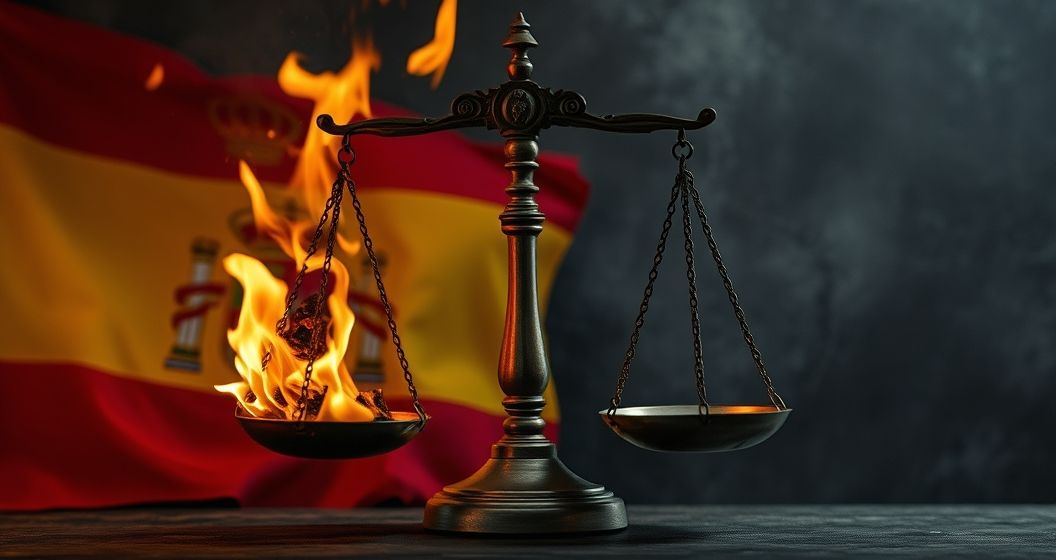
Spain’s political landscape is facing a period of intense turmoil, driven by two critical and polarizing issues. The government is navigating the final stages of a controversial amnesty law for Catalan separatists while simultaneously grappling with a widening corruption investigation known as the “Caso Koldo,” creating a deeply fractured and tense atmosphere in the nation’s capital.
The Contentious Amnesty Law Nears Approval
At the heart of the political debate is the amnesty law, a key component of the agreement that allowed Prime Minister Pedro Sánchez’s Socialist Party (PSOE) to form a government. The legislation aims to pardon individuals involved in the Catalan independence movement. Supporters argue it is a necessary step towards reconciliation and de-escalating regional tensions, paving the way for a more stable political dialogue between Madrid and Catalonia.
However, the law has faced fierce opposition from conservative and right-wing parties, including the People’s Party (PP) and Vox. Critics contend that it undermines the rule of law, creates inequality among Spanish citizens, and legitimizes illegal actions taken during the 2017 independence referendum. The bill’s journey through parliament has been fraught with challenges, but it is now approaching its final vote, a moment that will significantly impact the government’s stability.
“Caso Koldo” Corruption Probe Shakes the Government
Compounding the government’s challenges is the “Caso Koldo,” a corruption scandal involving alleged kickbacks on contracts for face masks during the pandemic. The investigation centers on Koldo García, a former aide to a Socialist minister, and has led to accusations of illicit enrichment and influence peddling. The probe has cast a shadow over the PSOE, providing potent ammunition for the opposition.
Political Fallout and Calls for Accountability
The People’s Party has seized upon the scandal, demanding transparency and calling for high-level resignations. The case has dominated parliamentary debates, with the opposition accusing the government of widespread corruption and a lack of moral authority. The government, in turn, has pledged full cooperation with the judicial investigation while attempting to contain the political damage and distance itself from those implicated in the wrongdoing.
A Climate of Heightened Polarization
The convergence of the amnesty law debate and the “Caso Koldo” investigation has pushed political polarization to new heights. Each issue feeds the other, with the opposition using the corruption scandal to question the government’s legitimacy as it pushes through the divisive amnesty bill. This toxic environment is characterized by heated rhetoric in parliament, public protests, and a deepening sense of division among the electorate, making cross-party cooperation on other national issues nearly impossible.
As both situations continue to unfold, Spain’s political future hangs in the balance. The final approval of the amnesty law will be a critical test for the ruling coalition, while the expanding corruption probe threatens to further erode public trust and destabilize the government. The coming weeks are set to be decisive in shaping the country’s political direction.