
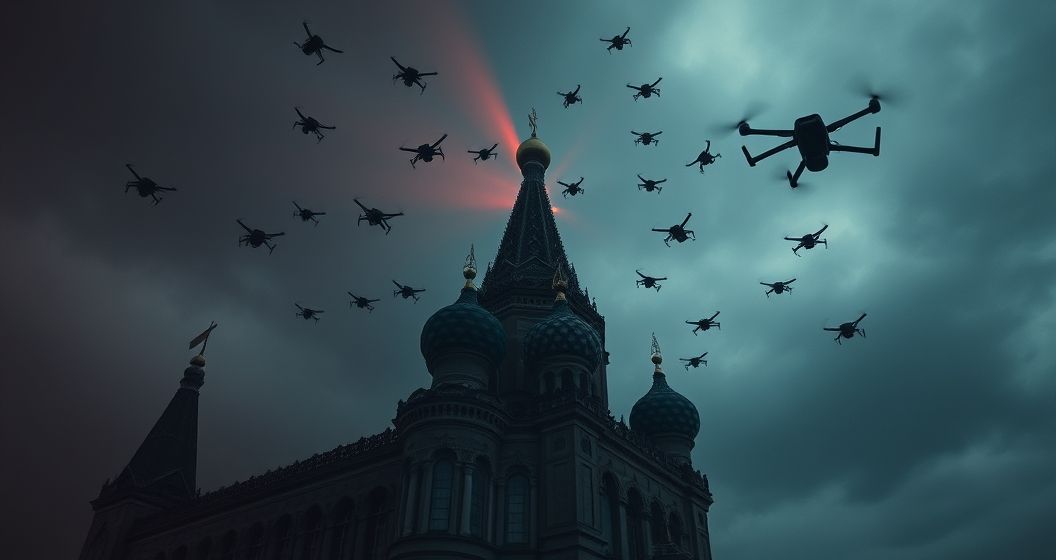
Russia is currently grappling with a series of complex challenges, including significant cross-border drone attacks targeting its western regions. In response, the Kremlin has intensified its defensive measures while also addressing fresh economic pressure from international sanctions. Moscow continues to fortify its economic resilience and adapt its foreign policy, signaling a determined stance against what it describes as hostile actions from the West and its allies.
Major Drone Assault Targets Key Regions
Recent reports from Russian officials indicate a substantial increase in unmanned aerial vehicle (UAV) attacks, primarily targeting infrastructure in regions bordering Ukraine. Areas such as Belgorod and Kursk have reportedly been subjected to sustained drone waves, testing the capabilities of local air defense systems. The Ministry of Defence has stated that the majority of incoming drones were successfully intercepted, preventing more extensive damage.
Local authorities have been providing updates on the situation, confirming damage to some non-critical civilian infrastructure and industrial facilities. Emergency services were deployed to manage the aftermath and ensure public safety. These incidents have prompted a heightened state of alert in border regions, with officials reassuring residents that all necessary measures are being taken to protect them from further attacks and disruptions.
Economic Strategy Amidst New Sanctions
On the economic front, Russia is navigating another round of international sanctions aimed at key sectors of its economy. The new measures target financial institutions, technology imports, and energy exports, seeking to limit Moscow’s revenue streams. In response, Russian economic policymakers have reiterated their commitment to a strategy of import substitution and strengthening trade ties with non-Western partners.
Officials from the Central Bank and Ministry of Finance have emphasized the resilience of the Russian economy, pointing to stable macroeconomic indicators. The government’s focus remains on fostering domestic production and creating parallel financial systems to bypass the restrictions. This approach is part of a broader, long-term strategy to insulate the economy from external pressures and enhance its self-sufficiency.
Adapting Foreign Policy and Trade
In parallel with its economic adjustments, the Kremlin is actively pursuing a foreign policy centered on strengthening alliances outside of the Western sphere. Diplomatic engagements with nations in Asia, Africa, and Latin America have been intensified. This includes promoting trade in national currencies and developing alternative logistics routes to circumvent sanction-related obstacles and build a more multipolar global economic order.
Kremlin Reaffirms Strategic Stance
The official rhetoric from Moscow remains firm and defiant. Government spokespeople have characterized the drone attacks as “terrorist acts” and the sanctions as an illegitimate form of economic warfare. Russia’s leadership has communicated to both its domestic and international audiences that it will not alter its strategic objectives due to external pressure, signaling a readiness for a prolonged period of confrontation.
In conclusion, Russia is managing a multi-front challenge that combines direct military threats with sustained economic pressure. The government’s response is multifaceted, involving enhanced military defenses, economic adaptation, and a strategic pivot in its foreign policy. These developments underscore a period of heightened tension and reflect Moscow’s ongoing efforts to assert its interests on the global stage.


