
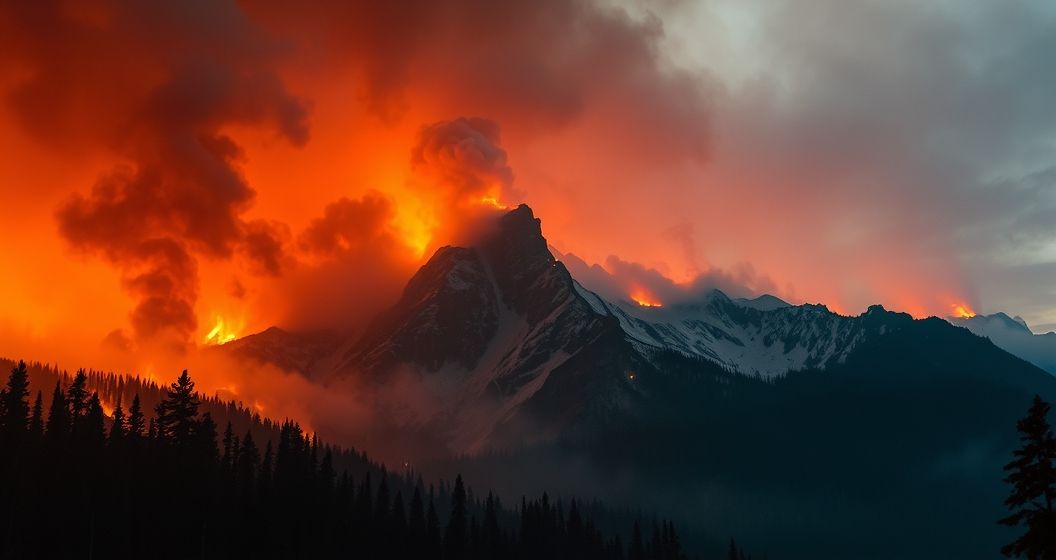
An early and aggressive start to the wildfire season is forcing thousands of residents in Western Canada from their homes, as multiple out-of-control blazes challenge firefighting resources. British Columbia and Alberta are bearing the brunt of the intense conditions, with large-scale evacuations underway and thick smoke causing hazardous air quality across vast regions. Officials are warning that a long and difficult summer may lie ahead due to persistent drought and unfavorable weather patterns.
State of Emergency in British Columbia
In northeastern British Columbia, the situation has become critical, particularly around the community of Fort Nelson. The fast-moving Parker Lake fire has prompted a mandatory evacuation order for the town and surrounding areas, displacing thousands of residents. The blaze, fueled by strong winds and dry conditions, grew rapidly, forcing officials to declare a local state of emergency to coordinate response efforts and ensure public safety. Crews are working tirelessly to establish containment lines, but the fire’s unpredictable behavior remains a significant concern.
Alberta on High Alert Near Fort McMurray
Meanwhile, in Alberta, communities near Fort McMurray are on high alert as a wildfire burns dangerously close. Evacuation alerts have been issued for several neighborhoods, bringing back difficult memories of the devastating 2016 wildfire that destroyed large parts of the city. While the current fire is smaller, its proximity to residential areas and the volatile weather have put authorities on high alert. Resources are being heavily mobilized to prevent the fire from reaching the community, with air tankers and helicopters supporting ground crews in their suppression efforts.
Widespread Air Quality Concerns
The impact of the fires extends far beyond the immediate flames. Thick plumes of smoke have blanketed large parts of Western Canada, drifting into the prairie provinces and even crossing the border into the United States. This has led to widespread air quality advisories, with health officials urging residents, especially those with respiratory conditions, the elderly, and children, to remain indoors. The smoke has reduced visibility and created hazardous breathing conditions in major cities, highlighting the far-reaching consequences of these intense wildfires.
A Challenging Season Ahead
Experts point to a combination of severe drought, low humidity, and strong winds as the primary drivers behind the season’s intense start. Below-average snowpack over the winter has left forests exceptionally dry and vulnerable to ignition. Fire officials are stressing the importance of public vigilance and adherence to fire bans. With forecasts predicting continued warm and dry weather, the coordinated response between provincial and federal agencies will be crucial in managing what is shaping up to be a very challenging wildfire season for the country.


