
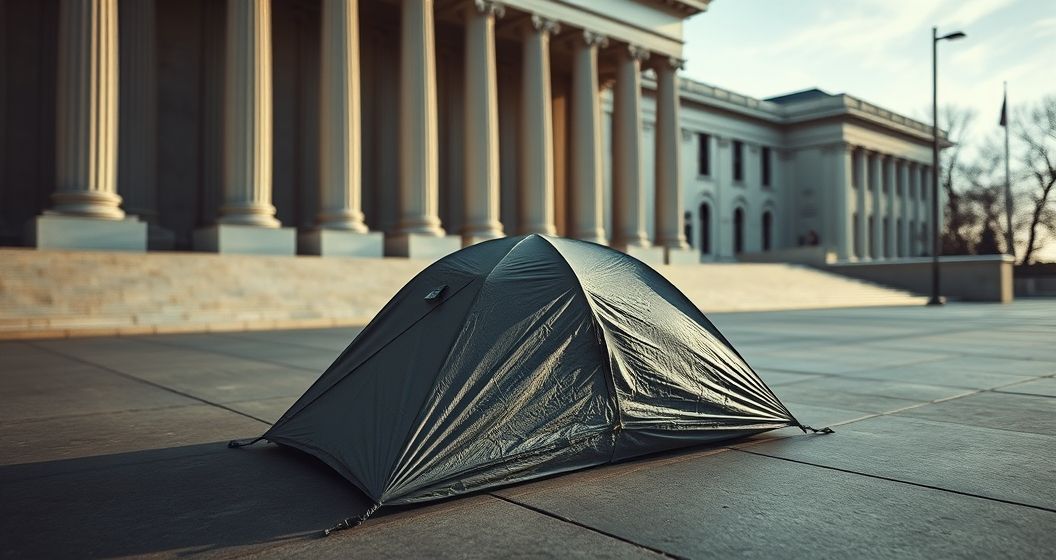
In a landmark decision with far-reaching implications, the Supreme Court has ruled that cities can enforce bans on sleeping or camping in public spaces. The ruling addresses a critical legal question that has divided communities across the nation, particularly in Western states where homelessness has visibly increased. This decision empowers local governments to manage public areas more strictly but has also sparked intense debate among civil rights advocates and policymakers about the treatment of unhoused individuals.
The Core of the Grants Pass Ruling
The case, City of Grants Pass v. Johnson, centered on an ordinance in the Oregon city that fined people for sleeping in public parks and other areas with basic bedding materials. The Supreme Court, in a 6-3 decision, sided with the city, overturning a lower court’s ruling. The majority opinion argued that such ordinances do not constitute “cruel and unusual punishment” under the Eighth Amendment, provided there is somewhere for individuals to go. This shifts the legal landscape, giving cities more authority to clear encampments from sidewalks, parks, and other public property.
Immediate Impact for Local Governments
Following the ruling, local officials in many municipalities are expected to either enact new ordinances or more aggressively enforce existing ones. Proponents of the decision argue it is a necessary tool to restore public order, safety, and hygiene in shared spaces. They contend that large encampments can pose health risks and deter public use of parks and other facilities. This legal clarity allows them to act without the immediate threat of federal lawsuits that have previously stalled such efforts. The focus now shifts to what alternatives, such as shelters or designated camping areas, cities will provide.
Dissent and Concerns Over Criminalization
The court’s three liberal justices issued a strong dissent, arguing that the ruling effectively criminalizes the status of being homeless. Justice Sonia Sotomayor wrote that punishing people for sleeping outdoors when they have no safe alternative is both cruel and illogical. Advocacy groups for the homeless have echoed these concerns, stating that fines and arrests create barriers to employment and housing, trapping individuals in a cycle of poverty. They argue the focus should be on supportive housing and services, not punitive measures.
A Deepening National Debate
The Supreme Court’s decision does not solve the underlying causes of homelessness, but it fundamentally alters how the issue is managed at the local level. The ruling has been praised by some political leaders as a restoration of local control, while others have condemned it as an inhumane step backward. This legal precedent is expected to trigger a new wave of policy debates and legal challenges in states and cities as they navigate the complex intersection of public safety, property rights, and humanitarian responsibility.
Ultimately, the long-term effects of this decision will depend on how individual cities choose to act. While some may use it to simply displace homeless populations, others may be spurred to invest more heavily in shelter capacity and comprehensive support systems. The national conversation on how to address one of the country’s most pressing social issues has now entered a new and contentious chapter.