
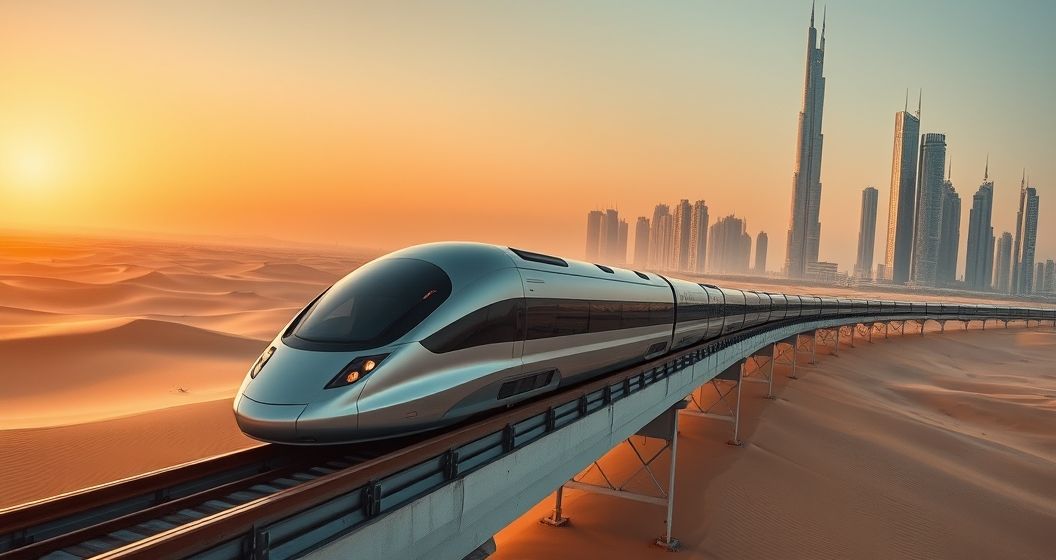
The United Arab Emirates is advancing its ambitious national railway project, a strategic initiative designed to revolutionize logistics and transportation across the country. The Etihad Rail network is rapidly expanding, connecting key industrial hubs, ports, and cities. This development is not just about laying tracks; it represents a fundamental shift in the nation’s infrastructure, promising significant economic growth, enhanced supply chain efficiency, and a more sustainable future for transport.
A New Era of National Transportation
Etihad Rail marks a transformative step in the UAE’s infrastructure journey. The project aims to create a comprehensive rail network that serves as the backbone of the national transport system. By linking major economic zones, from Ghuweifat on the border with Saudi Arabia to the ports of Fujairah, the railway facilitates the seamless movement of goods. This initiative is critical for reducing reliance on road transport, easing traffic congestion, and providing a more reliable and cost-effective solution for freight and logistics companies operating within the region.
Driving Economic and Logistical Growth
The economic implications of the national railway are vast. By providing a direct link between industrial production centers and export hubs, the network drastically improves supply chain efficiency. Businesses can move raw materials and finished products faster and at a lower cost, boosting competitiveness. This infrastructure is a powerful enabler for key sectors, including manufacturing, construction, and trade, supporting the UAE’s long-term economic diversification goals. The project is expected to contribute billions to the national GDP by optimizing logistics and creating new commercial opportunities.
Sustainability and a Future Vision
Beyond its economic benefits, the Etihad Rail project is strongly aligned with the UAE’s sustainability commitments. Rail transport generates significantly lower carbon emissions compared to heavy-duty trucks, contributing directly to the nation’s Net Zero by 2050 strategic initiative. The development also lays the groundwork for a future passenger service, which will offer a fast, safe, and eco-friendly alternative for travel between the Emirates. This forward-thinking approach positions the UAE as a leader in developing integrated and sustainable public transport systems for future generations.
Connecting Industries and Communities
At its core, the railway is a project of unification. It physically connects the diverse Emirates, fostering greater integration and collaboration between them. From the industrial heartlands of Abu Dhabi to the bustling ports of Dubai and the northern Emirates, the network creates a cohesive economic corridor. This connectivity provides a robust platform for industries to thrive, ensuring that resources and goods can be distributed efficiently across the country. It reinforces the UAE’s status as a global logistics and trade hub by strengthening its internal transport infrastructure to world-class standards.
In conclusion, the UAE’s national railway is far more than an infrastructure project. It is a strategic investment in the nation’s future, designed to bolster economic resilience, promote environmental sustainability, and enhance connectivity. As the network becomes fully operational, it will redefine the landscape of trade and transport in the UAE for decades to come.
