
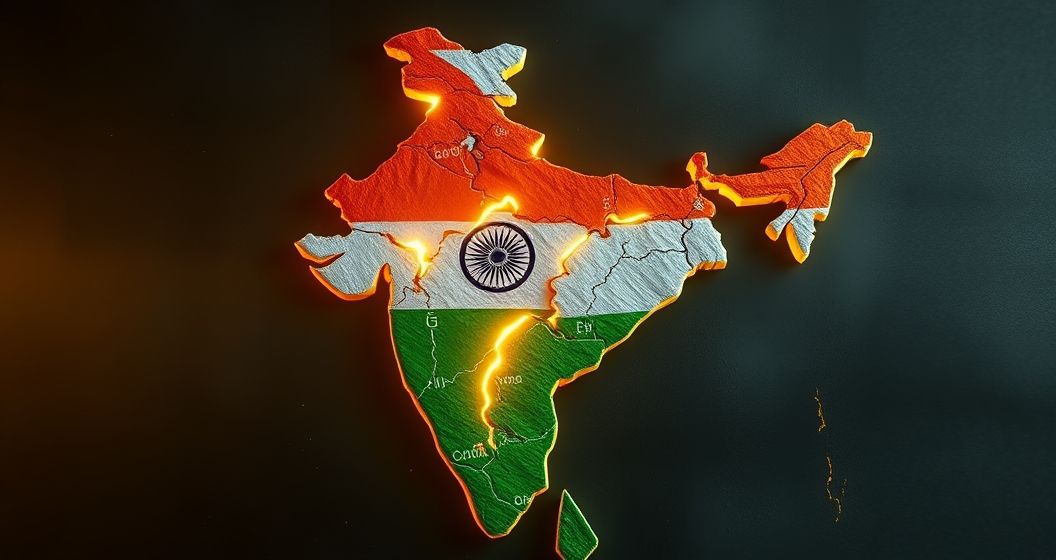
India’s political and economic landscape is experiencing significant shifts following the conclusion of the general election. While the ruling NDA coalition secured a majority, the results have reshaped parliamentary dynamics. Concurrently, the Reserve Bank of India announced a key monetary policy decision, while severe heatwaves continue to challenge several northern states, impacting daily life and infrastructure. These developments highlight a period of transition and challenge for the nation.
Election Results Redefine Political Power
The 2024 general election results have delivered a surprising mandate, ushering in a new era of coalition politics. The National Democratic Alliance (NDA), led by the Bharatiya Janata Party (BJP), crossed the majority mark to form the government. However, the BJP fell short of securing an absolute majority on its own, a significant change from its previous landslide victories. This outcome makes the party reliant on its coalition partners to maintain a stable government.
This reliance on allies like the Telugu Desam Party (TDP) and Janata Dal (United) is expected to influence policy-making and governance. The opposition, consolidated under the INDIA bloc, performed significantly better than anticipated. Their increased seat count strengthens their position in parliament, promising a more robust and vocal opposition. The results are being interpreted as a call for a more consultative and inclusive approach to governance from the electorate.
RBI Holds Key Interest Rate Steady
Amidst the political developments, the Reserve Bank of India (RBI) provided a sense of economic stability. The Monetary Policy Committee (MPC) announced its decision to keep the benchmark repo rate unchanged at 6.5 percent for the eighth consecutive time. This move was widely expected by economists and market analysts, signaling the central bank’s continued focus on controlling inflation while supporting sustainable economic growth.
The RBI Governor highlighted that the fight against inflation is not yet over, and the committee remains committed to bringing it down to the target of 4 percent. On a positive note, the central bank revised its GDP growth forecast for the fiscal year upwards to 7.2 percent from the previous 7 percent. This optimistic projection suggests confidence in the underlying strength and resilience of the Indian economy despite global uncertainties.
Extreme Heatwave Grips Northern India
While political and economic news dominates headlines, a severe environmental crisis continues to unfold across northern India. Several states, including Delhi, Rajasthan, Uttar Pradesh, and Punjab, are reeling under an intense heatwave with temperatures soaring to record levels. The extreme weather has disrupted daily life, posing significant health risks, particularly for vulnerable populations, and leading to water shortages and power outages.
Authorities have issued red alerts and advisories, urging people to stay indoors during peak afternoon hours and take precautions against heat-related illnesses. The prolonged heatwave is also placing immense strain on the country’s infrastructure, especially the power grid, as the demand for cooling has surged. This recurring climate event underscores the urgent need for effective climate adaptation and mitigation strategies.
In summary, recent events paint a complex picture of the nation. The election has ushered in an era of coalition politics, the central bank continues its cautious approach to economic management, and extreme weather events highlight pressing environmental challenges facing the country.
