
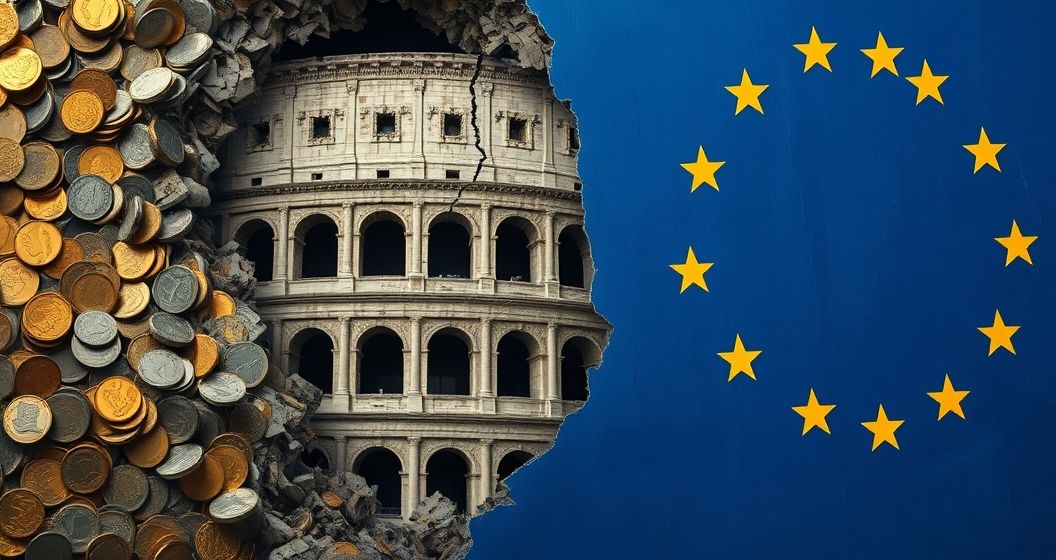
Italy’s government is navigating a complex economic landscape, defined by the drafting of its new budget law and ongoing discussions with the European Union. Key debates focus on fiscal responsibility, social welfare measures, and strategies to stimulate growth. These decisions come at a critical time, as households and businesses continue to face significant cost-of-living pressures, making the government’s next steps crucial for the nation’s short-term stability and long-term economic health.
The Core of the New Budget Law
At the heart of the current political debate is the government’s annual budget law, a document that outlines its fiscal priorities. A central theme is the attempt to provide financial relief to families and businesses without increasing the national debt. Proposals often include extensions of tax cuts on labour, known as the “tax wedge,” which aim to increase workers’ net pay. This measure is seen as a key tool to combat the effects of inflation on household purchasing power.
However, drafting this budget is a delicate balancing act. Limited public funds mean that every allocation requires difficult choices. Resources are needed for critical sectors like healthcare, pensions, and public infrastructure. The government must therefore find a way to finance its priority measures while adhering to a path of fiscal prudence, a challenge that has sparked intense debate among political parties and economic analysts alike.
Balancing Domestic and European Demands
Adding another layer of complexity are Italy’s obligations to the European Union. The country is under pressure to align its fiscal policy with the EU’s recently reformed Stability and Growth Pact, which sets limits on member states’ budget deficits and public debt. These rules require a cautious approach to public spending, potentially limiting the scope of expansive measures the government might wish to introduce to support the economy.
Furthermore, Italy is a major beneficiary of the EU’s post-pandemic recovery fund (PNRR). Accessing these crucial funds is conditional on implementing a series of agreed-upon reforms and investment targets. Therefore, the government must demonstrate consistent progress on this front, ensuring that its domestic policy choices do not jeopardize this vital flow of European investment, which is essential for modernizing the country.
Public Reaction and Social Impact
The economic decisions being made in Rome are being closely watched by the public. Persistently high costs for energy, groceries, and other essentials remain a primary concern for millions of Italians. Consequently, there is significant public expectation for the budget to provide tangible relief. Trade unions and consumer associations have been vocal, calling for more substantial interventions to protect wages and support low-income households against inflation.
Opposition parties have also entered the debate, criticizing the government’s approach as insufficient and proposing alternative solutions. This has created a charged political atmosphere, where economic policy becomes a central battleground for competing visions of the country’s future. The government’s ability to communicate its strategy and convince the public of its effectiveness will be key to maintaining social and political stability.