
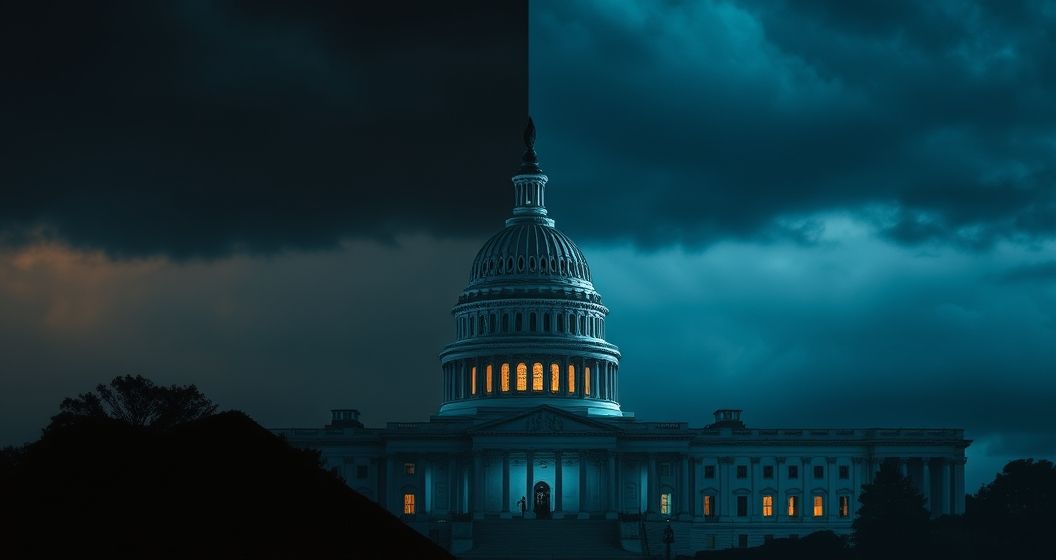
The United States government is on the brink of a potential shutdown as lawmakers in Congress struggle to reach an agreement on federal funding. With a critical deadline fast approaching, intense negotiations are underway to pass essential spending bills. A failure to secure a deal would halt non-essential government services, impacting millions of federal employees and the public. The current deadlock highlights deep divisions over spending levels and national priorities.
The Core of the Disagreement
The primary conflict revolves around disagreements on the federal budget for the upcoming fiscal year. A faction of House Republicans is demanding significant spending cuts and policy changes, putting them at odds with both Democrats and some of their own party members. These demands have complicated the passage of the twelve individual appropriation bills required to fund government agencies. The Senate, operating with a bipartisan approach, has advanced its own versions of the bills, creating a legislative standoff between the two chambers.
Key points of contention include funding for international aid, border security policies, and spending levels for various domestic programs. The narrow majority in the House of Representatives gives a small group of lawmakers considerable leverage, making it difficult for leadership to build a consensus. This internal party friction is a major hurdle that must be overcome to avert a shutdown.
Economic and Social Consequences
A government shutdown would have wide-ranging and immediate consequences. Hundreds of thousands of federal workers would be furloughed, meaning they would be sent home without pay. While essential services like national security and air traffic control would continue, many other operations would cease. National parks and museums would likely close, and administrative functions, such as processing passports and business permits, would be suspended.
Federal Workers and Public Services
The economic impact extends beyond federal employees. Government contractors could see payments delayed, and local economies that rely heavily on a federal presence would suffer. The uncertainty created by a shutdown can also negatively affect financial markets and overall business confidence. For the public, it means potential disruptions to services they rely on, from federal loan processing to scientific research operations.
Navigating a Path Forward
To avoid a full shutdown, lawmakers are considering a short-term solution known as a continuing resolution (CR). A CR would extend current funding levels for a limited period, giving negotiators more time to finalize a long-term budget agreement. However, even passing a temporary measure is proving to be a significant challenge due to the same political divisions stalling the larger budget process.
As the deadline nears, pressure is mounting on congressional leaders to find a compromise. The coming days will be critical in determining whether the government can remain fully operational or if the nation will face the disruptive effects of another shutdown. The outcome will depend on last-minute negotiations and the willingness of all parties to reach a consensus for the sake of governmental stability.