
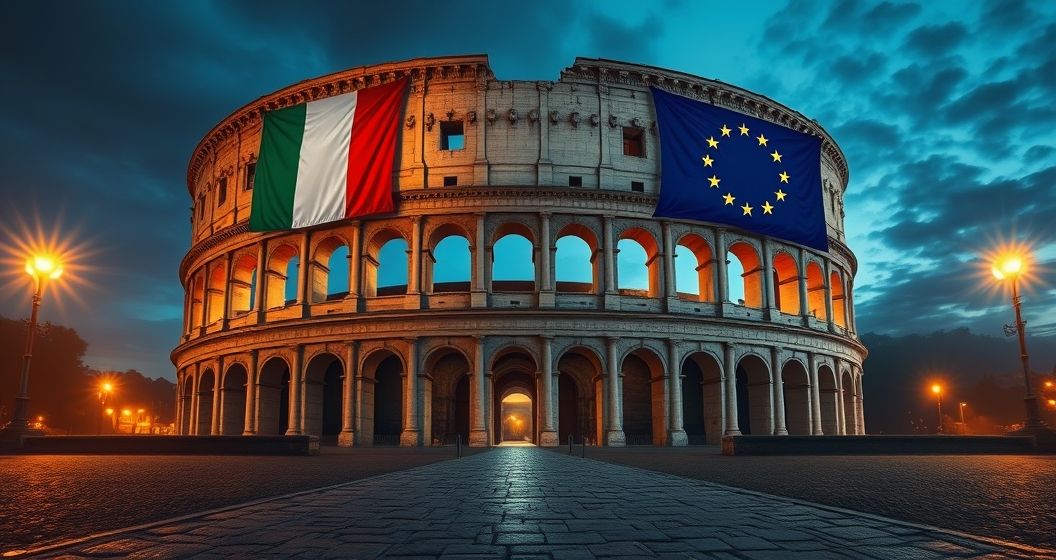
Italy is currently navigating a period of intense political activity, with the government’s reform agenda and the upcoming European elections dominating public discourse. Prime Minister Giorgia Meloni’s administration is pushing forward with significant constitutional changes while also positioning itself on the European stage. This has created a dynamic and often contentious environment, as opposition parties challenge the government’s direction on both domestic and international fronts, setting the stage for a crucial electoral test.
Election Tensions and Political Maneuvering
The campaign for the European elections is in full swing, serving as a major barometer of public opinion on the current government. Political leaders are engaged in heated debates, focusing on key issues such as economic policy, immigration, and Italy’s role within the European Union. The outcome is seen not just as a reflection of EU sentiment but as a domestic referendum on the Meloni government’s performance to date. The competition between the ruling coalition and opposition forces has intensified, with each side vying to gain momentum.
Analysts are closely watching the performance of all major parties. For the governing coalition, a strong result would solidify its mandate and provide political capital for its ambitious reform plans. For the opposition, particularly the Democratic Party led by Elly Schlein, the elections offer a critical opportunity to demonstrate a viable alternative and consolidate its support base. The political climate is charged with anticipation, as the results will undoubtedly shape the country’s political landscape for the foreseeable future.
The Contentious Constitutional Reform Agenda
At the heart of the government’s domestic policy is a proposed constitutional reform known as the “premierato,” which aims to introduce the direct election of the prime minister. Proponents, including Prime Minister Meloni, argue that this change would bring much-needed political stability to a country known for its frequent changes in government. They believe it would create a stronger executive, more accountable to the electorate and capable of implementing long-term policies without the threat of constant political crises.
However, the proposal has drawn fierce criticism from opposition parties and constitutional experts. Critics warn that the reform could concentrate too much power in the hands of the prime minister, potentially weakening the role of the President and the Parliament. They argue that it risks upsetting the delicate system of checks and balances established in the Italian constitution. This debate over the very structure of the republic has become a central point of contention in the national political arena.
Economic Challenges and European Funds
Underpinning the political debates are persistent economic challenges. While the government has projected a sense of stability, concerns over inflation, the cost of living, and national debt remain prominent. A key focus is the implementation of the National Recovery and Resilience Plan (PNRR), which relies on substantial EU funding to fuel economic growth and modernization. The effective and timely use of these funds is critical for Italy’s long-term economic health and is a major test for the administration.
The government’s ability to manage the economy and deliver on the PNRR’s ambitious projects is under constant scrutiny. Delays or inefficiencies could have significant economic and political repercussions. As such, economic performance is inextricably linked to voter sentiment, and it remains a pivotal issue in the ongoing political campaigns and public discourse leading up to the elections.


