
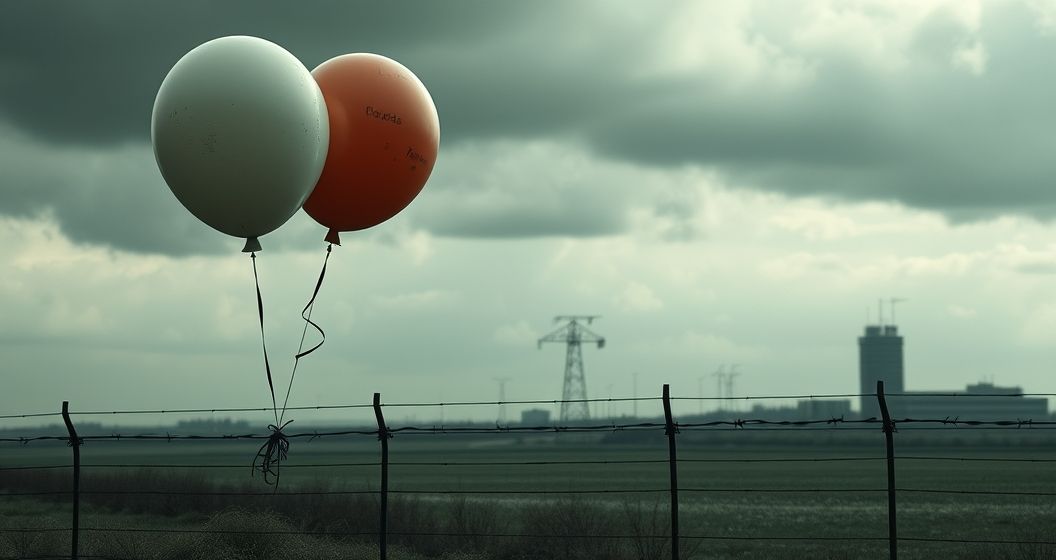
South Korea is navigating a period of heightened geopolitical and domestic pressure. The government has fully suspended a key 2018 military agreement with North Korea in response to Pyongyang’s campaign of sending trash-filled balloons across the border. This decisive security measure comes as the nation continues to grapple with a prolonged strike by junior doctors that has strained the healthcare system, alongside efforts to invigorate the economy through new strategic initiatives.
Tensions Escalate with North Korea
In a significant strategic shift, Seoul has suspended the 2018 Inter-Korean Military Agreement. The decision was a direct response to North Korea sending hundreds of balloons carrying trash and manure into the South. Officials in Seoul condemned the act as a “low-class” provocation and a violation of the armistice agreement. The suspension of the pact removes restrictions that have been in place for years, allowing the South Korean military to resume drills and other activities near the heavily fortified border.
The government stated that this move will enable a more immediate and robust response to any future North Korean provocations. Following the suspension, there is speculation that South Korea may restart propaganda broadcasts from loudspeakers aimed at the North, a psychological warfare tactic that Pyongyang has previously reacted to with extreme anger. The international community is closely watching these developments, concerned about a potential cycle of escalation on the Korean Peninsula.
Domestic Healthcare Crisis Continues
On the home front, the government is facing a persistent challenge from the ongoing walkout by thousands of junior doctors. The strike, which began months ago, is a protest against a government plan to significantly increase medical school admissions to address a doctor shortage in rural areas and essential fields. Despite repeated government pleas and threats of legal action, including license suspensions, the doctors have not returned to their posts.
The prolonged absence has placed immense strain on major hospitals, leading to cancelled surgeries and delayed treatments for patients. The government has implemented emergency measures, including deploying military doctors and allowing senior nurses to perform more procedures. However, the standoff continues with little sign of a resolution, creating a critical challenge for the nation’s public health infrastructure.
Focus on Economic Revitalization
Amid these pressing security and social issues, the government is also pushing forward with its economic agenda. New initiatives are being explored to bolster key industries, particularly the semiconductor sector, which is a cornerstone of the South Korean economy. The strategy focuses on securing supply chains, fostering innovation in advanced technologies like artificial intelligence, and increasing tax incentives for corporate research and development.
These economic policies aim to ensure South Korea maintains its competitive edge in the global market. The government’s approach reflects a dual focus: managing immediate crises while simultaneously laying the groundwork for long-term sustainable growth and stability in a rapidly changing global economic landscape.


