
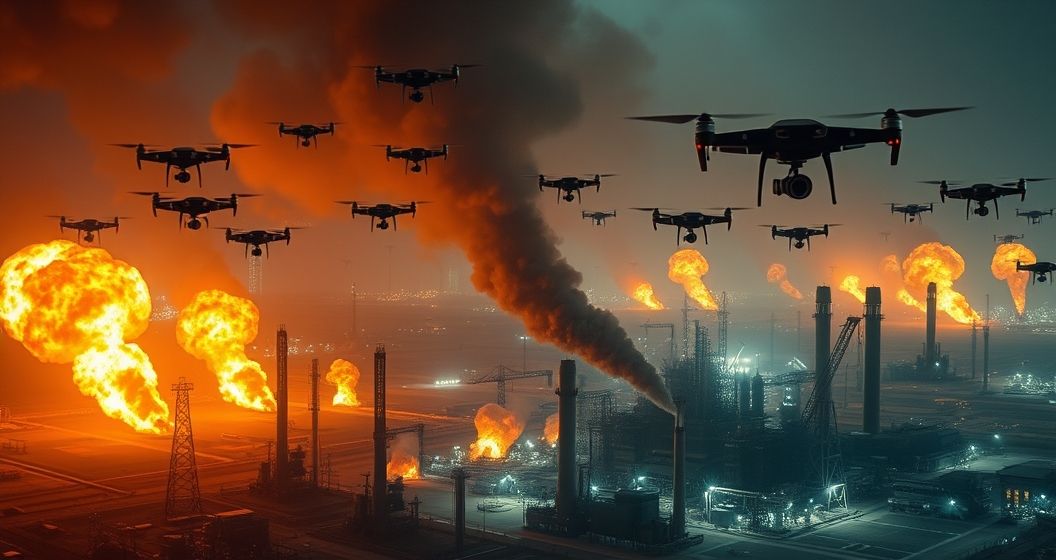
Russia’s Ministry of Defence has reported intercepting a large-scale wave of unmanned aerial vehicles (UAVs) over several of its southern and western regions. The overnight attacks primarily targeted energy infrastructure, testing the country’s air defence capabilities across a wide area. Local authorities confirmed a series of explosions and subsequent emergency responses as a result of the widespread aerial assault, which represents one of the most significant coordinated drone strikes in recent weeks.
Widespread Assault Across Multiple Oblasts
The drone attacks were recorded across several territories, including the Belgorod, Kursk, Voronezh, and Rostov regions. Governors and local officials in these areas issued alerts, urging residents to seek shelter as air defence systems were actively engaged throughout the night. The geographical scope of the assault indicates a sophisticated operation aimed at overwhelming Russian air defences by striking multiple locations simultaneously. Eyewitnesses reported sounds of explosions and the visible operation of anti-aircraft systems.
Energy Facilities Remain a Primary Target
A consistent pattern in these attacks has been the targeting of critical energy infrastructure. Reports from the ground indicated that several facilities, including oil depots and electrical substations, were hit. In some locations, fires broke out following direct impacts, requiring emergency services to be dispatched to contain the blazes and assess the damage. These strikes aim to disrupt Russia’s logistical capabilities and impact its economy by targeting key components of its fuel and energy sector, which are vital for both civilian use and military operations.
Assessing the Damage and Official Response
In the aftermath, regional authorities began to evaluate the extent of the damage. While official statements from the Ministry of Defence often claim high interception rates, governors in the affected regions provided more specific details about the consequences on the ground. Information regarding damage to industrial sites and residential buildings was shared through official channels. The response highlights the ongoing challenge for local administrations in protecting civilian areas and critical infrastructure from persistent aerial threats.
Air Defences Under Continuous Pressure
The scale and frequency of these drone attacks place continuous strain on Russia’s air defence network. The UAVs used are often small and fly at low altitudes, making them difficult to detect and intercept. This ongoing aerial campaign forces Russia to deploy significant anti-aircraft resources to protect its border regions and strategic sites deeper within its territory. The effectiveness of these defences is constantly being tested by evolving tactics and the sheer number of drones deployed in each wave.
This latest series of attacks underscores a critical dimension of the ongoing conflict, where long-range drone warfare has become a central tactic. The strikes not only cause physical damage but also create psychological pressure on the population in the targeted regions and demonstrate a persistent capability to strike deep within Russian territory, challenging claims of comprehensive air superiority and security.


