
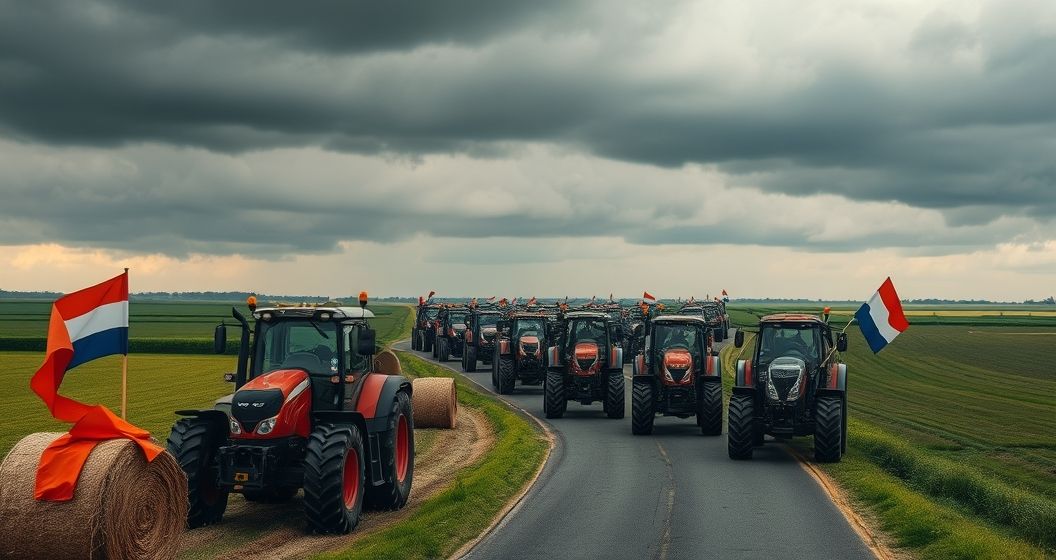
The Netherlands is once again gripped by widespread farmer protests as tensions escalate over the government’s stringent nitrogen emission policies. Farmers, feeling increasingly cornered by environmental regulations, have taken to the streets and highways, deploying tractors to block major routes and demonstrate their discontent. This wave of protests highlights a deep-seated struggle between agricultural interests and environmental protection goals, with significant economic and social implications for the nation.
The core of the issue lies in the mandated reduction of nitrogen oxide and ammonia emissions, aiming to protect vulnerable nature areas. However, farmers argue that the proposed measures threaten their livelihoods and the future of traditional Dutch agriculture. Recent developments include calls for new negotiations and potential compromises, yet the agricultural sector remains steadfast, demanding long-term certainty and viable alternatives. The ongoing saga keeps the nation on edge, with both sides seeking a sustainable path forward amidst environmental urgency and economic necessity.
Dutch Housing Nightmare: Will New Rent Caps Save Tenants?
#####
The Netherlands’ severe housing crisis continues to dominate headlines, with recent government proposals aimed at tackling soaring rental prices. Cities like Amsterdam, Utrecht, and Rotterdam have seen an unprecedented surge in rents, making affordable living a distant dream for many. The latest legislative push focuses on expanding rent control measures, specifically targeting mid-market rental properties, which currently fall outside existing regulations.
Under the proposed reforms, landlords could face stricter limits on rent increases, and a points system might be introduced to determine fair rental prices for a broader range of homes. While tenants’ unions and social advocates welcome these initiatives, property investors and landlords express strong concerns, warning that such interventions could stifle investment in new housing and ultimately worsen the supply shortage. The debate rages on, with the nation watching closely to see if these bold steps can genuinely improve housing affordability and ease the pressure on countless Dutch households.
Political Tensions Mount: Dutch Coalition Talks on the Brink?
#####
The formation of a new Dutch government is proving to be an arduous and complex task, with recent reports indicating significant hurdles and potential breakdowns in coalition talks. Following the November elections, key parties are grappling with ideological differences and policy disagreements, particularly on contentious issues such as immigration, climate change, and healthcare. The protracted negotiations are fueling uncertainty across the political landscape, leaving citizens eager for a stable governing coalition.
Insiders suggest that the negotiations between the VVD, PVV, NSC, and BBB are particularly challenging, with specific points of friction emerging around budget allocations and social policies. The current state of affairs raises questions about the long-term viability of a potential alliance and whether a majority government can be formed without further concessions or even a re-evaluation of potential partners. The coming weeks are critical for Dutch politics, as leaders attempt to bridge divides and forge a path towards a functional administration.
Wallet Shock: Why Dutch Groceries Are Still Breaking the Bank!
#####
Despite a gradual cooling of general inflation figures, Dutch consumers are still feeling the pinch at the supermarket, with grocery prices remaining stubbornly high. Recent data reveals that while energy costs have stabilized somewhat, the price of everyday essentials continues to rise, impacting household budgets across the country. This persistent inflation in food items is a major concern for many, especially lower-income families and those on fixed incomes.
Experts point to a combination of factors, including increased production costs for farmers, higher transport expenses, and global supply chain disruptions. Supermarkets are also facing pressure from rising wages and energy bills, which are inevitably passed on to consumers. The government has introduced some measures to alleviate the cost of living crisis, but many argue that more targeted support is needed to ensure basic necessities remain affordable. The struggle for financial stability continues to be a top priority for countless Dutch residents.
Dutch Healthcare on Brink? Nurses Sound Alarm Over Workload!
#####
The Dutch healthcare system is sounding the alarm, with frontline workers, particularly nurses, warning of an unsustainable workload and severe staff shortages. Hospitals and care institutions across the Netherlands are struggling to cope with an aging population, increased demand for care, and the lingering effects of the pandemic. This crisis is leading to increased burnout among staff, longer waiting lists for patients, and a tangible decline in the quality of care.
Recent reports highlight a critical lack of qualified personnel, with many experienced nurses leaving the profession due to immense pressure and inadequate compensation. Unions are calling for urgent government intervention, demanding better working conditions, higher wages, and robust recruitment strategies to attract new talent. The long-term stability of Dutch healthcare hangs in the balance, as policymakers grapple with finding sustainable solutions to ensure the well-being of both care providers and patients.