
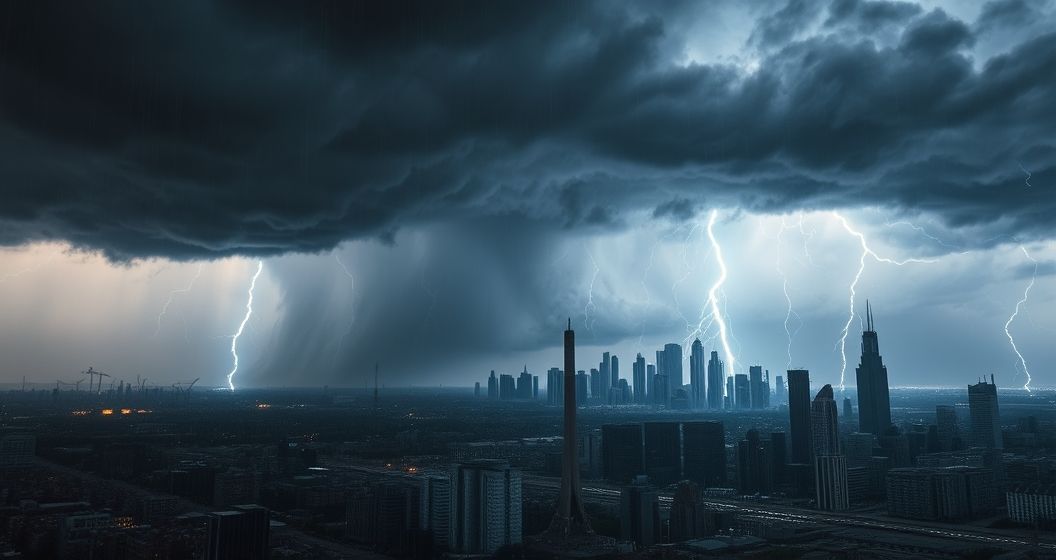
Germany, often seen as the economic powerhouse of Europe, is currently grappling with a confluence of formidable challenges. From persistent inflation to an ongoing energy crisis and intricate internal political dynamics, the nation finds itself at a pivotal juncture. The latest news from German media outlets paints a picture of a government and a populace striving to adapt to rapidly evolving global and domestic landscapes, all while maintaining a delicate balance within the European Union.
Germany’s Economic Tug-of-War: Inflation and Recession Fears
The **German economy** is undeniably feeling the squeeze of global inflationary pressures, exacerbated by geopolitical events. Recent data continues to show elevated consumer prices, significantly impacting household purchasing power and business confidence. The European Central Bank (ECB) has been aggressively hiking interest rates in an effort to tame inflation across the Eurozone, a move that, while necessary, also raises concerns about potential recessionary impacts. Businesses are facing higher borrowing costs, and consumers are tightening their belts, leading to a palpable sense of economic uncertainty. Experts are closely watching the upcoming economic forecasts, with many predicting a slowdown, if not a technical recession, in the coming quarters. The government is attempting to cushion the blow through various relief packages, but the long-term effectiveness of these measures remains a subject of intense debate.
The Energy Conundrum: Securing Winter and Beyond
Perhaps no challenge is more immediate and pressing for Germany than the **energy crisis**. The nation’s historic reliance on Russian gas has been starkly exposed, leading to frantic efforts to secure alternative supplies and implement energy-saving measures. The much-discussed “Gaspreisbremse” (gas price brake) is a central pillar of the government’s strategy, aiming to cap energy costs for households and businesses and prevent widespread bankruptcies and social unrest. However, the implementation details and the long-term financial implications of such a massive intervention are complex. Debates also rage about the future of nuclear power and coal, with environmental goals often clashing with immediate energy security needs. As winter approaches, the nation remains on high alert, with gas storage levels closely monitored and public campaigns urging reduced consumption. The move towards renewable energy is accelerating, but the transition is proving to be a monumental logistical and financial undertaking.
Coalition Conundrums: Navigating the Ampel’s Path
At the political heart of these challenges is Germany’s “Ampel” (traffic light) coalition, comprising the Social Democrats (SPD), the Greens, and the Free Democrats (FDP). This tripartite alliance, while united in many overarching goals, frequently finds itself in **tense internal debates** over specific policy directions. For instance, discussions around the national budget, social welfare reforms, and climate protection measures often highlight ideological differences between the parties. The FDP, championing fiscal discipline, often finds itself at odds with the SPD and Greens, who advocate for more extensive state intervention and social spending. These internal frictions, though common in coalition governments, are amplified by the severity of the current crises. Chancellor Olaf Scholz’s leadership is constantly being tested as he attempts to forge consensus and project a unified front both domestically and on the international stage. The success or failure of the Ampel coalition in navigating these turbulent waters will undoubtedly shape Germany’s trajectory for years to come.
In conclusion, Germany is facing a multifaceted test of its resilience and adaptability. The interplay between economic headwinds, energy insecurity, and the complexities of coalition governance demands astute leadership and robust solutions. How the nation responds to these concurrent crises will not only define its own future but also have significant ripple effects across the European Union and the wider global economy.


