
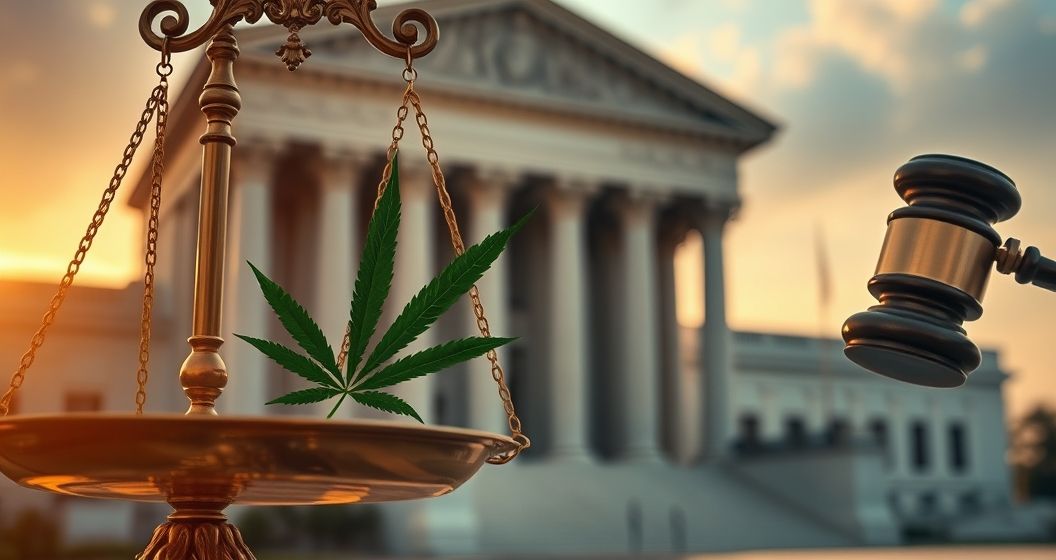
Brazil is on the cusp of a historic transformation in its drug policy, as the Supreme Federal Court (STF) has secured a majority vote to decriminalize the possession of marijuana for personal use. This landmark decision signals a significant departure from the country’s long-standing prohibitionist stance and could reshape its approach to drug-related offenses, focusing on public health rather than criminal punishment for users.
A Pivotal Moment for Drug Policy
The ruling, which has been deliberated by the court for nearly a decade, represents a critical juncture in the national debate on drug laws. The majority of justices agreed that criminalizing individuals for possessing small amounts of cannabis is unconstitutional. It is crucial to note that the court’s decision is for decriminalization, not full legalization. This means that while possessing marijuana for personal use will no longer carry the penalty of imprisonment, it will still be considered an illicit act, likely resulting in administrative sanctions such as warnings or community service.
This development aims to address the severe overcrowding in Brazilian prisons, a significant portion of which is attributed to minor drug offenses. Proponents of the change argue that the current law disproportionately affects poor and non-white individuals, who are more likely to be charged with trafficking even when caught with small quantities. By decriminalizing possession, the justice system can redirect its resources toward combating large-scale trafficking operations.
Defining the Line Between User and Trafficker
A central challenge for the STF following this majority vote is to establish a clear, quantitative threshold that distinguishes a personal user from a drug trafficker. The absence of such a guideline in current legislation has led to inconsistent and often discriminatory enforcement by police and lower courts. The justices are now tasked with defining a specific amount of cannabis that will be legally considered for personal consumption, a decision that will be critical for the practical implementation of the new policy.
This quantitative criterion is expected to bring much-needed legal certainty and reduce the subjective nature of arrests. Human rights organizations and legal experts believe that a clearly defined limit will protect vulnerable populations from being unfairly prosecuted as traffickers, a charge that carries severe penalties and contributes significantly to the prison population.
Broader Implications and Next Steps
The STF’s decision has ignited a wide range of reactions across Brazilian society. While public health advocates and reformists have celebrated the move as a progressive step toward a more humane drug policy, conservative political figures have voiced strong opposition, arguing it could lead to an increase in drug consumption. The debate highlights the deep social and political divisions on the issue within the country.
As the final votes are cast and the specific regulations are formulated, the nation will be watching closely. This ruling does not legalize the sale of cannabis but sets a powerful precedent. It shifts the national conversation from a purely criminal justice issue to one that incorporates public health and human rights, potentially paving the way for future legislative reforms in Brazil.


