
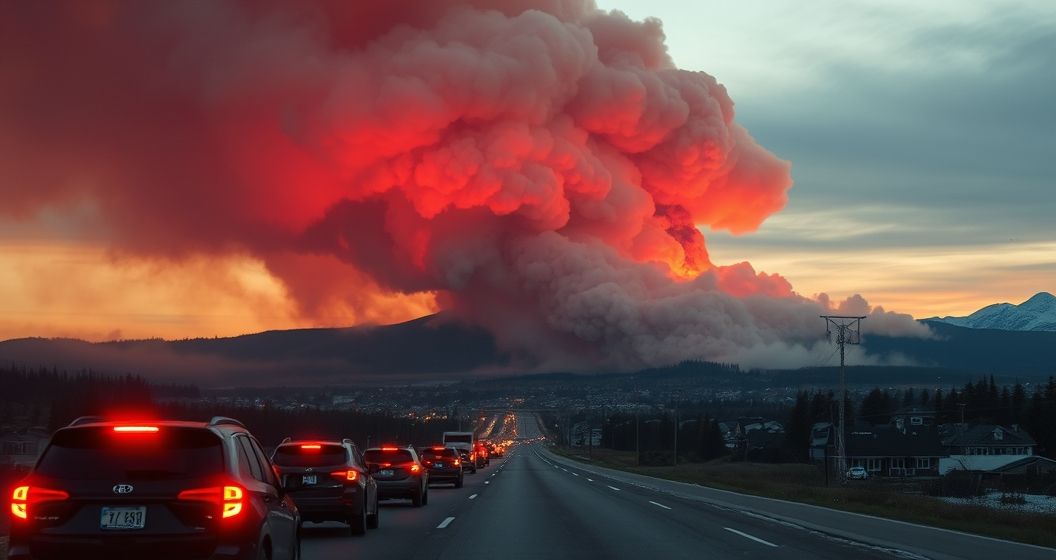
An intense and early start to the wildfire season in Western Canada has triggered widespread evacuation orders, forcing thousands of residents in British Columbia and Alberta to flee their homes. Authorities are battling numerous out-of-control blazes fueled by strong winds and unseasonably dry conditions. The rapidly evolving situation has put communities on high alert and stretched emergency resources thin as the country braces for a potentially challenging summer.
State of Emergency in British Columbia
The most significant fires are currently concentrated in British Columbia, where the situation has become critical. The community of Fort Nelson and the nearby Fort Nelson First Nation are under a mandatory evacuation order affecting several thousand people. A major wildfire burning just outside the town has grown substantially, posing a direct threat to homes and infrastructure. Officials have described the fire’s behaviour as aggressive and unpredictable, making containment efforts extremely difficult for firefighting crews on the ground.
Evacuees have been directed to reception centres in neighbouring cities, with many facing an uncertain wait for news about their properties. The provincial government is providing support and has urged all residents in affected regions to remain vigilant and be prepared to leave at a moment’s notice. The rapid spread of the fires highlights the volatile conditions created by a lack of precipitation and warmer-than-average temperatures.
Widespread Air Quality Advisories
Beyond the immediate danger of the flames, thick smoke from the wildfires is causing significant air quality issues across a vast area. Plumes have drifted across British Columbia, Alberta, and into the prairie provinces, prompting special air quality statements from Environment Canada. Residents in major cities, including Edmonton and Calgary, have been advised to take precautions as the smoke can pose a serious health risk, particularly for children, the elderly, and individuals with respiratory conditions.
Health officials are recommending that people stay indoors as much as possible, keep windows and doors closed, and use air purifiers if available. The poor air quality has led to hazy skies and reduced visibility, serving as a stark reminder of the fires’ far-reaching impact. The situation is being closely monitored, as shifting wind patterns could carry the smoke even further in the coming days.
A Coordinated Response and National Effort
Federal and provincial governments are working together to coordinate the emergency response. Additional firefighters and resources are being mobilized from across Canada and internationally to support the crews in British Columbia and Alberta. The focus remains on protecting lives and property while trying to establish containment lines around the most dangerous fires. Emergency officials are providing regular updates, stressing the importance of following all evacuation orders and official guidance.
The early onset of this year’s fire season is a cause for major concern, following a record-breaking year for wildfires. Experts point to a combination of low winter snowpack and a dry, warm spring as key contributing factors. As the situation continues to develop, the resilience of affected communities and the dedication of emergency responders are being put to the test.


