
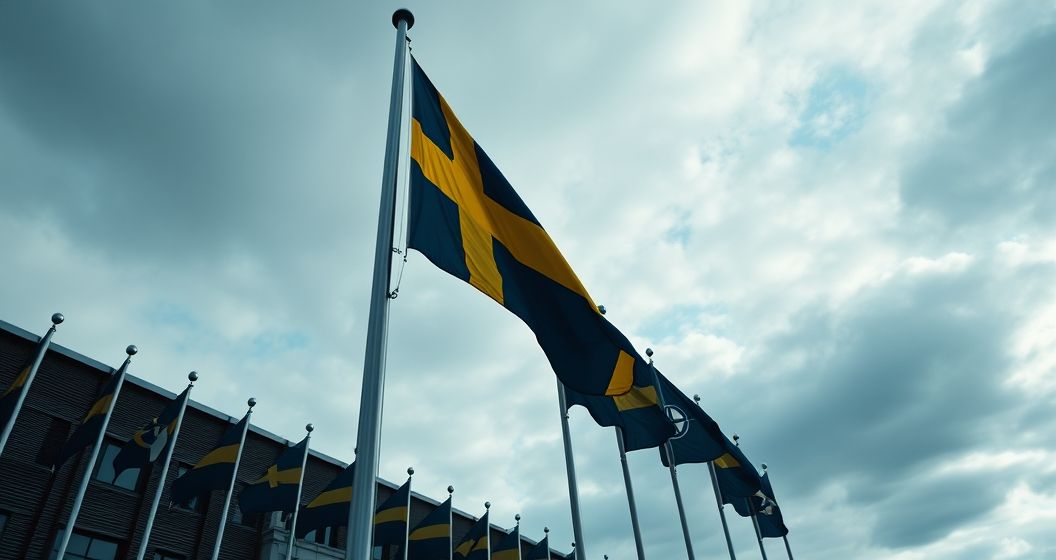
Sweden has formally marked its accession to the North Atlantic Treaty Organization (NATO) with a flag-raising ceremony at the alliance’s headquarters in Brussels. The event, attended by Swedish Prime Minister Ulf Kristersson and Crown Princess Victoria, signifies the end of a historic process and ushers in a new era for the nation’s security policy. This final step solidifies Sweden’s position as the 32nd member of the military alliance, concluding a significant shift away from centuries of military non-alignment.
A Historic Moment for a New Era
The ceremony represents a profound change in Sweden’s defense and security posture, a policy pivot driven by regional security concerns. The decision to seek membership was a direct response to the shifting geopolitical landscape in Europe. Prime Minister Kristersson described the occasion as a “homecoming,” emphasising that Sweden is now part of a collective security framework. The blue and yellow Swedish flag now flies alongside those of the other 31 member states, a powerful symbol of unity and shared commitment.
NATO Secretary General Jens Stoltenberg welcomed Sweden, highlighting the strategic benefits the country brings to the alliance. He noted that Sweden’s inclusion makes NATO stronger and Sweden safer. The accession process, which began nearly two years ago, faced several diplomatic hurdles but ultimately secured unanimous approval from all existing members. This milestone completes the strategic integration of the Nordic region into the alliance, following Finland’s membership last year.
Strengthening Nordic and Baltic Security
Sweden’s membership has significant implications for the security architecture of Northern Europe. With both Sweden and Finland now full members, the Baltic Sea is largely encircled by NATO countries, a strategic development that enhances the alliance’s defensive capabilities in the region. This provides greater operational depth and simplifies defense planning, particularly for the Baltic states of Estonia, Latvia, and Lithuania. The move is widely seen as a major reinforcement of NATO’s northern flank.
The integration of Sweden’s advanced military capabilities, including its modern air force and sophisticated submarine fleet, is a considerable asset for the alliance. The country’s strategic location and well-trained armed forces will contribute directly to collective defense missions and enhance regional stability. The focus now shifts from accession to full integration into NATO’s command and force structures.
Domestic Focus on Defense Investment
In parallel with joining the alliance, Sweden is intensifying its focus on domestic defense readiness. The government has reaffirmed its commitment to increasing military spending to meet, and potentially exceed, NATO’s target of 2% of Gross Domestic Product (GDP). This increased investment is aimed at modernising equipment, expanding military personnel, and strengthening civil defense infrastructure to align with alliance standards and responsibilities.
The transition requires a comprehensive adaptation of the Swedish Armed Forces to ensure full interoperability with other NATO members. While the formal process of joining is complete, the practical work of integration will continue. This marks a new chapter for Sweden, one defined by collective security and a strengthened commitment to national and regional defense within the NATO framework.