
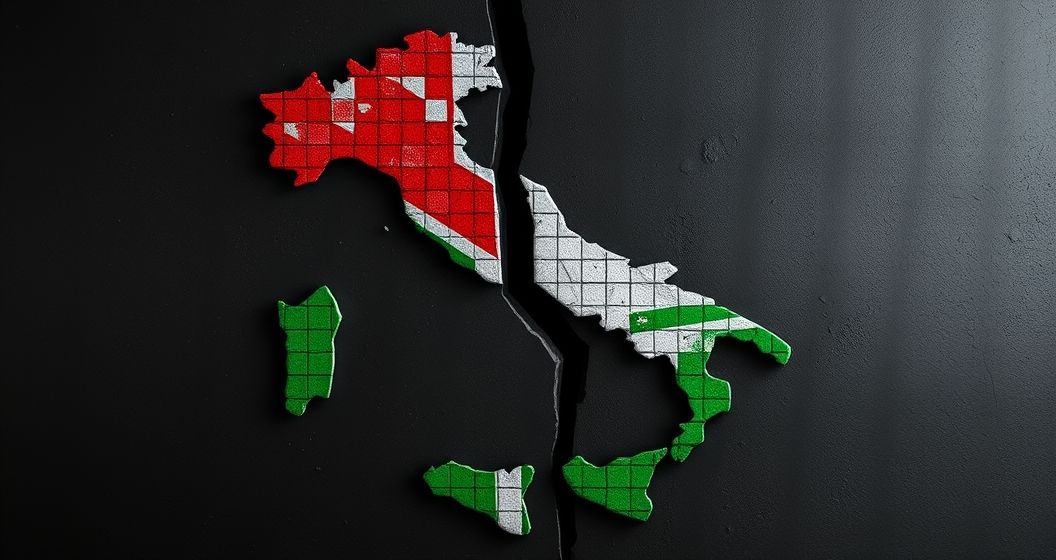
The Italian parliament has given its final approval to the controversial “differentiated autonomy” bill, a landmark reform for Prime Minister Giorgia Meloni’s government. The law, which passed after a tense and marathon session in the Chamber of Deputies, aims to grant more powers to Italy’s regions. However, it has ignited a fierce political debate, with critics warning it could deepen the country’s historic North-South economic divide and jeopardize national unity.
What is Differentiated Autonomy?
The reform, championed by the Lega party and steered by Minister for Regional Affairs Roberto Calderoli, enacts a provision within the Italian Constitution. It allows individual regions to request control over 23 specific state-managed subjects. These areas include crucial sectors such as healthcare, education, energy, transport, and foreign trade. Wealthier northern regions, like Lombardy and Veneto, have long advocated for this change, arguing it will lead to greater efficiency and services better tailored to local needs.
Proponents believe that allowing well-managed regions to retain more of their tax revenue to fund these new responsibilities will reduce bureaucracy and foster a more accountable system of governance. They argue that this model rewards efficiency and could serve as a positive example for other regions to follow, ultimately improving public services across the country. The government insists this is a moment of accountability for all regional administrators.
Fears of a “Two-Speed Italy”
Opposition parties and leaders in southern Italy have vehemently opposed the bill, staging protests and accusing the government of “splitting the country.” The primary concern is that the reform will create a “two-speed Italy,” where prosperous northern regions can afford high-quality services while poorer southern regions are left behind. Critics fear that without a robust system to guarantee equal funding, essential services like public health and education in the South could face significant cuts.
The debate centers on the concept of “Essential Levels of Performance” (LEP), which are meant to define the minimum standard of services that must be guaranteed to all citizens, regardless of where they live. The opposition argues that the government has approved the law without adequately defining or financing these essential levels, effectively creating a framework for inequality that could exacerbate existing economic and social disparities between the North and South.
Political Turmoil and an Uncertain Future
The final vote was met with protests both inside and outside the parliament building. Opposition lawmakers sang the national anthem and waved Italian flags in a symbolic gesture of dissent, highlighting their view that the law undermines national cohesion. The government, however, has celebrated the approval as a historic achievement and a key promise delivered to its voters.
With the bill now law, the focus shifts to its complex implementation. Each region wishing to gain more autonomy must now negotiate specific agreements with the central government. The process is expected to be long and contentious, with the definition and funding of the LEPs remaining the most critical and unresolved issue. The passage of this law marks not an end, but the beginning of a new, uncertain chapter in the relationship between the Italian state and its regions.


