
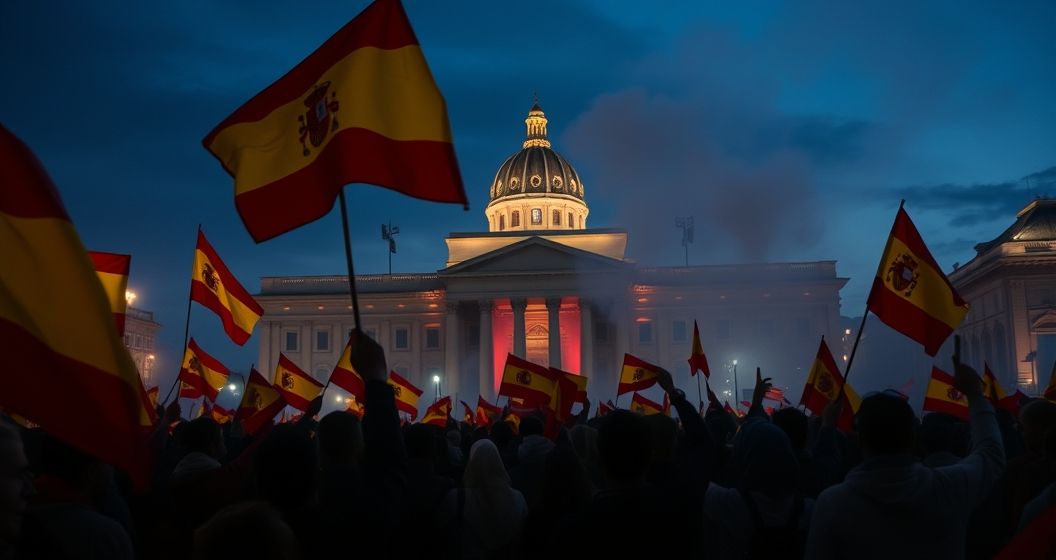
Spain is currently navigating a period of intense political and social activity. The national agenda is dominated by high-stakes negotiations over a controversial amnesty law for Catalan separatists, while widespread farmers’ protests are causing significant disruption across the country. Amid these challenges, the nation’s key economic sectors, like tourism, show signs of remarkable strength, painting a complex picture of the current landscape.
Political Deadlock Over Amnesty Law
The proposed amnesty law, a critical component of Prime Minister Pedro Sánchez’s investiture agreement, has hit a major roadblock. The Catalan separatist party Junts, led from exile by Carles Puigdemont, voted against the bill in its current form, demanding broader protections. Their main contention is the exclusion of individuals accused of terrorism-related offenses, a point the government is reluctant to concede.
This rejection sends the bill back to a parliamentary commission, opening a new one-month window for negotiation. The government faces a delicate balancing act: appeasing its crucial Catalan allies without appearing to undermine the judiciary or cross legal red lines. The outcome of these talks will be pivotal for the stability of the current legislative session and the political future of the country.
Farmers’ Protests Erupt Across the Nation
Echoing movements across Europe, Spanish farmers have initiated widespread protests, using tractors to block major highways and disrupt traffic in several regions. The demonstrations are a response to a combination of grievances, including what they describe as suffocating EU environmental regulations, low prices for their produce, and unfair competition from imports from outside the European Union that do not meet the same stringent standards.
Core Demands of the Agricultural Sector
The farmers are calling for a simplification of the EU’s Common Agricultural Policy (CAP), stronger government measures to ensure fair pricing, and stricter controls on imports. They argue that the current economic model is unsustainable and threatens the livelihood of thousands of family farms. The protests are expected to continue and intensify, posing a significant challenge to the government and impacting supply chains.
Tourism Sector Provides Economic Optimism
In contrast to the political and social tensions, Spain’s tourism industry is providing a significant economic boost. Recent figures indicate that the country is on track for a record-breaking year, surpassing pre-pandemic levels in both visitor numbers and revenue. This resilience highlights the enduring appeal of Spain as a global travel destination and its vital role in the national economy, offering a degree of stability amid the uncertainty.
This complex interplay of political negotiation, social unrest, and economic resilience defines Spain’s current moment. While the government navigates the intricate challenges posed by the amnesty law and farmers’ demands, the strength of sectors like tourism offers a foundation for stability. The coming weeks will be crucial in determining the direction of the country on multiple fronts.