
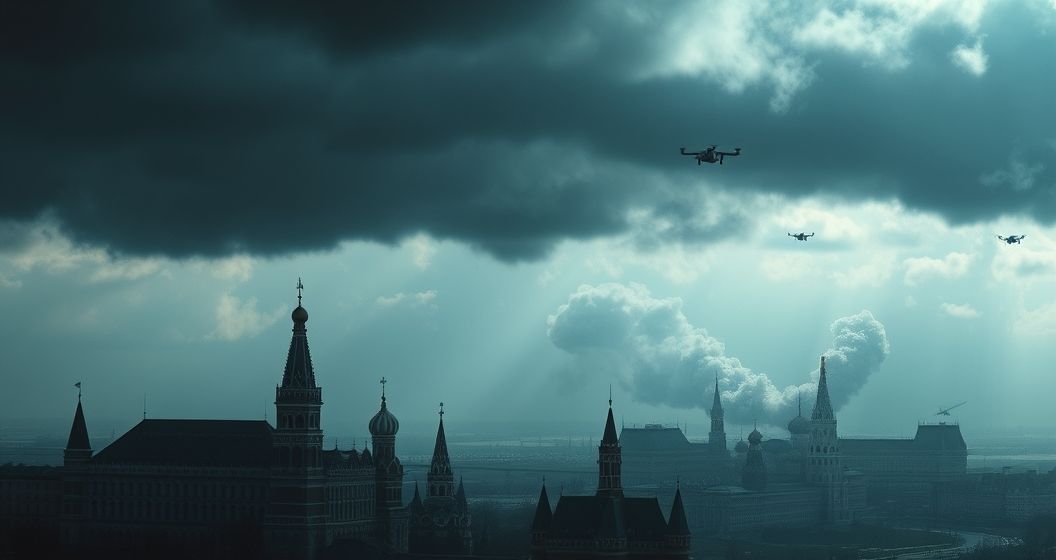
Recent developments in Russia highlight a nation grappling with challenges on multiple fronts. From significant drone attacks targeting critical energy infrastructure to persistent economic pressures and high-stakes diplomatic maneuvers, the country faces a period of heightened complexity. These events underscore the ongoing military, economic, and geopolitical tensions shaping its current landscape.
Intensified Drone Attacks Target Key Infrastructure
In a significant escalation, Russian energy facilities have once again come under fire from large-scale drone attacks. A major oil refinery in the Krasnodar region was reportedly targeted, resulting in a substantial fire that required a major response from emergency services. This incident is not isolated but part of a broader, consistent strategy aimed at disrupting Russia’s fuel production and export capabilities, which are crucial for both its economy and military operations.
The strategic impact of these attacks is twofold. Firstly, they inflict direct economic damage by halting production and requiring costly repairs. Secondly, they force the Russian military to reallocate air defense systems to protect industrial sites far from the front lines. This sustained campaign against the country’s economic backbone represents a critical pressure point, creating logistical and financial strains that resonate throughout the national economy.
Kremlin Outlines Stance on Peace Negotiations
On the diplomatic front, the Kremlin has reiterated its conditions for potential peace negotiations. President Vladimir Putin recently outlined a proposal that demands Ukrainian forces withdraw completely from four regions that Russia claims to have annexed. The proposal also insists that Ukraine abandon its ambitions to join NATO. This position has been framed by Moscow as a concrete path toward ending the conflict, although it has been swiftly rejected by Kyiv and its Western allies.
International reaction has been largely critical, with many leaders viewing the terms as a demand for capitulation rather than a genuine basis for negotiation. Ukrainian officials have labeled the proposal an “ultimatum” and affirmed their commitment to restoring the country’s territorial integrity based on its 1991 borders. The starkly different visions for a resolution indicate that a diplomatic breakthrough remains distant.
Economic Pressures Mount Amid Inflation Concerns
Domestically, Russia’s economy continues to navigate significant headwinds. The Central Bank has signaled growing concern over persistent inflationary pressures, fueled by robust government spending and a tight labor market. Officials have indicated that a key interest rate hike is increasingly likely in the near future to curb rising prices and stabilize the economy. This move would aim to cool down consumer demand and borrowing.
The ongoing economic transformation toward a war footing places immense strain on national resources. While the defense sector is booming, other industries face challenges, and the general population contends with the rising cost of living. The government’s ability to balance massive military expenditures with domestic economic stability remains a central and ongoing challenge for policymakers.


