
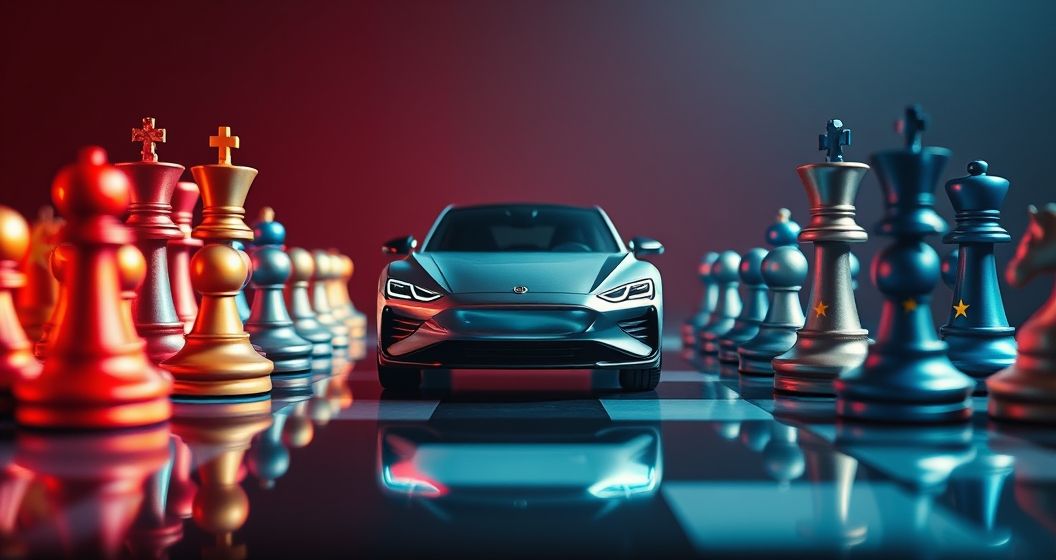
Tensions between Beijing and Brussels have reached a critical point following the European Union’s decision to impose new tariffs on Chinese electric vehicles. China’s Ministry of Commerce has strongly condemned the move, labeling it as blatant protectionism. The ministry has vowed to take all necessary measures to safeguard the legitimate rights and interests of Chinese companies, signaling a potential escalation in this significant trade dispute that could impact the global automotive industry and beyond.
The European Union’s Justification
The European Commission announced its decision to apply additional duties on imported Chinese EVs after a months-long investigation. The probe concluded that China’s battery-electric vehicle value chain benefits from unfair state subsidies, which is causing a threat of economic injury to EU producers. The tariffs vary by manufacturer, with some facing duties of over 38% on top of the existing 10% levy. The EU maintains that this action is not about closing its market but about ensuring a level playing field for European companies.
Beijing’s Strong Condemnation and Vow to Retaliate
In response, Beijing has been unequivocal in its opposition. Chinese officials argue that the EU’s findings are baseless and distort the reality of China’s EV industry, whose competitive advantage comes from innovation and robust supply chains, not subsidies. The Commerce Ministry stated that the move disregards World Trade Organization (WTO) rules and represents a “naked protectionist act.” The government has urged the EU to immediately correct its wrongful practices and has made it clear that it will not stand idly by.
Potential Sectors for Chinese Countermeasures
While specific retaliatory measures have not yet been detailed, speculation is growing about which European industries could be targeted. Analysts suggest that sectors such as European agriculture, particularly pork and dairy products, could face new tariffs. Furthermore, the automotive sector, including luxury cars with large engines, and the aviation industry are also seen as potential targets for Chinese countermeasures. This creates significant uncertainty for European businesses that rely heavily on the vast Chinese market for their revenue.
Wider Implications for the Global Economy
This escalating dispute carries substantial risks for both sides and the global economy. A full-blown trade war could disrupt supply chains, increase consumer prices, and hinder the global transition to green energy, a goal both China and the EU claim to support. German automakers, in particular, have expressed deep concern, as they have significant investments and sales in China and could be caught in the crossfire of any retaliatory actions. The situation highlights the delicate balance between protecting domestic industries and fostering international trade cooperation.
A Precarious Path Forward
The coming weeks will be crucial in determining whether a resolution can be found through dialogue or if the situation will devolve into a tit-for-tat trade conflict. The EU has left the door open for discussions with Chinese authorities to find a mutually agreeable solution. However, with both sides digging in their heels, the global automotive industry and international markets are bracing for a period of heightened tension and potential disruption as this trade standoff unfolds.

