
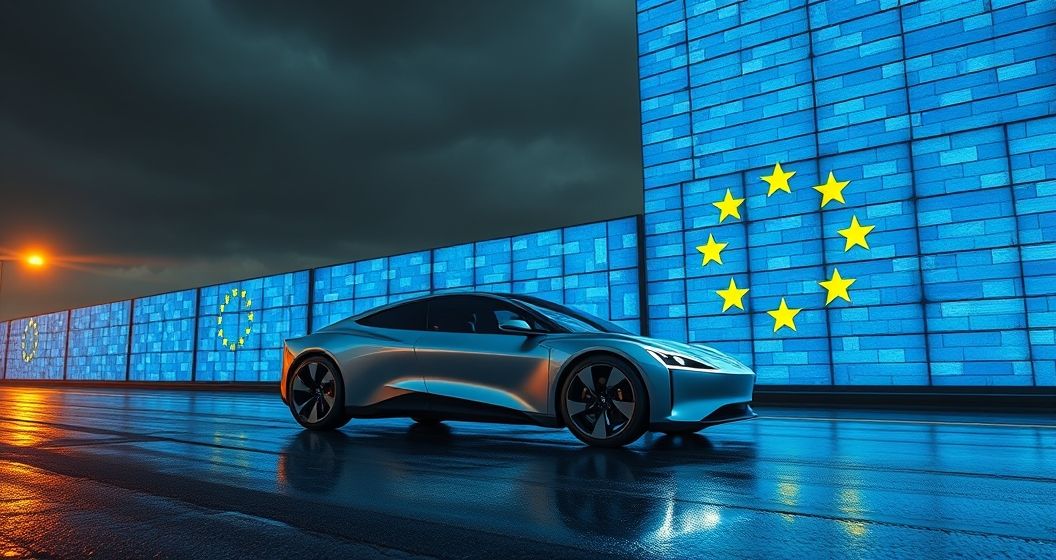
Recent trade friction between China and the European Union has intensified following the EU’s decision to impose provisional tariffs on imported Chinese electric vehicles (EVs). Citing concerns over unfair state subsidies that give Chinese manufacturers a competitive advantage, Brussels has taken a step that Beijing warns could trigger a wider trade conflict. This move threatens to disrupt a multi-billion dollar trade relationship and has significant implications for the global automotive industry and climate goals.
The European Union’s Tariff Decision
The European Commission announced its plan to levy additional duties on Chinese EVs after a lengthy anti-subsidy investigation. The tariffs are not uniform and will vary depending on the manufacturer, with specific rates applied to major companies like BYD, Geely, and SAIC. The EU argues that these measures are necessary to protect European carmakers from a surge of lower-cost imports that could undermine local production and jobs. The move is designed to level the playing field, ensuring fair competition within the single market.
Officials in Brussels have stressed that the goal is not to close the market but to remedy the distortions caused by what they identify as illegal subsidies. The provisional nature of the tariffs leaves a window for dialogue with Chinese authorities to find a potential resolution. However, the decision reflects a growing assertiveness from the EU in defending its economic interests against perceived unfair trade practices from major global partners.
China’s Firm Response and Countermeasures
China’s Ministry of Commerce immediately condemned the EU’s decision, labeling it as a blatant act of protectionism that ignores established facts and World Trade Organization rules. Beijing has denied the subsidy allegations, stating that the competitiveness of its EV industry stems from innovation, efficient supply chains, and open market competition. Officials have expressed strong dissatisfaction and have vowed to take all necessary measures to safeguard the legitimate rights and interests of Chinese companies.
While specific retaliatory actions have not been officially announced, there is widespread speculation that China could target key European exports. Industries such as agriculture, particularly pork products, as well as aviation and vehicles with large-displacement engines, are seen as potential targets for countermeasures. This tit-for-tat approach raises concerns about a damaging cycle of escalation that would harm businesses and consumers on both sides.
Broader Implications for Global Trade
The dispute has far-reaching consequences beyond the automotive sector. It could lead to higher prices for European consumers, limiting their access to more affordable electric vehicles and potentially slowing the continent’s transition away from fossil fuels. For the global auto industry, it creates uncertainty and disrupts supply chains that have become increasingly interconnected. European automakers with significant operations in China, such as BMW and Volkswagen, find themselves in a difficult position, facing potential fallout from both the EU tariffs and any Chinese retaliation.
A Path Forward?
The current situation represents a critical juncture in EU-China economic relations. While both sides have adopted firm positions, the door for negotiation remains open. A resolution through dialogue would be the preferred outcome to avoid a costly trade war that could have ripple effects across the global economy. The coming weeks will be crucial in determining whether diplomacy can prevail or if the world’s major trading blocs are heading toward a period of sustained economic friction.

