
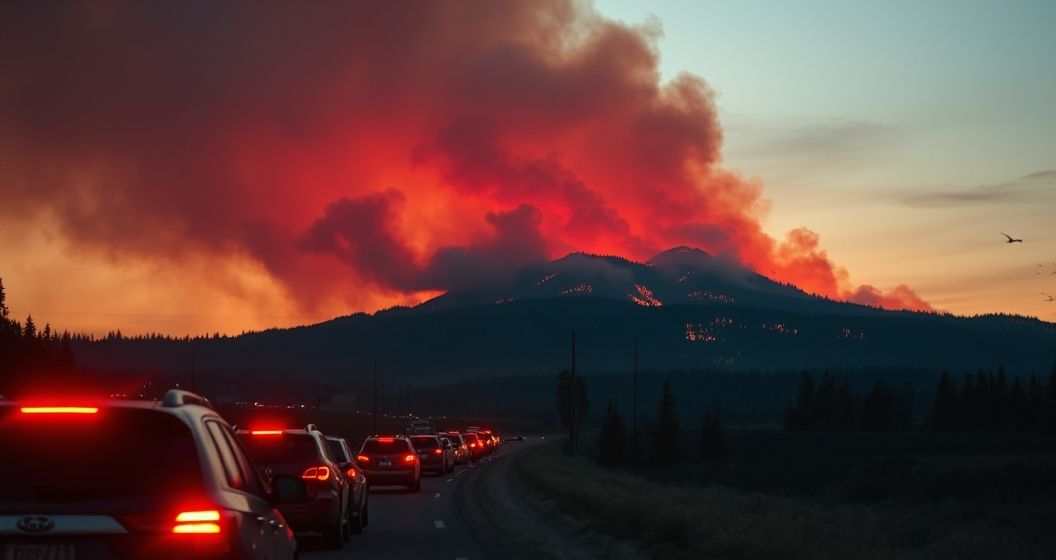
Wildfires are escalating across Western Canada, forcing thousands of residents in British Columbia and Alberta to evacuate their homes. Fast-moving and out-of-control blazes, fueled by strong winds and dry conditions, have triggered widespread emergency alerts. Officials are urging residents in affected areas to remain vigilant and prepared for rapidly changing conditions as firefighting crews work to contain the growing threat.
British Columbia Faces Escalating Threat
In northeastern British Columbia, the community of Fort Nelson and the nearby Fort Nelson First Nation are under a mandatory evacuation order impacting several thousand people. The Parker Lake fire, located just west of the town, has shown aggressive growth, creating challenging conditions for emergency responders. The blaze has damaged structures and continues to pose a significant risk to the community and critical infrastructure in the region.
Authorities have described the situation as dynamic and dangerous, with strong winds making containment efforts extremely difficult. Evacuees have been directed to reception centres in neighbouring communities, and highways in the area have been closed to non-essential traffic. The BC Wildfire Service is deploying extensive resources, including air tankers and ground crews, to combat the fire and protect property.
Alberta on High Alert as Fires Spread
Meanwhile, Alberta is grappling with its own series of intense wildfires, particularly in the vicinity of Fort McMurray. An evacuation alert has been issued for several neighbourhoods as the MWF-017 wildfire burns out of control southwest of the city. This alert has brought back memories of the devastating 2016 wildfire that forced the evacuation of the entire city and caused widespread destruction.
Officials are closely monitoring the fire’s progression, which is being driven by powerful winds. While an evacuation order has not yet been issued for Fort McMurray itself, residents in the designated alert zones have been told to be ready to leave at a moment’s notice. The province has declared a state of local emergency for the Regional Municipality of Wood Buffalo to better coordinate the response.
Air Quality and Health Concerns Mount
The smoke from these massive wildfires is causing a significant deterioration in air quality across large parts of Western Canada and beyond. Special air quality statements have been issued for much of British Columbia, Alberta, and Saskatchewan, with smoke plumes drifting as far east as Manitoba and into the northern United States. The hazy conditions present a considerable health risk, especially for children, the elderly, and individuals with respiratory conditions.
Health officials are advising residents in smoke-affected areas to limit outdoor activities, keep windows and doors closed, and use air purifiers if possible. The poor visibility created by the dense smoke is also creating hazardous driving conditions on many regional highways, compounding the challenges for both residents and emergency crews.
Emergency Response and Official Warnings
Provincial governments are coordinating a massive emergency response, mobilizing firefighters, equipment, and support personnel. The focus remains on protecting lives and property while battling the unpredictable fires. Officials continue to stress the importance of heeding all evacuation alerts and orders without delay. Residents are advised to have an emergency kit prepared and to stay informed through official sources for the most current information and instructions.

