
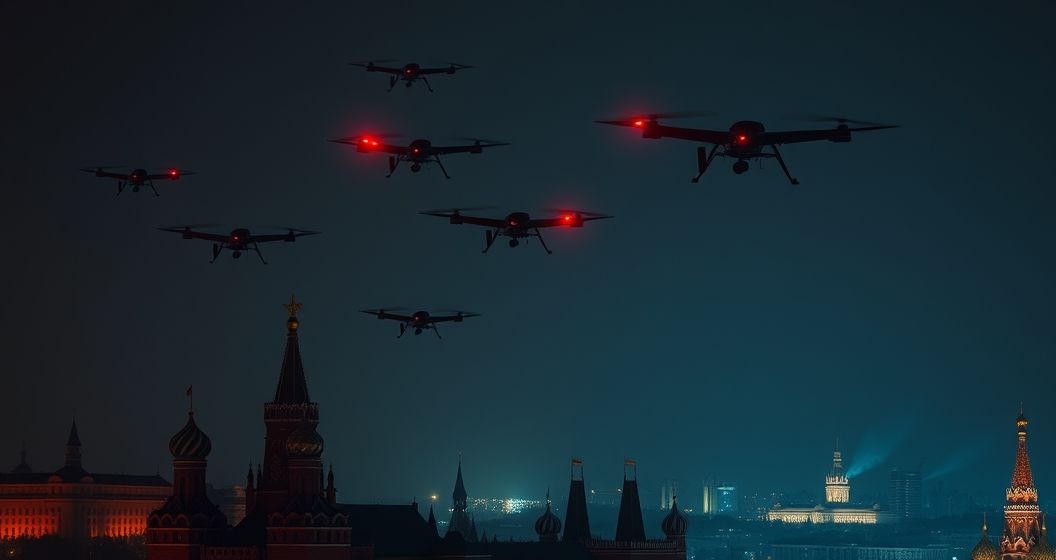
Russia is experiencing a significant escalation in drone attacks targeting multiple regions, signaling a new and more volatile phase of the ongoing conflict. Air defense systems have been actively engaged in areas from the border regions to the Moscow Oblast, responding to what officials describe as a coordinated campaign. This surge in aerial incursions places increased pressure on both military and civilian infrastructure, challenging Russia’s domestic security narrative and prompting a forceful response.
A New Phase of Aerial Warfare
The frequency and range of these attacks have notably increased. Regions such as Belgorod and Kursk, which are close to the border, continue to be primary targets. However, recent waves of unmanned aerial vehicles (UAVs) have also penetrated deeper into Russian territory. The targets appear to vary, from energy facilities and industrial sites to military installations, suggesting a strategic effort to disrupt logistical and economic activities far from the front lines.
Residents in affected areas have reported explosions and the sound of air defense systems at work. The Russian Ministry of Defence has consistently issued statements claiming the successful interception of the majority of these drones. Despite these official assurances, reports of debris causing damage on the ground and occasional direct hits highlight the persistent threat posed by this evolving form of warfare.
The Official Response from Moscow
The Kremlin has condemned the attacks as terrorist acts and has vowed to take all necessary measures to protect its territory and citizens. Officials emphasize the effectiveness of their multi-layered air defense network, which they state is adapting to the new challenges. The official narrative focuses on resilience and the military’s capacity to neutralize these threats before they reach their intended targets, thereby minimizing potential damage and casualties.
Moscow’s response has been twofold: bolstering defensive capabilities in vulnerable regions and carrying out its own retaliatory strikes. The military has reported targeting Ukrainian command centers, military-industrial facilities, and energy infrastructure in response to the incursions, framing its actions as a direct consequence of the attacks on Russian soil.
Broader Strategic and Economic Implications
This escalation has broader implications beyond the immediate military conflict. The constant threat of drone attacks aims to create a sense of vulnerability within Russia, stretching military resources and creating psychological pressure. For citizens in border regions, the conflict is no longer a distant event but a daily reality, impacting local economies and normal life.
Strategically, the use of long-range drones reflects a shift in tactics, designed to demonstrate an ability to strike deep within Russian territory. This challenges Russia’s air superiority and forces a reallocation of defensive assets. The ongoing aerial exchanges underscore the deepening of the conflict, with both sides leveraging technology to gain an advantage.
In conclusion, the intensification of drone warfare against Russian regions marks a critical development. It represents a direct challenge to Russia’s internal security and is met with a firm and retaliatory stance from Moscow. This cycle of escalation continues to define the conflict, with significant and far-reaching consequences for the stability of the entire region.

