
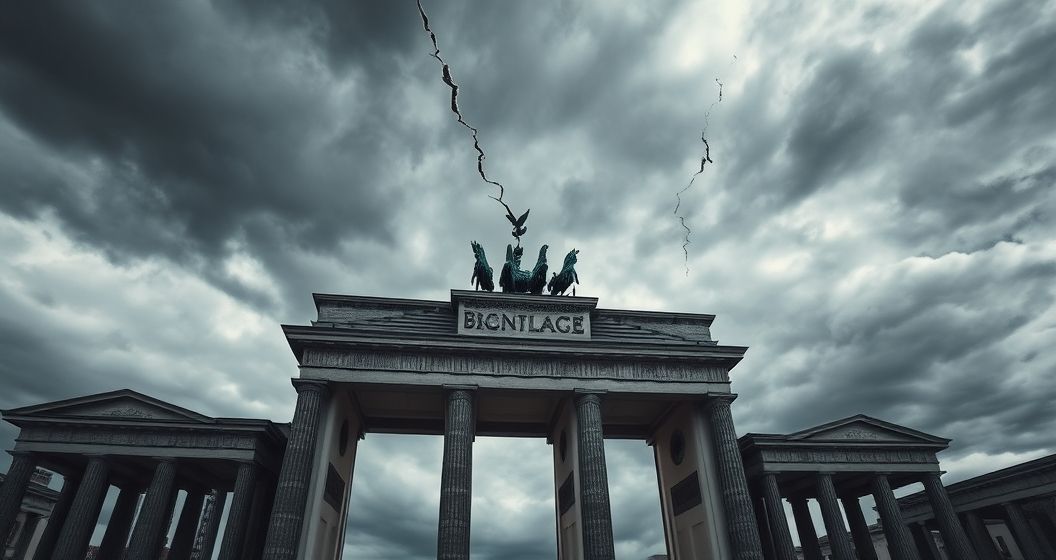
Germany is currently navigating a period of significant economic and political turbulence. The coalition government, led by Chancellor Olaf Scholz, is grappling with a severe budget crisis, while the nation’s economic engine shows signs of sputtering. This complex situation is further intensified by widespread public discontent, manifesting in large-scale protests that challenge the government’s policies and stability.
The Looming Economic Slowdown
The German economy, traditionally Europe’s powerhouse, is facing considerable headwinds. Projections from leading economic institutes point towards stagnation or even a slight recession. A primary cause for concern is the struggling industrial sector, which has been hit hard by high energy prices, sluggish global demand, and persistent inflation. Companies are becoming more cautious with investments, and industrial production figures have remained weaker than expected, raising alarms about the country’s long-term competitiveness.
This economic pressure is felt directly by consumers and businesses alike. While inflation has eased from its peak, the cost of living remains elevated, impacting household spending power. The combination of these factors creates a challenging environment, forcing the government to find solutions that can stimulate growth without further straining public finances. The outlook remains uncertain as Germany attempts to adapt its energy-intensive industrial model to a new global economic reality.
Coalition Under Pressure Over Budget Gaps
The political landscape is dominated by a budget crisis that has exposed deep divisions within the ruling “traffic light” coalition of Social Democrats (SPD), Greens, and Free Democrats (FDP). A constitutional court ruling invalidated a plan to repurpose billions of euros, blowing a massive hole in the federal budget. This has forced the government into difficult negotiations over spending cuts and financial priorities, testing the alliance’s cohesion to its limits.
At the heart of the debate are conflicting ideologies. The FDP insists on adhering to Germany’s strict “debt brake,” which limits new borrowing, while partners in the SPD and the Greens argue for more investment in climate protection, infrastructure, and social programs. Finding a compromise that satisfies all parties while complying with constitutional law has proven to be a monumental task for Chancellor Scholz, whose leadership is under intense scrutiny during this critical period.
Public Discontent Spills onto the Streets
The government’s attempts to close the budget gap have triggered a powerful public backlash. A decision to phase out tax breaks on agricultural diesel sparked nationwide protests by farmers, who used tractors to block city centers and highways. This movement has become a symbol of broader frustration felt across rural Germany and other sectors of the population who feel burdened by the government’s policies and disconnected from the political elite in Berlin.
The farmers’ protests are not an isolated event but part of a wider pattern of industrial action and social unrest. These demonstrations highlight a growing sentiment that the costs of economic transition and fiscal consolidation are being unfairly distributed. The government now faces the dual challenge of restoring fiscal stability while also regaining the trust of a significant portion of its citizens who feel their concerns are being ignored.
