
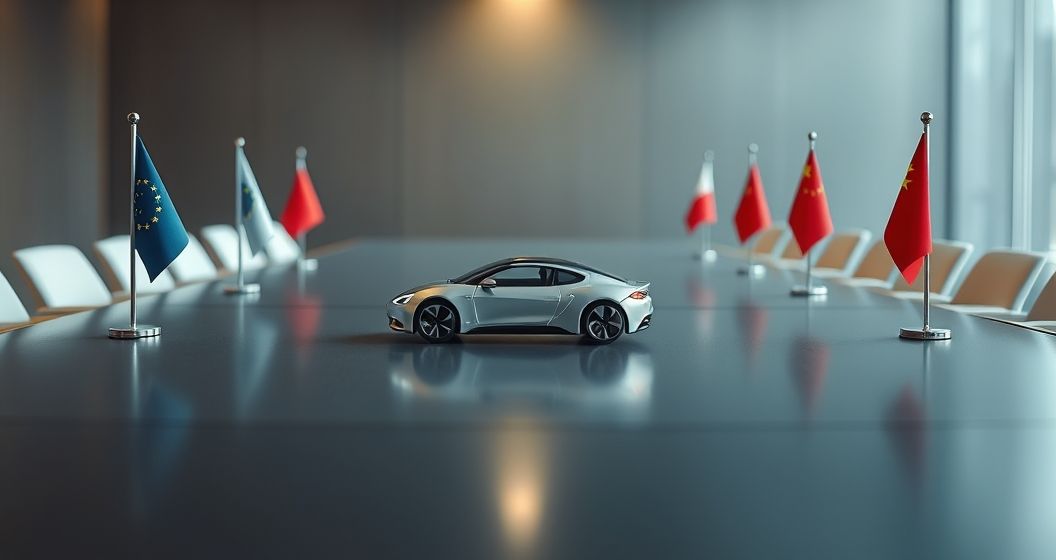
China and the European Union have officially initiated consultations aimed at resolving a looming trade dispute over proposed tariffs on Chinese-made electric vehicles. The move signals a potential de-escalation after weeks of mounting tensions, with both sides expressing a willingness to find a negotiated solution. The outcome of these discussions could have significant implications for the global automotive industry and broader trade relations between the two economic powerhouses.
Understanding the Tariff Dispute
The central issue stems from a European Commission investigation concluding that Chinese EV manufacturers benefit from unfair state subsidies, allowing them to sell vehicles at lower prices in the European market. As a result, the EU announced its intention to impose provisional tariffs of up to 38.1% on imported Chinese EVs. This measure is designed to level the playing field for European carmakers.
In response, Beijing has strongly opposed the move, labeling it a protectionist act that violates international trade rules. Chinese officials have consistently denied the allegations of unfair subsidies, arguing that the competitiveness of their EV industry is a result of innovation, efficient supply chains, and open market competition. China has also hinted at potential retaliatory measures targeting European goods, raising concerns of a wider trade conflict.
Negotiations Aim to Avert Trade War
Recent communications between high-level officials, including China’s Commerce Minister and the EU’s Trade Commissioner, have paved the way for these crucial talks. Both parties have publicly confirmed their commitment to dialogue, seeking a resolution that addresses the EU’s concerns while avoiding the economic damage that would result from a tit-for-tat tariff escalation. The primary goal is to find a mutually acceptable outcome before the provisional tariffs are set to take effect.
The Economic Stakes for Both Sides
A full-scale tariff war could be detrimental for everyone involved. Many European automakers, particularly those in Germany, have significant investments and sales in the Chinese market. They fear that retaliatory tariffs from China on imported European cars could severely impact their profitability. For Chinese EV makers, the European market represents a key growth area, and high tariffs could hinder their international expansion plans.
A Path Forward Through Dialogue
Despite the contentious nature of the dispute, the agreement to hold consultations is seen as a constructive step. Observers believe the negotiations will focus on finding a compromise that may involve pricing commitments from Chinese companies or other mechanisms to address the EU’s concerns without resorting to steep tariffs. The discussions underscore a shared interest in maintaining the stability of global supply chains.
As the consultations get underway, the global business community is watching closely. While the agreement to talk is a positive development, the path to a final resolution remains complex. The success of these negotiations will be a crucial test of the EU-China economic relationship and could set a precedent for handling future trade disagreements in an increasingly competitive global market.
