
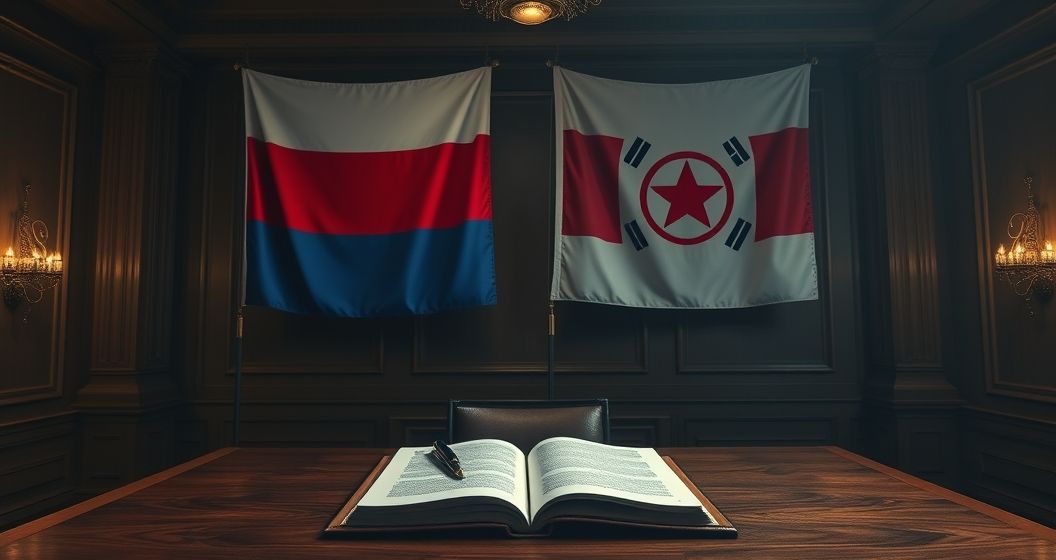
Russia and North Korea have dramatically elevated their relationship by signing a comprehensive strategic partnership agreement, which includes a mutual defense clause. This landmark deal was finalized during President Vladimir Putin’s first visit to Pyongyang in over two decades. The agreement commits both nations to provide immediate military assistance if the other is attacked, marking a significant geopolitical shift in the region and creating a powerful new alliance against Western pressures.
Details of the New Defense Pact
The core of the new treaty is its mutual defense commitment, reviving a pact that existed during the Cold War. President Putin stated that the agreement provides for “mutual assistance in the event of aggression against one of the parties.” This formalizes a military alliance that has been growing stronger, particularly since the escalation of the conflict in Ukraine. North Korean leader Kim Jong Un hailed the agreement as the strongest treaty ever signed between the two countries, elevating their ties to the level of a formal alliance.
Beyond the military aspect, the partnership aims to counter international sanctions, which both nations face heavily. The leaders condemned the “sanctions politics of the West” and pledged to develop alternative trade and settlement mechanisms that are not controlled by Western financial systems. This move is designed to create an economic buffer and enhance their sovereignty in the face of sustained international pressure.
International Reaction and Geopolitical Shifts
The strengthening of ties between Moscow and Pyongyang has drawn immediate condemnation from the United States, South Korea, and their allies. Western officials have expressed grave concerns that the partnership will lead to increased North Korean arms supplies to Russia for its war in Ukraine. In return, Russia is suspected of providing North Korea with advanced military technology, including for its satellite and missile programs, which would violate UN Security Council resolutions.
Analysts view this alliance as a clear challenge to the U.S.-led global order. By forming a united front, Russia and North Korea are not only bolstering their individual security but also attempting to reshape regional power dynamics. The visit underscores a broader trend of sanctioned states building alternative networks to circumvent Western influence and economic restrictions, creating a more fragmented and contested international landscape.
Domestic Pressures and Ongoing Conflicts
While Russia projects strength on the international stage, it continues to face significant challenges at home and in its conflict with Ukraine. In recent days, Ukrainian drone attacks have intensified, targeting energy infrastructure deep inside Russian territory. An oil terminal in the port of Azov in the Rostov region was set ablaze following a major drone strike, highlighting Ukraine’s growing capability to disrupt Russia’s logistics and economy.
Economic Resilience and Challenges
These attacks add to the economic pressures Russia is facing. While the Russian economy has shown resilience against sanctions, thanks to high oil prices and state spending, the long-term outlook remains uncertain. The government continues to manage inflation and stabilize the ruble, but the costs of the prolonged conflict and the impact of attacks on critical infrastructure pose ongoing risks to its economic stability and war-making capacity.