
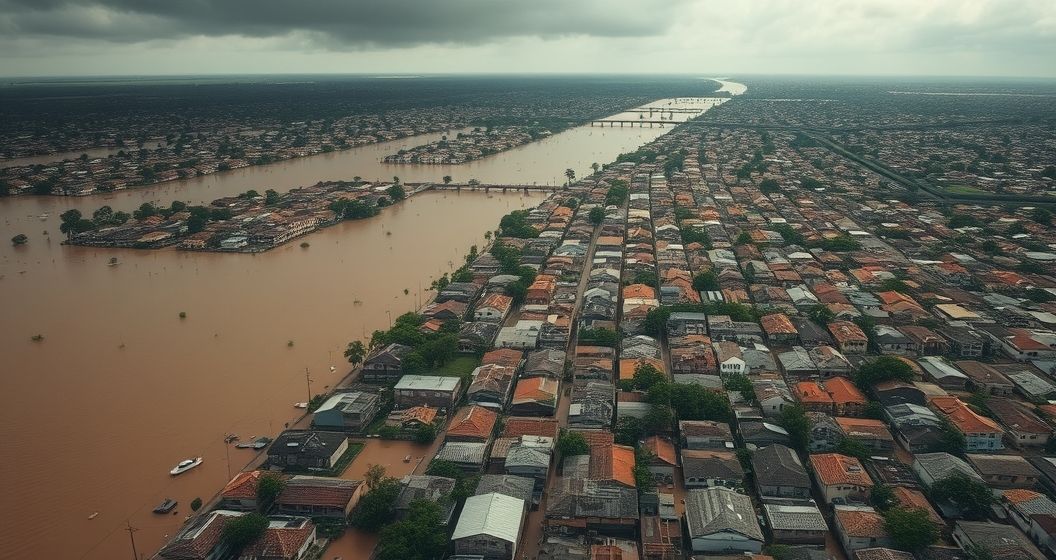
Brazil is confronting one of its most severe climate-related catastrophes as historic flooding devastates the southern state of Rio Grande do Sul. Unprecedented rainfall has caused rivers to overflow, submerging entire cities, destroying critical infrastructure, and triggering a massive humanitarian crisis. The disaster has displaced hundreds of thousands of residents and resulted in a tragic loss of life, prompting a large-scale national emergency response to aid the affected population and address the widespread destruction.
The Scale of an Unprecedented Disaster
The extent of the flooding is staggering, impacting the vast majority of municipalities within Rio Grande do Sul. Major urban centers, including the state capital Porto Alegre, have seen their streets turn into rivers. The Guaíba River reached record-high levels, overwhelming flood protection systems and inundating key areas like the city’s international airport, which remains closed indefinitely. This event is widely described by experts as the worst natural disaster in the state’s history, highlighting its extreme and unforeseen nature.
Emergency services, supported by the military and a legion of volunteers, are engaged in extensive rescue operations. Thousands of people have been rescued from rooftops and isolated areas, often under perilous conditions. The immediate focus is on saving lives and providing shelter, food, and clean water to the displaced. Makeshift shelters are overflowing, and authorities are working tirelessly to manage the logistics of distributing essential supplies to a population in desperate need.
Economic Devastation and Supply Chain Impact
The economic fallout from the floods is immense and will have long-lasting consequences for both the state and the nation. Rio Grande do Sul is a critical agricultural hub, responsible for a significant portion of Brazil’s rice, soy, and meat production. The floods have inundated vast swathes of farmland, destroying crops and killing livestock, which is expected to disrupt national food supply chains and lead to price increases for staple goods across the country.
Infrastructure and Industrial Losses
Beyond agriculture, the state’s industrial sector has been severely hampered. The destruction of essential infrastructure, including highways, bridges, and power plants, has paralyzed economic activity. Many businesses have been forced to halt operations due to direct flood damage or the inability to transport goods and personnel. The long-term cost of rebuilding this critical infrastructure is projected to be in the billions, posing a significant financial challenge for both state and federal governments.
Government Response and Future Challenges
The Brazilian government has declared a state of public calamity and announced a substantial financial aid package to support rescue efforts, provide direct assistance to affected families, and fund reconstruction projects. Federal officials have visited the region to coordinate the response, emphasizing the need for a unified effort to address the crisis. However, the scale of the disaster presents enormous logistical and financial hurdles that will test the capacity of public institutions.
This catastrophic event has intensified the debate in Brazil about climate change and the need for improved disaster preparedness. Scientists have linked the intensity of the rainfall to changing climate patterns, raising urgent questions about the vulnerability of urban and rural areas to extreme weather events. The focus is now shifting not only to recovery but also to developing more resilient infrastructure and effective climate adaptation strategies to mitigate the impact of future disasters.