
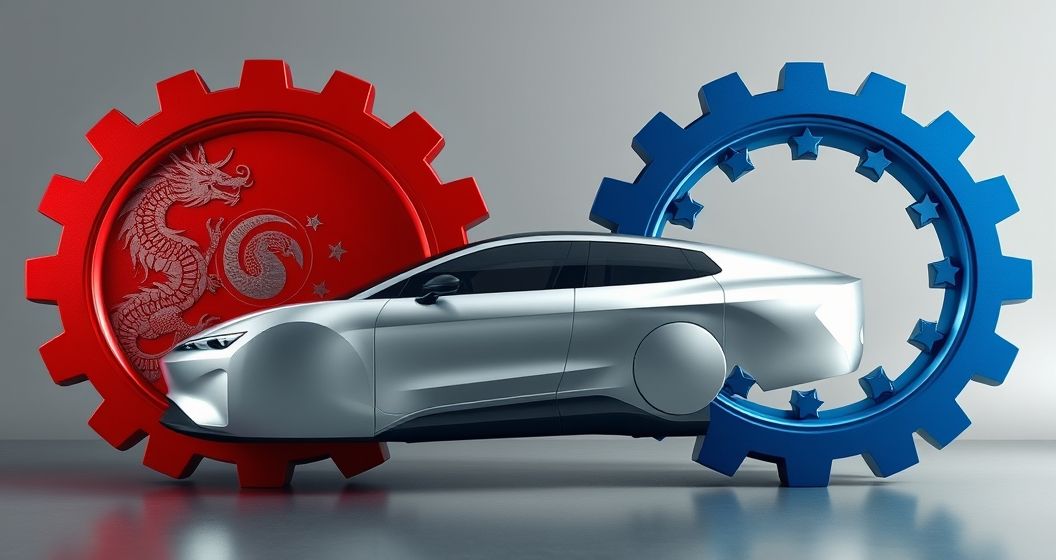
Top trade officials from China and the European Union have agreed to enter negotiations regarding the EU’s proposed tariffs on Chinese-made electric vehicles (EVs). This development marks a potential de-escalation in a trade dispute that threatens to impact the global automotive industry. The talks aim to find a resolution before provisional duties are set to take effect, creating a critical window for diplomacy to prevail over economic conflict.
Understanding the Tariff Standoff
The dispute centers on the European Commission’s investigation into China’s EV industry. The EU alleges that Chinese manufacturers benefit from unfair state subsidies, allowing them to sell vehicles at artificially low prices in the European market. As a result, the Commission announced plans to impose additional tariffs of up to 38.1% on imported Chinese EVs. The move is intended to level the playing field for European carmakers.
In response, Beijing has vehemently denied the allegations, labeling the tariffs as a blatant act of protectionism that violates international trade rules. Chinese officials argue that the competitiveness of their EV industry stems from innovation, efficient supply chains, and open market competition, not from improper government support. The government has warned that it will take necessary measures to protect the interests of its companies.
A Diplomatic Opening
The agreement to hold consultations was reached during a video call between China’s Commerce Minister Wang Wentao and EU Trade Commissioner Valdis Dombrovskis. Both sides have expressed a willingness to engage in dialogue, signaling a shared interest in avoiding a full-blown trade war. The primary objective of these talks is to address the EU’s concerns while finding a mutually acceptable solution that avoids the imposition of the steep new duties.
Germany’s Crucial Role
Germany, a major economic power within the EU, has been a vocal proponent of a negotiated settlement. German Vice Chancellor Robert Habeck recently visited Beijing, emphasizing the importance of dialogue. The German automotive industry, with its significant investments and sales in the Chinese market, would be particularly vulnerable to retaliatory measures from China. This has positioned Berlin as a key advocate for de-escalation within the EU bloc.
Economic Consequences on the Horizon
If the negotiations fail, the economic fallout could be substantial. China has already launched its own anti-dumping investigation into certain pork products imported from the EU, a move widely seen as a direct response to the EV tariff threat. Further escalation could see China targeting other European goods, from luxury items to agricultural products, disrupting global supply chains and raising costs for consumers on both sides.
The coming weeks are crucial. The outcome of these negotiations will not only determine the future of EV trade between the two economic giants but also set a precedent for how similar disputes are handled globally. The talks represent a critical opportunity to stabilize a fragile trade relationship and prevent a costly conflict that would have far-reaching economic consequences.