
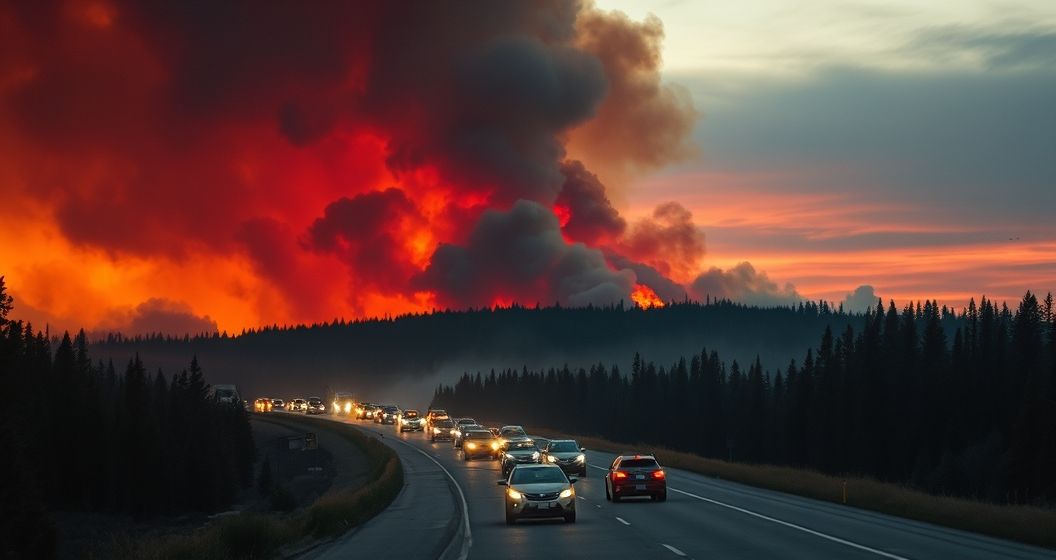
Aggressive wildfires are spreading across parts of British Columbia and Alberta, forcing thousands of residents to evacuate their homes. Authorities have issued urgent evacuation orders for communities including Fort Nelson, BC, and areas near Fort McMurray, Alberta. Unseasonably warm and dry conditions, combined with strong winds, are fueling the rapidly growing blazes, creating a critical situation for emergency responders and threatening key infrastructure across the region.
State of Emergency in British Columbia
In northeastern British Columbia, the community of Fort Nelson is under a full evacuation order as the out-of-control Parker Lake fire rages nearby. The fire, which grew exponentially due to strong winds, has prompted the Northern Rockies Regional Municipality and the Fort Nelson First Nation to declare a state of local emergency. Nearly 5,000 residents have been ordered to leave the area for safety.
Officials have described the fire behaviour as extreme and unpredictable. Firefighting crews are working under challenging conditions to establish containment lines, but the speed and intensity of the blaze are making efforts difficult. The fire has also led to significant disruptions, including the closure of major highways and poor air quality that extends for hundreds of kilometres, impacting neighbouring communities.
Alberta on High Alert
Meanwhile, in Alberta, an out-of-control wildfire is threatening communities on the southern edge of Fort McMurray, a region that experienced a catastrophic wildfire in 2016. Evacuation alerts have been issued for neighbourhoods including Saprae Creek, Gregoire Lake Estates, and parts of the Regional Municipality of Wood Buffalo. Residents in these areas have been told to be prepared to leave on short notice as the fire moves closer.
The provincial government is mobilizing resources and has put multiple fire crews and aircraft on the scene to combat the blaze. The memory of the 2016 disaster has heightened anxiety among residents and officials, leading to a swift and proactive response. Air quality advisories are in effect for Fort McMurray and surrounding areas due to heavy smoke, posing a health risk to the remaining population.
A Challenging Start to Wildfire Season
Environmental Factors at Play
Experts point to a combination of factors for this intense start to the wildfire season. A winter with below-average snowfall and a warm, dry spring have left forests exceptionally vulnerable to ignition. Persistent drought conditions across Western Canada have created an abundance of dry fuel for fires to consume, while shifting wind patterns have accelerated their spread, making them difficult to contain.
The scale of these early-season fires is raising concerns about what the summer months may bring. Federal and provincial authorities are warning that Canada could be facing another severe wildfire season, urging citizens to exercise extreme caution and adhere to all fire bans and public safety announcements to prevent human-caused fires.
Conclusion
The ongoing wildfires in both provinces highlight the severe and immediate threat posed by current environmental conditions. Emergency crews continue to battle the flames while displaced residents await updates on their homes and communities. Officials are urging the public to remain vigilant and follow all safety directives as the situation remains highly volatile, marking a difficult beginning to the fire season.