
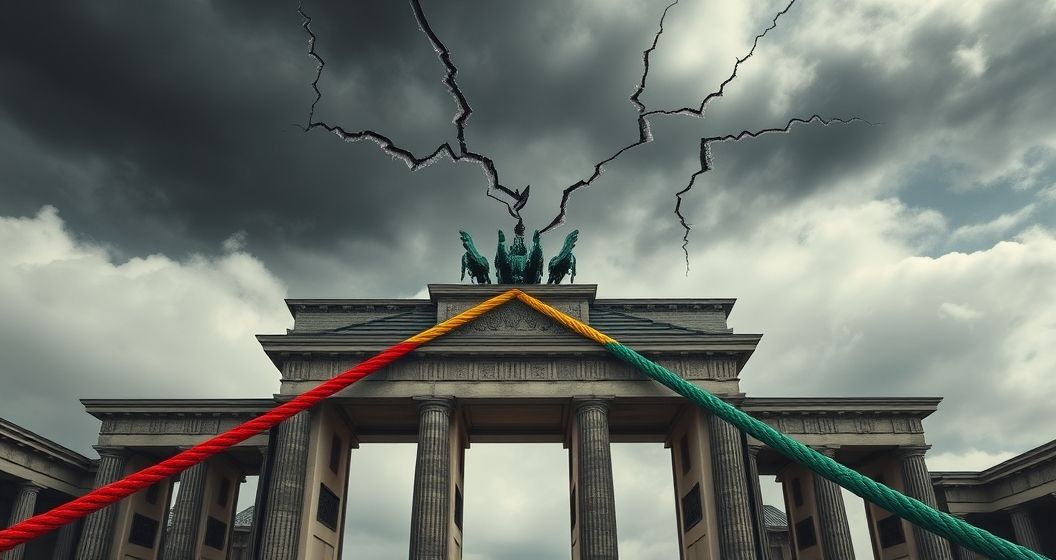
Germany’s ruling coalition is currently navigating a period of intense political and economic pressure. Faced with a significant budget crisis, widespread social unrest, and a fragile economy, Chancellor Olaf Scholz’s government is being tested on multiple fronts. The outcomes of these challenges are poised to shape the nation’s direction, impacting everything from public spending and social policy to its standing within Europe. The combination of internal disputes and external pressures has created a highly volatile environment.
The Deepening Budget Crisis
At the heart of the government’s struggles is a severe budget crisis triggered by a constitutional court ruling. The decision invalidated the reallocation of billions in unused pandemic funds, creating a substantial gap in the federal budget. This has forced the coalition, comprised of the Social Democrats (SPD), the Greens, and the Free Democrats (FDP), into difficult negotiations over spending cuts and financial priorities. The differing ideologies of the parties have made reaching a consensus a contentious process.
The core of the dispute revolves around Germany’s strict “debt brake,” which limits new government borrowing. While Finance Minister Christian Lindner (FDP) insists on adhering to this rule, partners in the coalition have argued for its reform to allow for necessary investments in climate protection and infrastructure. The resulting deadlock has led to proposed cuts in various sectors, including controversial reductions in agricultural subsidies, which has directly fueled public anger and further complicated the political landscape for the ruling parties.
Widespread Protests and Public Discontent
The government’s austerity measures have sparked significant backlash from the public, most visibly through mass protests by German farmers. In response to planned cuts to subsidies for agricultural diesel, farmers have organized large-scale demonstrations, using convoys of tractors to block major roads and city centers across the country. These protests highlight a growing sense of frustration among a segment of the population that feels economically burdened and politically ignored by the current administration’s policies.
This discontent is not limited to the agricultural sector. The ongoing strain of high inflation, elevated energy costs, and economic uncertainty has contributed to a broader climate of dissatisfaction. The protests are symptomatic of a deeper social and economic anxiety, challenging the government’s ability to maintain public support while implementing unpopular but fiscally necessary measures. The coalition must now balance fiscal responsibility with the risk of further alienating key voter demographics and fueling populist sentiment.
An Unsteady Economic Outlook
Compounding these political challenges is Germany’s precarious economic situation. As Europe’s largest economy, it has been struggling with sluggish growth, with some analysts warning of a technical recession. High energy prices, weakened global demand for its exports, and persistent inflation continue to weigh on industrial production and consumer confidence. The economic headwinds make the government’s task of navigating the budget crisis even more daunting, as there is little room for error.
Conclusion: Germany’s government finds itself at a critical crossroads, grappling with a complex mix of fiscal constraints, social unrest, and economic fragility. The ability of the three-party coalition to find viable and unified solutions will be crucial in determining the country’s short-term stability and long-term prosperity. The coming months will be a decisive period for Chancellor Scholz and his administration as they attempt to steer the nation through this turbulent period.