
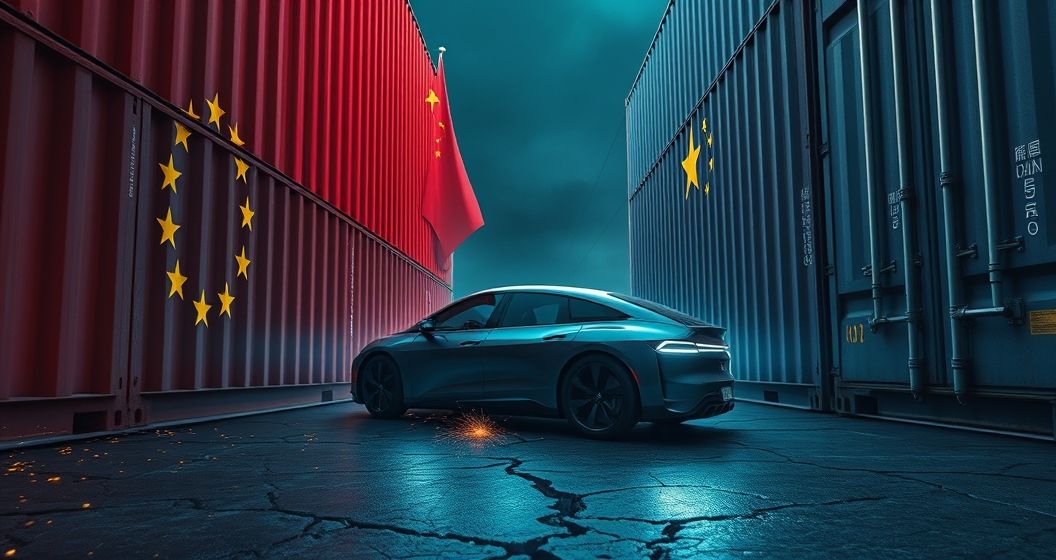
Trade relations between China and the European Union have entered a contentious new phase after the European Commission announced provisional tariffs on Chinese electric vehicle (EV) imports. This move, aimed at countering what the EU describes as unfair state subsidies, has drawn a sharp rebuke from Beijing, which has vowed to take necessary measures to protect its interests. The escalating dispute threatens to disrupt the global automotive supply chain and raises concerns about a broader trade conflict.
The European Commission’s Tariff Announcement
Following a lengthy investigation, the European Commission concluded that China’s battery-electric vehicle value chain benefits from unfair subsidization, which poses a threat of economic injury to EU producers. Consequently, it has outlined plans to impose additional duties on EVs imported from China. The tariffs vary by manufacturer, with specific rates applied to major players. Automaker BYD will face a 17.4% tariff, Geely will see a 20% duty, and state-owned SAIC will be subject to the highest rate of 38.1%.
Beijing’s Swift and Firm Rebuttal
China’s Ministry of Commerce immediately condemned the decision, labeling it a “blatant act of protectionism” that lacks a factual or legal basis. Officials in Beijing argue that the tariffs violate World Trade Organization (WTO) rules and will distort competition in the automotive industry. They contend that the competitive advantage of Chinese EVs stems from innovation and efficient supply chains, not from state subsidies. The ministry has urged the EU to reverse its decision to avoid harming bilateral economic cooperation.
While stopping short of announcing specific countermeasures, the Chinese government has made it clear that it will not stand idle. A spokesperson stated that China will “resolutely take all necessary measures to firmly defend the legitimate rights and interests of Chinese companies.” This has fueled speculation about potential retaliatory tariffs on European goods, with sectors like agriculture, aviation, and luxury automobiles seen as possible targets for Chinese action, mirroring tactics used in past trade disputes.
Concerns from European Automakers
The EU’s tariff plan has not been universally welcomed within Europe. Major German automakers, including Volkswagen, BMW, and Mercedes-Benz, have expressed significant concern. These companies have substantial investments and sales in the Chinese market and fear that a trade war would be more damaging than beneficial. They argue that protectionist measures could trigger a harmful cycle of retaliation, ultimately undermining the principles of free trade and hurting global business operations for all parties involved.
Navigating an Uncertain Future
The situation remains fluid, with a window for diplomatic engagement still open before the tariffs are finalized. The EU’s move is a high-stakes gamble intended to level the playing field, but it risks triggering a costly conflict that could have far-reaching economic consequences. The coming weeks will be critical in determining whether Brussels and Beijing can find a negotiated solution or if the global auto industry is headed for a period of significant turmoil and market fragmentation.