
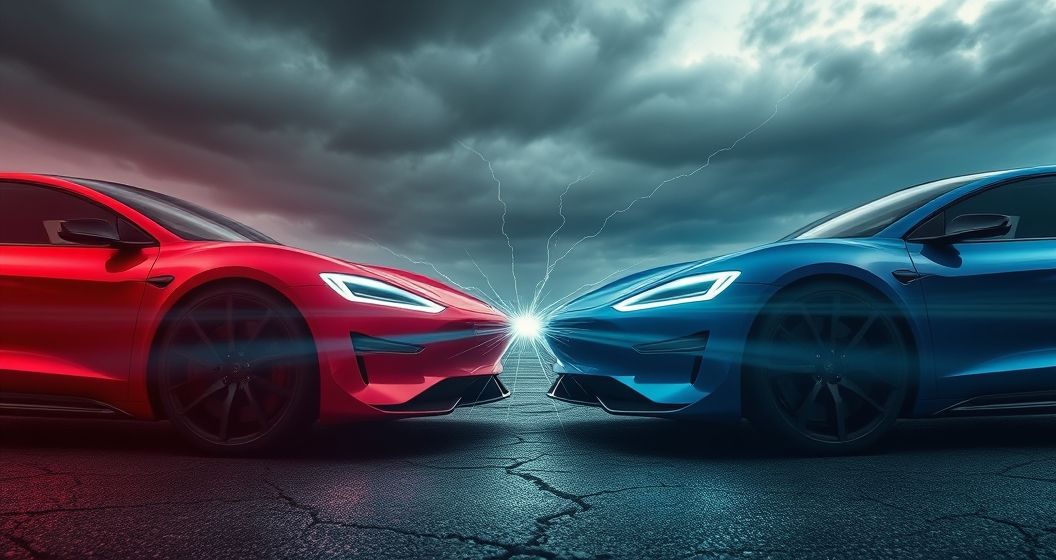
Trade relations between the European Union and China are becoming increasingly tense, with the global automotive industry at the center of the dispute. The EU has launched an anti-subsidy investigation into Chinese electric vehicles (EVs), a move that Beijing has strongly condemned. This escalating conflict threatens to disrupt supply chains and could have significant economic consequences for both sides, sparking fears of a wider trade war that could impact multiple sectors.
EU Probe into Unfair Competition
The European Commission initiated the investigation based on allegations that Chinese EV manufacturers receive substantial state subsidies. Brussels argues these subsidies give Chinese companies an unfair competitive advantage, allowing them to sell their vehicles in Europe at artificially low prices. This, they claim, undermines European carmakers and threatens jobs across the continent. The probe aims to determine whether to impose countervailing tariffs to level the playing field for domestic producers.
Officials in Brussels have emphasized that the goal is not to close the market but to ensure fair competition. However, the investigation has been met with skepticism and criticism from Beijing, which views the move as a protectionist measure designed to shield Europe’s legacy auto industry from innovative and cost-effective competitors. The outcome of this probe is being closely watched by international trade organizations and global automakers alike.
China’s Strong Rebuttal and Potential Retaliation
China has vehemently denied the accusations of unfair subsidies, labeling the EU’s investigation as a “blatant act of protectionism.” Chinese officials maintain that the success of their EV industry is a result of technological innovation, robust supply chains, and open market competition, not state financial support. The Ministry of Commerce has warned that the EU’s actions could seriously damage bilateral economic and trade relations.
A Warning Shot to European Industries
In response to the EU’s actions, Beijing has signaled it is prepared to retaliate. China has launched its own anti-dumping investigation into brandy imported from the EU, a move widely seen as a direct response targeting France, a key supporter of the EV probe. There is growing concern that China could expand its retaliatory measures to other European goods, including agricultural products, luxury items, and automobiles, which would significantly impact major European exporters.
The High Stakes for the Global Auto Market
The dispute places major European car manufacturers in a difficult position. Companies like Volkswagen, BMW, and Mercedes-Benz rely heavily on the Chinese market for a significant portion of their global sales and profits. A full-blown trade war could expose them to retaliatory tariffs, disrupt their operations in China, and jeopardize their market share. The conflict underscores the deep economic interdependence between the two trading blocs and the delicate balance required to manage it.
As both sides stand firm, the path forward remains uncertain. While there are calls for dialogue and a negotiated solution, the risk of escalating tit-for-tat tariffs is very real. The final decision from the European Commission will be a critical moment, not only for the future of the global EV market but also for the broader landscape of China-EU relations in the years to come.