
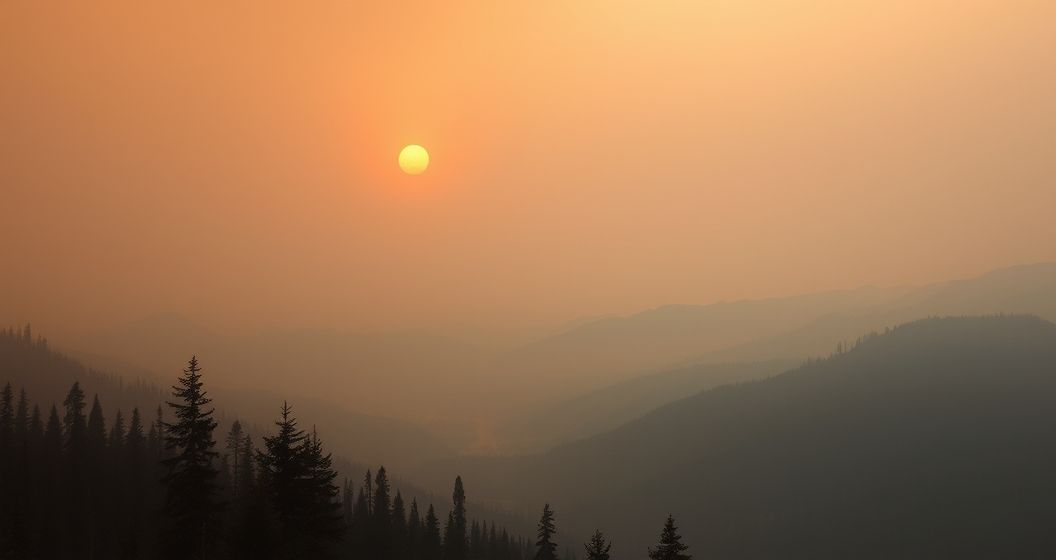
Authorities have issued widespread special air quality statements across much of Canada as thick smoke from active wildfires in the west drifts across the country. The smoke, originating primarily from significant blazes in British Columbia and Alberta, is creating hazardous conditions and prompting health warnings for millions of residents. Environment Canada is urging the public to take precautions as poor air quality is expected to persist, impacting daily life and posing risks to vulnerable populations.
Intense Wildfires Fuel the Crisis
The root of the air quality issue lies in numerous out-of-control wildfires burning in western provinces. In northeastern British Columbia, fires near Fort Nelson have forced thousands to evacuate. Similarly, Alberta is contending with several challenging blazes, including those threatening communities near Fort McMurray. These fires are consuming vast areas of dry forest, releasing immense plumes of smoke and fine particulate matter into the atmosphere, which are then carried eastward by prevailing winds.
A National Health Concern
The smoke is not a localized problem. The hazy skies and acrid smell have now spread across the prairie provinces, with Saskatchewan and Manitoba experiencing significant drops in air quality. The smoke’s trajectory has even carried it south into the United States, affecting several northern states. This cross-country atmospheric event highlights the far-reaching impact of the western wildfires, turning a regional emergency into a national environmental and health concern affecting millions.
Understanding the Health Risks
Wildfire smoke contains fine particulate matter, known as PM2.5, which can penetrate deep into the lungs and enter the bloodstream. Exposure can cause immediate effects like coughing, irritated eyes, and shortness of breath. For individuals with pre-existing conditions such as asthma or heart disease, as well as for children and the elderly, these particles pose a much more serious health threat. Prolonged exposure can worsen chronic conditions and lead to more severe respiratory issues.
Official Advisories and Precautions
In response to the deteriorating conditions, Environment Canada has activated its Air Quality Health Index (AQHI) warnings for numerous regions. Officials are advising the public to reduce or reschedule strenuous outdoor activities. Staying indoors with windows and doors closed is the most effective way to minimize exposure. For those with central air systems, using high-quality filters and recirculating indoor air can help. If venturing outside is unavoidable, wearing a well-fitted N95 respirator can offer protection.
Ongoing Situation and Outlook
With firefighting efforts continuing and no immediate relief in the weather forecast for fire-stricken regions, the smoke problem is expected to continue. Air quality will likely fluctuate depending on wind patterns and fire activity. Canadians in affected areas are encouraged to stay informed by monitoring official weather alerts and public health advisories. The situation serves as a stark reminder of the increasing frequency and intensity of Canada’s wildfire season and its broad consequences.