
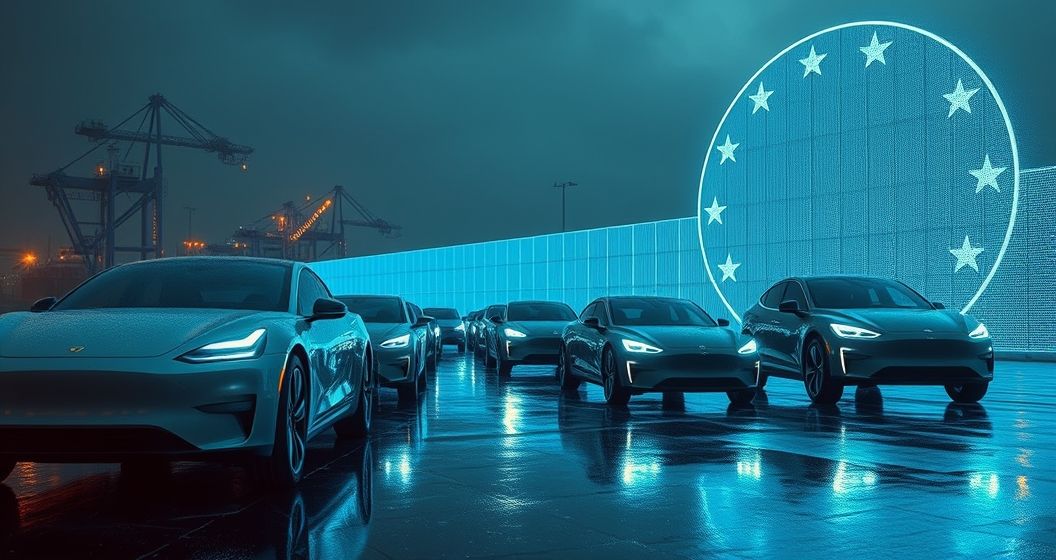
Tensions between China and the European Union are escalating following the EU’s decision to impose new tariffs on Chinese electric vehicles (EVs). Beijing has strongly condemned the move, labeling it as protectionism and vowing to take all necessary measures to protect its interests. This development marks a significant new phase in the trade relationship between the two economic giants, threatening to disrupt global automotive supply chains and spark a wider trade conflict.
The EU’s Stance on Unfair Competition
The European Commission announced the provisional tariffs after an investigation concluded that China’s EV industry benefits from unfair state subsidies. According to EU officials, these subsidies allow Chinese manufacturers to sell vehicles at artificially low prices, undercutting European automakers and threatening jobs within the bloc. The tariffs are intended to level the playing field and protect the EU’s domestic car industry from what it perceives as distorted market competition.
The new duties will vary depending on the manufacturer and are set to be applied on top of the existing 10% tariff. The move has been supported by some member states concerned about industrial competition, but it has also drawn criticism from others, particularly Germany, whose automotive industry is heavily reliant on the Chinese market. These internal divisions highlight the complexity of the EU’s position.
Beijing’s Firm Opposition and Potential Countermeasures
China’s Ministry of Commerce swiftly responded, urging the EU to correct its “wrongdoing” and resolve the friction through dialogue. Officials in Beijing argue that the success of China’s EV industry is a result of open competition, technological innovation, and robust supply chains, not state subsidies. They have accused the EU of violating international trade rules and using the investigation as a pretext for protectionist policies.
While specific retaliatory actions have not been detailed, Chinese state media and industry groups have suggested that Beijing could target various European sectors. Potential countermeasures may include tariffs on large-engine vehicles, aviation products, and agricultural goods like pork and dairy. This strategic signaling is designed to pressure the EU into reconsidering its tariff decision before it becomes permanent.
Economic Implications for Global Markets
A full-blown trade dispute would have far-reaching consequences beyond the automotive sector. It could lead to increased costs for consumers, disrupt established global supply chains, and create uncertainty for international investors. For European carmakers, particularly German brands with significant operations and sales in China, retaliatory tariffs could severely impact their profitability and market share. The situation is a delicate balancing act, as many European auto companies also rely on components manufactured in China.
As the deadline for a final decision approaches, both sides are under pressure to find a diplomatic solution. The international business community is closely watching the negotiations, hoping that dialogue will prevail over a costly and damaging trade war that could hinder the global transition to green energy and electric mobility.


