
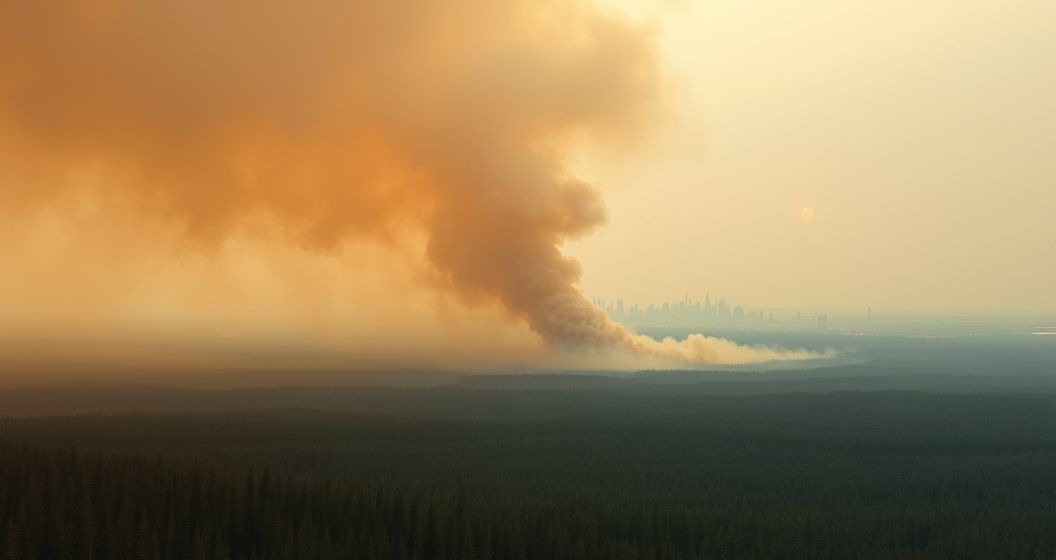
Intense and unseasonable wildfires raging across Western Canada are creating a significant public health issue, with smoke blanketing vast regions of the country and extending into the United States. Authorities have issued widespread air quality alerts as hazardous haze impacts major urban centers, forcing residents to take precautions. The fires, particularly in British Columbia and Alberta, have led to evacuation orders and states of emergency in several communities as firefighters battle the challenging blazes.
Fires Engulf Western Provinces
British Columbia and Alberta are the epicenters of the current wildfire crisis. Numerous fires are classified as “out of control,” fueled by dry conditions and strong winds that have complicated containment efforts. These blazes are consuming thousands of hectares of forest and land, threatening homes, infrastructure, and critical industries. The scale of the fires has prompted provincial governments to declare states of emergency, allowing for greater coordination of resources and faster response to protect affected communities.
Firefighting crews from across Canada, and in some cases from other countries, are being mobilized to assist in the fight. The focus remains on protecting lives and property, but the sheer number and intensity of the fires present a formidable challenge. Evacuation orders have been issued for several towns and rural areas, displacing thousands of residents who face an uncertain wait for news about their homes and livelihoods.
A National Air Quality Concern
The most far-reaching impact of the wildfires is the thick smoke that has traveled thousands of kilometers. Major cities like Calgary, Edmonton, and Vancouver have experienced dangerously poor air quality, with Environment Canada issuing special statements advising the public of the risks. The Air Quality Health Index (AQHI) has frequently reached the “high risk” or “very high risk” categories in these areas, indicating a significant threat to health.
Protecting Your Health from Wildfire Smoke
Health officials are strongly advising residents in affected areas to limit their time outdoors. The fine particulate matter in wildfire smoke can penetrate deep into the lungs and bloodstream, causing a range of health issues. Vulnerable populations, including children, the elderly, pregnant individuals, and those with pre-existing heart or lung conditions like asthma, are at the greatest risk of experiencing adverse effects. Recommended precautions include keeping windows and doors closed, using air purifiers with HEPA filters, and wearing a well-fitted N95 mask if outdoor activity is unavoidable.
An Ongoing and Evolving Situation
The situation remains dynamic as weather patterns continue to influence both fire behavior and smoke dispersal. While containment efforts are underway, officials warn that the crisis is far from over, with the peak of the wildfire season still weeks away. The dual challenge of battling active fires on the ground while managing the widespread public health impact of the smoke highlights the growing severity of Canada’s wildfire seasons and the need for continued vigilance and preparedness.


