
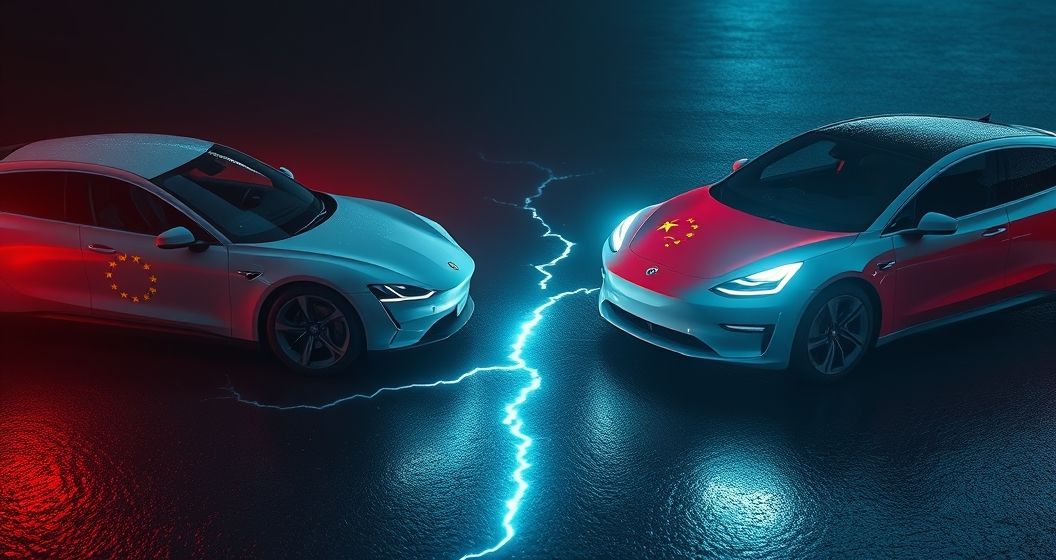
Trade relations between the European Union and China have entered a tense phase following the EU’s decision to impose new tariffs on imported Chinese electric vehicles (EVs). This move, aimed at countering what the EU describes as unfair state subsidies, has prompted a strong reaction from Beijing, sparking concerns of a potential trade war. The outcome of this dispute could have significant consequences for the global automotive industry and international trade dynamics.
The EU’s Anti-Subsidy Investigation
The European Commission’s decision is the result of an anti-subsidy investigation launched last year. The inquiry concluded that the Chinese EV supply chain benefits heavily from unfair state subsidies, giving Chinese manufacturers a significant competitive advantage. The EU argues that this practice threatens European automakers and undermines fair competition within the single market. The provisional tariffs, which vary by manufacturer, are set to be applied in the coming weeks.
Brussels maintains that the goal is not to close its market but to ensure a level playing field for all participants. Officials have emphasized that the measures are compliant with World Trade Organization rules and are designed to restore fairness. However, the move has not been universally supported within the EU, with some member states, particularly Germany, expressing concerns about the potential for Chinese retaliation that could harm their own industries.
China Vows to Retaliate
Beijing has strongly condemned the tariffs, labeling them as a “blatant act of protectionism.” Chinese officials deny the allegations of unfair subsidies and argue that the competitiveness of their EV industry stems from innovation, efficiency, and open market competition. The Chinese Ministry of Commerce has stated that the EU’s investigation lacks factual and legal basis and has urged the bloc to reverse its decision immediately.
In response, China has initiated its own anti-dumping investigation into certain pork products imported from the EU. This is widely seen as a direct retaliatory measure. There are also growing concerns that Beijing could target other European sectors, including luxury cars and agricultural goods, if the EV tariffs are permanently enforced. This tit-for-tat approach has heightened fears of a broader and more damaging trade conflict.
Navigating a Path Forward
Despite the escalating rhetoric, both sides have left the door open for negotiations. EU and Chinese officials are expected to hold talks to find a mutually acceptable solution before the tariffs become definitive. Industry leaders, especially from the German automotive sector, are pushing for de-escalation, warning that a trade war would ultimately harm businesses and consumers on both sides. The global auto industry is deeply interconnected, with many European brands having significant manufacturing operations and sales in China.
The coming weeks will be crucial in determining whether dialogue can prevail over confrontation. The dispute highlights the complex economic relationship between the EU and China, balancing cooperation in areas like climate change with growing competition in strategic industries. A resolution will require careful diplomacy to address the EU’s concerns without triggering a cycle of retaliation that could disrupt global supply chains.


