
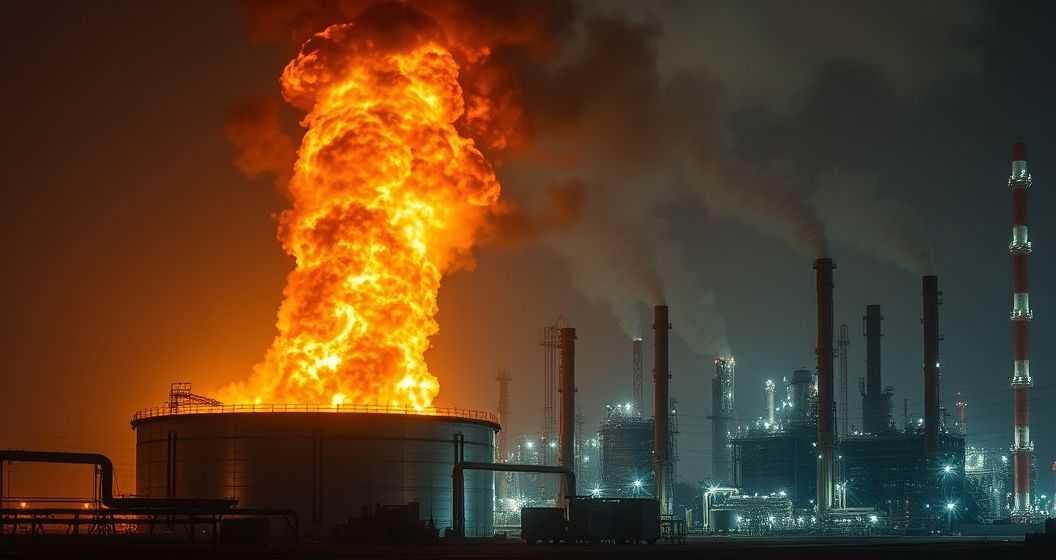
A significant fire has erupted at a major oil refinery in Russia’s Rostov region following what local officials have described as a targeted drone attack. The incident at the Novoshakhtinsk oil products plant highlights an ongoing strategy of striking critical Russian energy infrastructure. Emergency services were dispatched immediately to combat the blaze, which spread rapidly across a large area of the facility, sending thick plumes of black smoke into the sky.
An Escalation in Cross-Border Attacks
This attack is part of a consistent pattern of drone strikes targeting Russian oil refineries and depots. These operations appear designed to disrupt Russia’s fuel supply chains, which are crucial for both its military operations and its domestic economy. By targeting these high-value assets deep inside Russian territory, the attacks serve to apply economic pressure and demonstrate a growing capability to reach sensitive industrial locations far from the front lines of the conflict.
The strategic selection of energy facilities suggests a calculated effort to inflict maximum disruption. Each successful strike not only causes immediate damage but also forces Russia to divert resources toward air defense and repair, straining its logistical capabilities. The psychological impact of these attacks, bringing the conflict to industrial heartlands, is also a significant factor in this evolving strategy.
The Novoshakhtinsk Facility Under Siege
The Novoshakhtinsk plant, located in the Rostov region, is a key piece of Russia’s southern energy infrastructure. According to regional governor Vasily Golubev, the fire was initiated by the impact of several unmanned aerial vehicles. The resulting blaze reportedly engulfed an area of several hundred square meters, requiring a major response from firefighting teams. Operations at the refinery were immediately suspended as personnel worked to contain the fire and prevent it from spreading to other volatile sections of the plant.
Initial reports from emergency services indicated that there were no immediate casualties, a fortunate outcome given the scale of the fire. The focus remains on extinguishing the flames and assessing the full extent of the structural and operational damage. Such incidents often lead to prolonged shutdowns for inspection and repair, impacting regional fuel production and distribution for an extended period.
Economic and Strategic Implications
The persistent attacks on Russia’s oil sector carry substantial economic weight. Russia is one of the world’s largest oil exporters, and its refining capacity is vital for generating state revenue. The cumulative damage from these strikes can reduce the output of refined products like gasoline and diesel, potentially leading to domestic supply shortages and a reduction in export income. This directly impacts the funding available for the nation’s military budget and overall economic stability.
From a strategic standpoint, these strikes force the Russian military to make difficult choices regarding the allocation of air defense systems. Protecting every critical infrastructure site across a vast country is a monumental challenge. Prioritizing the defense of military bases and command centers may leave industrial facilities like the Novoshakhtinsk refinery more vulnerable to attack, creating a strategic dilemma for defense planners.


