
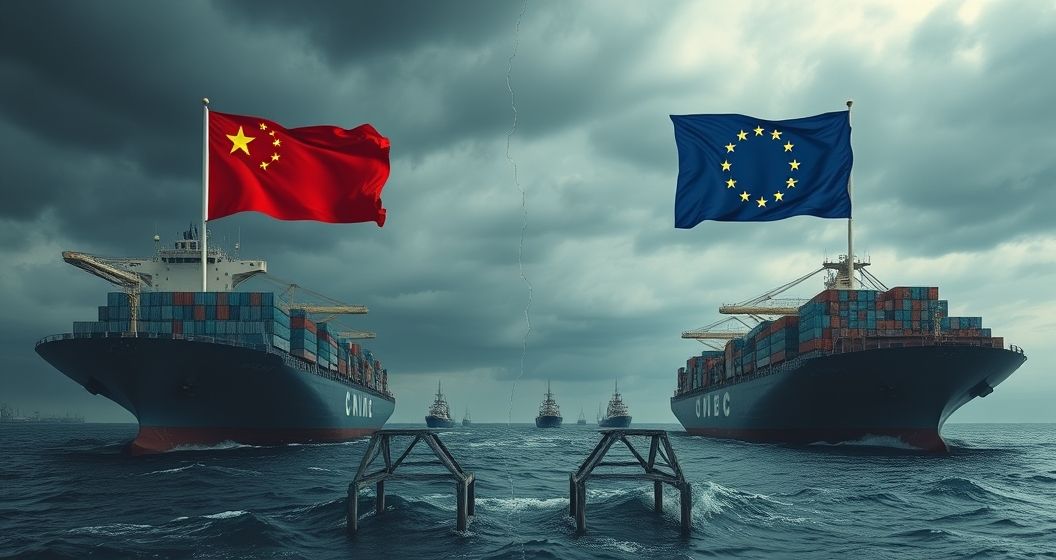
Tensions between China and the European Union are nearing a critical point as Brussels considers imposing tariffs on Chinese electric vehicles (EVs). Beijing has responded by calling for dialogue and negotiation, warning that protectionist measures could harm global trade stability. The dispute, centered on allegations of unfair state subsidies, threatens to disrupt a multi-billion dollar trade relationship and could have significant consequences for both consumers and automakers across the globe, setting the stage for a potential trade conflict.
The Heart of the Matter: EV Subsidies
The European Commission’s investigation focuses on the belief that China’s government provides massive subsidies to its EV manufacturers. This financial support, Brussels argues, allows Chinese companies to sell their vehicles in Europe at artificially low prices, undercutting local competitors. European officials are concerned that this creates an uneven playing field, potentially threatening the future of the continent’s historic automotive industry as it transitions towards electrification. The investigation could lead to the imposition of countervailing duties to offset the alleged subsidies.
Beijing’s Stance: A Call for Cooperation
China has firmly rejected the accusations, labeling the EU’s probe as a form of protectionism that violates international trade norms. Officials have stated that their support for the EV industry is aimed at promoting green technology and innovation, consistent with global climate goals. Instead of confrontation, Beijing is advocating for resolution through dialogue and consultation. The Chinese Ministry of Commerce has emphasized a desire to properly address mutual economic concerns and create a fair, non-discriminatory environment for industrial development.
Potential Economic Repercussions
Should the EU proceed with tariffs, analysts predict a swift and targeted response from China. Beijing could impose its own duties on European goods, with sectors like luxury automobiles, high-end agricultural products, and aviation being potential targets. Such a tit-for-tat escalation would not only impact major European exporters but could also disrupt complex global supply chains. Ultimately, consumers on both sides could face higher prices and fewer choices, while the broader goal of a swift green transition could be hampered by trade barriers.
A Test for Global Trade Relations
This dispute is more than just about cars; it reflects the evolving and often strained economic relationship between China and the West. It highlights a growing trend where trade policy is intertwined with industrial strategy and national security concerns. The outcome will serve as a key indicator of whether major economic powers can resolve their differences through established global trade frameworks or if a new era of protectionist policies will define international commerce, impacting everything from technology to renewable energy.
Looking Ahead
As the deadline for the EU’s decision approaches, diplomatic channels are under intense pressure. The coming weeks will be crucial in determining whether Brussels and Beijing can find common ground or if they are headed towards a damaging trade conflict. The resolution of this issue will have lasting implications not only for the automotive sector but for the entire framework of China-EU relations and the stability of the global trading system, which now stands at a significant crossroads.
