
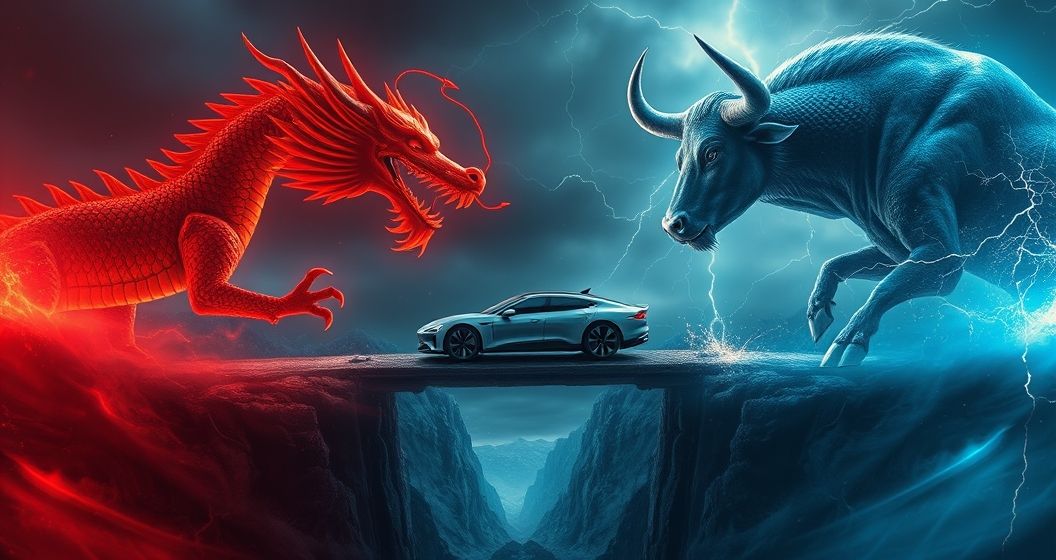
Tensions between the European Union and China are intensifying over the future of the electric vehicle (EV) market, signaling a potentially serious trade dispute. The EU is nearing the end of an anti-subsidy investigation into Chinese EV imports, with preliminary tariffs expected to be announced soon. Beijing has responded strongly, warning that it will take necessary measures to safeguard its interests, setting the stage for a high-stakes economic confrontation that could impact global supply chains.
The Heart of the Matter: An Anti-Subsidy Investigation
The core of the dispute lies in the European Commission’s probe, launched last year, into whether Chinese EV manufacturers benefit from unfair state subsidies. EU officials argue that this financial support allows Chinese companies to sell their vehicles at artificially low prices in Europe, undercutting local competitors like Volkswagen, Renault, and Stellantis. The investigation aims to determine if these practices constitute unfair competition and warrant the imposition of countervailing duties, or tariffs, to level the playing field.
This move reflects a growing concern within the EU about its industrial competitiveness, particularly in the green technology sector. As European automakers invest billions to transition to electric mobility, they face fierce competition from a wave of advanced and affordable Chinese EVs. The Commission’s action is seen as a defensive measure to protect a critical European industry from what it perceives as a state-driven export strategy from China.
Beijing’s Stance: A Warning Against Protectionism
China has vehemently denied the allegations, labeling the EU’s investigation as a protectionist act that violates international trade rules. Chinese officials maintain that the success of their EV industry is a result of technological innovation, robust supply chains, and open market competition, not unfair subsidies. They argue that imposing tariffs would not only harm Chinese companies but also disrupt the global automotive industry and undermine efforts to combat climate change by making EVs more expensive for European consumers.
Potential Retaliation in Focus
In response to the potential EU tariffs, Beijing has signaled that it is prepared to retaliate. While no specific actions have been confirmed, analysts suggest that European industries with significant exports to China could be targeted. This includes the luxury automotive sector, high-end agricultural products such as French brandy and dairy, and other specialized manufactured goods. Such a move would escalate the conflict from a sector-specific issue to a broader trade war, creating uncertainty for businesses on both sides.
Broader Implications for the Global Market
The outcome of this dispute will have far-reaching consequences. For consumers, tariffs could lead to higher prices for electric vehicles, potentially slowing the transition away from fossil fuels. For the automotive industry, it could force a realignment of global supply chains and investment strategies. Companies may need to reconsider their manufacturing footprints to avoid tariffs, a costly and complex process. As the world watches, the decisions made in Brussels and Beijing in the coming weeks will be critical in defining the future of global trade and green technology.