
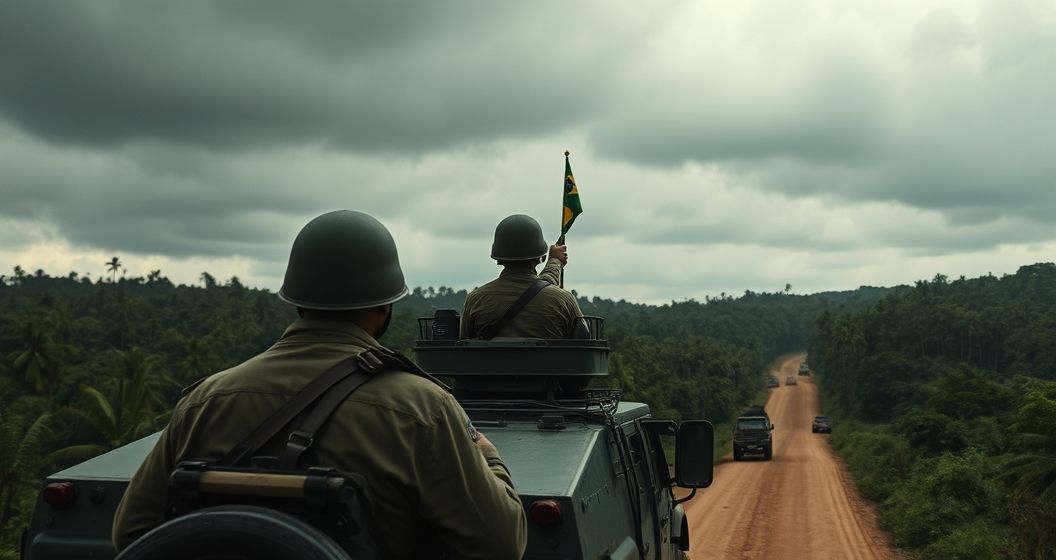
Brazil’s Ministry of Defense has confirmed a significant reinforcement of its military presence along the northern border, particularly in the state of Roraima. This strategic maneuver is a direct response to the escalating territorial dispute between neighboring Venezuela and Guyana over the oil-rich Essequibo region. The Brazilian government aims to secure its territory and prevent the conflict from spilling across its borders, ensuring national sovereignty is protected amid rising regional instability.
Strategic Military Deployment in Roraima
The Brazilian Army has increased its troop numbers and deployed additional armored vehicles to the border city of Pacaraima, the main land crossing with Venezuela. The operation includes the movement of Leopard 1A5 tanks and Guarani armored personnel carriers, which are being transported to bolster the 1st Jungle Infantry Brigade. This heightened military posture is designed not as an act of aggression but as a preventative measure to safeguard Brazilian interests and control access to its territory.
Military officials have emphasized that the primary goal is to intensify surveillance and enhance security along a remote and often porous border. The challenging jungle terrain makes monitoring difficult, and the increased presence is intended to deter any unauthorized crossings by armed groups or military units from either side of the dispute. The reinforcement ensures that Brazil is prepared for any potential escalations that could affect its national security.
Diplomatic Efforts and Regional Stability
Alongside its military preparations, the Brazilian government is actively engaged in diplomatic efforts to de-escalate the situation. President Lula da Silva’s administration has been in communication with both Venezuelan and Guyanese authorities, urging a peaceful and negotiated resolution to the century-old dispute. Brazil has consistently advocated for Latin America to remain a “zone of peace” and is leveraging its regional influence to promote dialogue over confrontation.
Humanitarian and Economic Concerns
The state of Roraima already faces significant challenges due to the ongoing influx of Venezuelan migrants and refugees fleeing economic and political turmoil. A military conflict next door could trigger a new wave of displacement, further straining local resources and humanitarian aid operations. The Brazilian government is concerned that an armed confrontation would create a severe humanitarian crisis on its doorstep, compounding existing social and economic pressures in the region.
Furthermore, the border reinforcement seeks to protect economic activities and maintain order. Any disruption caused by the Venezuela-Guyana conflict could impact cross-border trade and the livelihoods of communities living in the area. By securing the border, Brazil aims to create a stable environment where its citizens and economic interests are shielded from the external conflict.
A Proactive Stance for Peace
In conclusion, Brazil’s decision to reinforce its northern border is a calculated, two-pronged strategy. It combines a robust defensive military posture to deter any spillover with proactive diplomacy aimed at fostering a peaceful resolution. The government’s actions underscore a commitment to protecting its national sovereignty while simultaneously working to prevent a wider conflict that could destabilize the entire region. The focus remains on safeguarding Brazil’s territory and promoting dialogue as the only viable path forward.


