
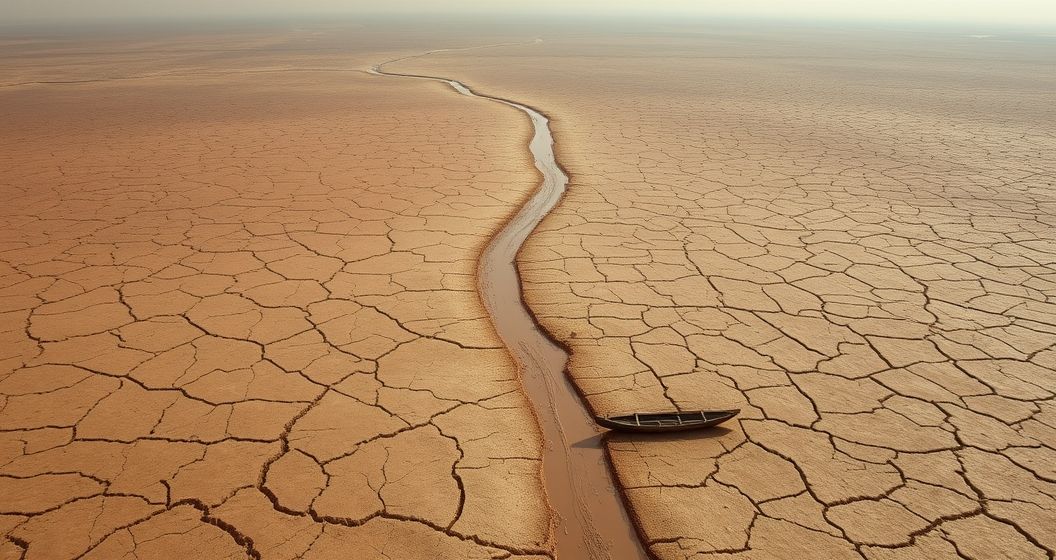
The Brazilian Amazon is grappling with a historic drought, pushing major rivers to their lowest levels in over a century and triggering a severe humanitarian and environmental crisis. In Manaus, the region’s largest city, the Rio Negro has dropped to a level unseen since records began in 1902. This drastic reduction in water levels is isolating communities, disrupting supply chains, and threatening the delicate ecosystem of the world’s largest rainforest.
A Region Under Severe Strain
Waterways that serve as vital lifelines for transportation and commerce have become impassable mudflats. Thousands of communities that rely solely on river transport for access to food, medicine, and fuel are now effectively cut off. The sight of large boats and barges stranded on dry riverbeds has become common, illustrating the scale of a logistical nightmare that impacts millions of people across the vast Amazon basin.
The situation has forced state and federal authorities to declare a state of emergency in dozens of municipalities. Efforts are underway to deliver essential supplies via smaller vessels or helicopters where possible, but the immense size of the affected area presents a formidable challenge for aid workers. The lack of access to clean drinking water is also a growing concern, raising the risk of waterborne diseases.
The Overwhelming Human Cost
For the local population, the consequences of the drought are devastating. Fishermen are unable to work as fish populations die off in overheated, low-oxygen pools of water. Families face shortages of basic necessities as supply boats can no longer reach their villages. The isolation exacerbates existing vulnerabilities, making it difficult for residents to access healthcare or attend school, bringing daily life to a standstill for many.
The government has announced an aid package to provide financial assistance and supplies, but residents report that the help is slow to arrive. The crisis underscores the fragility of life in a region so deeply dependent on the natural cycles of its rivers. The immediate focus is on humanitarian relief to prevent a larger catastrophe.
Ecological and Economic Fallout
Beyond the human impact, the ecological toll is becoming increasingly apparent. The drought has been linked to the deaths of over one hundred river dolphins in Lake Tefé, an event that has alarmed conservationists worldwide. Scientists suspect the extreme water temperatures and low oxygen levels are to blame. This mass mortality event is a stark warning of the broader impact on the Amazon’s unique biodiversity.
The drought also cripples the regional economy. Major industries, including the Manaus Free Trade Zone, depend on river transport to ship goods. Furthermore, low water levels have forced the shutdown of major hydroelectric plants, such as the Santo Antônio dam, leading to energy rationing and threatening power supplies in several states.
Official Response and Climate Factors
In response to the escalating emergency, the Brazilian government has initiated a task force to coordinate relief efforts and dredge key river passages to restore navigability. However, these are short-term solutions to a problem with long-term roots. Scientists attribute the extreme weather to a combination of global warming, which increases the frequency of extreme events, and the current El Niño phenomenon, which typically causes drier conditions in the northern Amazon.
As the Amazon continues to face this unprecedented challenge, the long-term outlook remains uncertain. The event serves as a critical reminder of the region’s vulnerability to climate change and highlights the urgent need for both immediate humanitarian aid and comprehensive strategies to build resilience against future climate shocks.


