
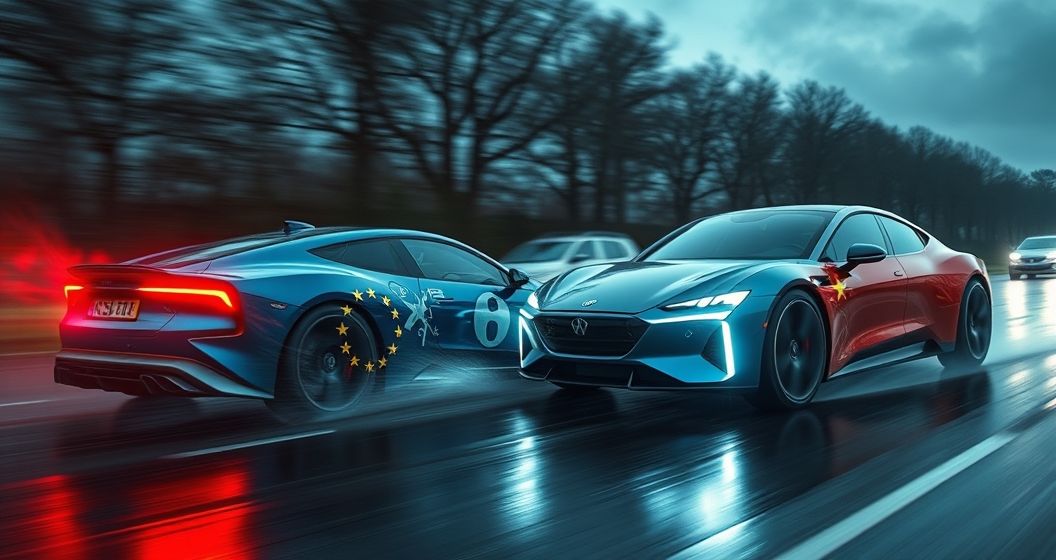
Trade tensions between China and the European Union are rapidly escalating following the EU’s decision to impose significant new tariffs on Chinese-made electric vehicles (EVs). Beijing has strongly condemned the move as blatant protectionism and has signaled that it is prepared to retaliate, raising serious concerns about a wider and more damaging trade conflict between the two economic powerhouses. This dispute opens a critical new front in global trade dynamics, with potentially severe implications for the international automotive industry and consumers alike.
The Heart of the Dispute: EU’s Subsidy Investigation
The European Commission’s action stems from a months-long investigation into China’s EV industry. Officials concluded that Chinese EV manufacturers benefit from unfair state subsidies, which allow them to sell vehicles at artificially low prices in the European market. This, the EU argues, undermines fair competition and poses a threat to European carmakers who are struggling to keep pace. The investigation claims that these subsidies are present throughout the entire supply chain, from raw material processing to battery production and final assembly.
In response, the EU has proposed provisional tariffs that will vary by manufacturer. Major players like BYD could face additional duties of 17.4%, while Geely may see a 20% tariff. SAIC, a state-owned enterprise, faces the highest proposed rate at 38.1%. These duties would be applied on top of the existing 10% tariff on all imported cars, potentially making Chinese EVs significantly more expensive for European consumers. The final decision on these measures is pending further talks.
Beijing’s Firm Response and Potential Retaliation
China’s Ministry of Commerce immediately denounced the EU’s findings, calling them unfounded and a violation of World Trade Organization rules. Beijing insists that the competitiveness of its EV industry comes from innovation, efficient supply chains, and open market competition, not from government subsidies. Chinese officials have accused the EU of using the investigation as a pretext to protect its own less competitive industries and have urged Brussels to reverse its decision to avoid further damaging economic relations.
In a clear signal of its intent, China has launched its own anti-dumping investigation into pork imports from the European Union. This is widely seen as a direct retaliatory measure, as countries like Spain, Germany, and France are major pork exporters to the Chinese market. Analysts believe other European sectors, including dairy products, luxury goods, and vehicles with large engines, could also be targeted if the dispute continues to escalate, creating a tit-for-tat scenario that would harm both economies.
Broader Implications for the Global Auto Industry
This escalating trade friction creates significant uncertainty for the global automotive sector. Not only does it affect Chinese brands aiming for European expansion, but it also impacts Western automakers like Tesla, BMW, and Volkswagen, which manufacture vehicles in China for export to Europe. These companies could also be hit by the tariffs, disrupting their global production strategies. The dispute also threatens to slow the adoption of electric vehicles, a key component of the EU’s climate goals, by potentially raising prices for consumers and limiting choice in the market.
