
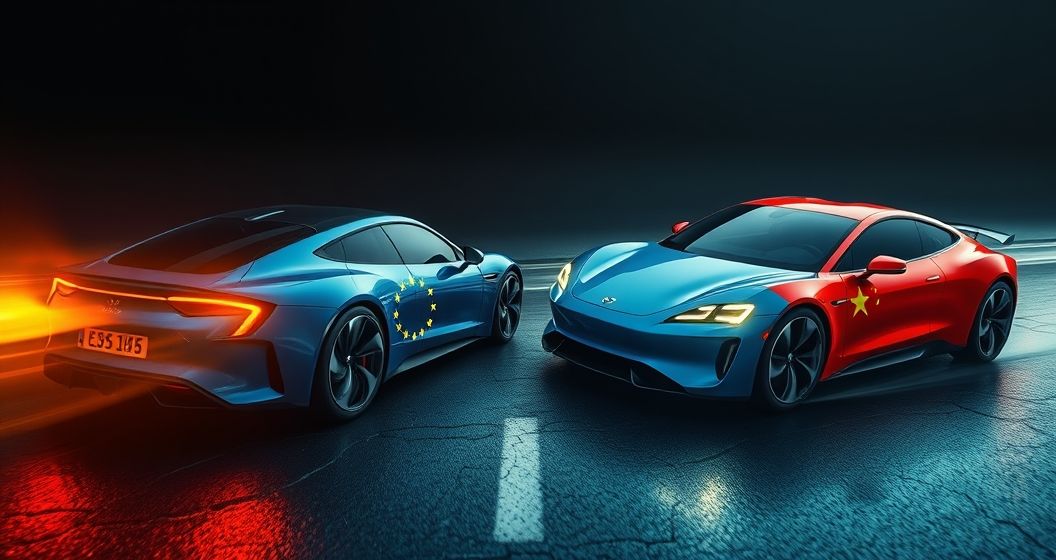
Tensions between the European Union and China are escalating over a potential trade dispute involving electric vehicles (EVs). The EU is nearing a decision on whether to impose tariffs on Chinese-made EVs, alleging that they benefit from unfair state subsidies. Beijing has strongly condemned the probe, warning of potential countermeasures that could impact European industries and ignite a broader trade conflict.
The Heart of the Matter: The EU’s Investigation
The European Commission launched an anti-subsidy investigation into Chinese electric vehicles, aiming to determine if they are unfairly undercutting European competitors. Officials in Brussels argue that significant financial support from the Chinese government allows manufacturers to sell their vehicles at artificially low prices. This, they claim, poses a direct threat to the European automotive industry, a cornerstone of the continent’s economy.
The investigation has examined the entire supply chain, from raw material processing to final assembly. The EU’s goal is to level the playing field for its domestic carmakers as they transition to electric mobility. The outcome of this probe will likely result in the imposition of countervailing duties, a move that China has labeled as protectionist and a violation of international trade rules.
Beijing’s Strong Rebuttal and Potential Retaliation
China’s Ministry of Commerce has vehemently denied the allegations, stating that the competitiveness of its EV industry comes from innovation and robust supply chains, not from subsidies. Chinese officials have criticized the EU’s investigation for its lack of transparency and fairness. They have urged Brussels to abandon its protectionist approach and resolve the dispute through dialogue and cooperation.
In response to the potential tariffs, Beijing has signaled it is prepared to retaliate. China has already launched an anti-dumping investigation into brandy imported from the EU, a move widely seen as a warning shot directed at France. There is growing concern that other European products, including luxury cars, agricultural goods, and high-end machinery, could be targeted if the EU proceeds with its EV tariffs.
European Industry Voices Concerns
The prospect of a trade war has alarmed many within the European automotive sector, particularly German carmakers. Major brands like Volkswagen, BMW, and Mercedes-Benz have significant investments and a large market share in China. They fear that Chinese retaliation would severely harm their sales and operations in the world’s largest auto market, potentially costing them more than any protection from tariffs might offer.
These industry leaders have advocated for caution, emphasizing the interconnectedness of global supply chains. They argue that open markets and fair competition, rather than tariffs, are the best way to foster innovation and growth. Their concerns highlight the delicate balance the EU must strike between protecting its domestic industry and maintaining a crucial economic relationship with China.
Navigating a Path Forward
The unfolding situation places the global automotive industry at a critical juncture. The EU’s final decision on tariffs will be a defining moment in its trade relationship with China. While both sides express a preference for dialogue, the risk of a retaliatory cycle of tariffs remains high. Such a conflict would not only disrupt the EV market but could also have significant economic consequences for businesses and consumers on both continents, leading to higher prices and reduced choices.
